

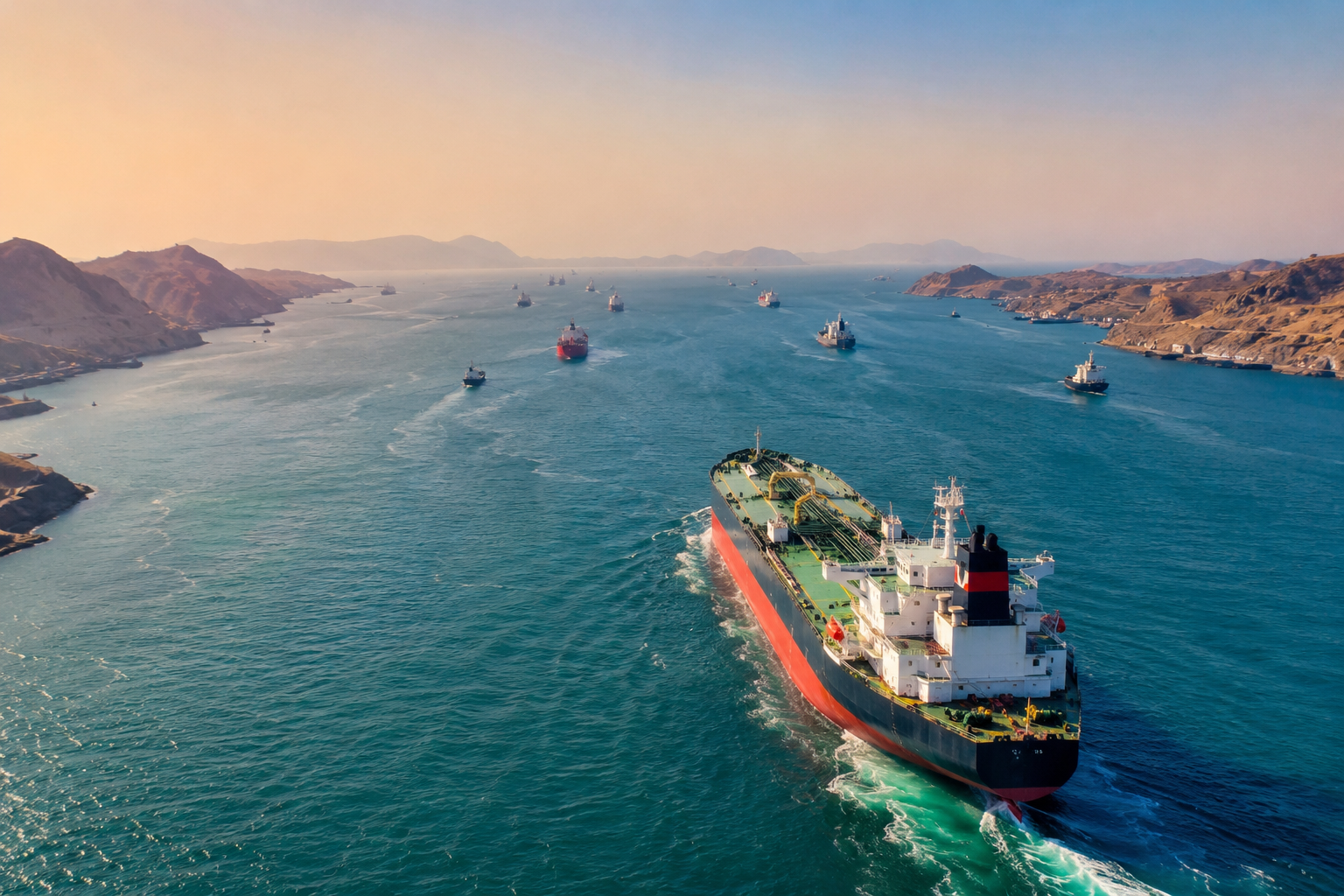
According to data from maritime analytics firm Kpler, 39 commodity-carrying vessels transited the Bab el-Mandeb Strait on July 28. This marks the highest daily volume since July 19 and is considered one of the first signs of a gradual recovery in shipping activity along one of the world’s most strategic maritime trade routes.
Of the total, 20 vessels entered the strait while 17 exited. Among them were several Aframax crude oil tankers, including Aisopos, Gustav, and Karachi, each carrying hundreds of thousands of barrels of crude oil. Vessels traveling in the opposite direction included tankers transporting petrochemical products, such as Velos Aquarius, carrying methyl tert-butyl ether (MTBE), a gasoline blending component, and Sea Ambition, transporting chemical cargo bound for Türkiye.
On July 29, another five vessels continued through the strait, including the VLCC Sophia and the Aframax Ocean Laureate. Analysts also noted that the actual volume of maritime traffic may be higher, as some vessels are believed to transit the region with their AIS transponders switched off.
Regional Tensions Continue to Impact Global Shipping
Despite the increase in vessel traffic, the security situation in the Red Sea remains unstable. Yemen’s Houthi movement claimed it had launched ballistic missiles at a Saudi oil tanker, reinforcing its previously announced maritime blockade targeting Saudi Arabia.
At the same time, reports emerged that China had held direct talks with Houthi representatives to secure safe passage for Chinese tankers through the Red Sea.
Against this backdrop, traffic through the Strait of Hormuz remains considerably lower. According to Kpler, only eight commodity-carrying vessels transited the strait on July 28, with five entering and three leaving. As of July 29, only one vessel had passed through the waterway.
Adding to market uncertainty, Iran rejected Oman’s proposal for joint regional management of the Strait of Hormuz. The decision reduces the likelihood of a near-term diplomatic breakthrough and continues to pose risks to global supply chains and international maritime trade.
Read also: Strait of Hormuz Remains a Key Risk for the Global Tanker Market