

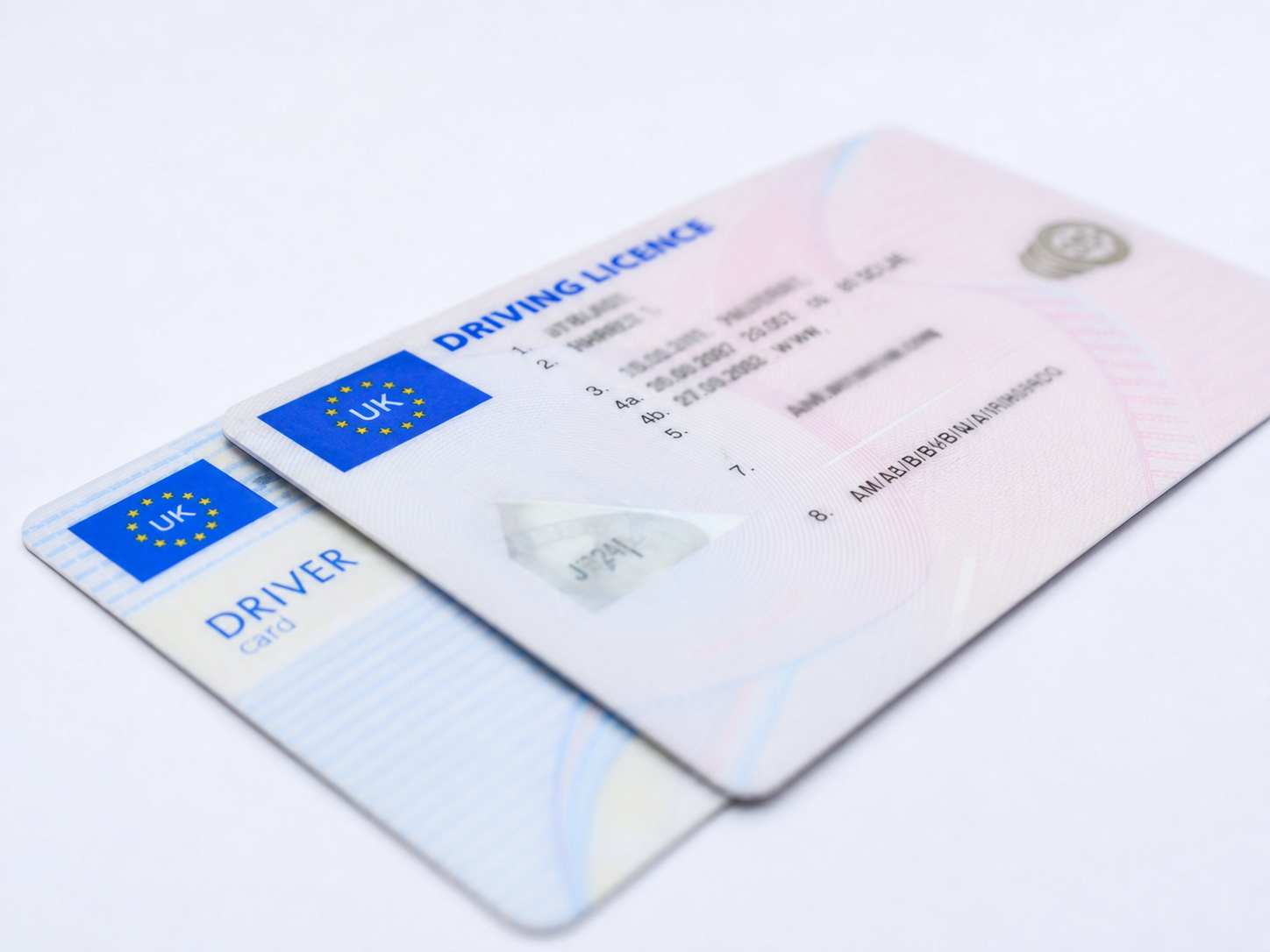
European Commission Moves Reform Into the Implementation Stage
The European Commission has published an implementation strategy for new rules governing driving licences and the cross-border enforcement of driving disqualifications.
The reform is based on two EU directives that entered into force on November 25, 2025. Member States must now amend national legislation, prepare administrative procedures and enable data exchanges between driving-licence authorities.
Most provisions must be transposed into national law by November 26, 2028. The main rules will apply from November 26, 2029. Certain provisions covering alternatively powered vehicles and accompanied driving will take effect earlier.
The EU has therefore not yet activated the complete cross-border system. It has entered the technical and legislative preparation phase.
A Driving Ban Will No Longer Stop at the Border
One of the central elements of the reform concerns drivers who hold a licence issued by one EU country but commit a serious offence in another.
A disqualification imposed abroad does not currently always take effect outside the country where the offence occurred. A driver may lose the right to drive in one Member State while retaining the ability to use the same licence elsewhere in the EU.
The new mechanism is intended to close that gap.
The country where the offence was committed will notify the Member State that issued the driving licence. A standard European certificate will be used to transfer information about the decision and the restriction imposed.
The issuing country will then be required to implement the withdrawal, suspension or restriction in its own system and record it in the national driving-licence register. This will enable the disqualification to take effect across the European Union.
Rules Will Cover Serious Traffic Offences
The cross-border mechanism is not intended to extend every parking fine or minor speeding offence throughout the EU.
It will apply to certain disqualifications resulting from the most serious road-safety offences. These include drink-driving, driving under the influence of drugs, exceeding the speed limit by at least 50 km/h and reckless driving that causes death or serious injury.
The reform does not introduce identical penalties or disqualification periods in every Member State.
National authorities will continue to define offences, conduct proceedings and determine sanctions under domestic law. The EU rules create a mechanism for transmitting and implementing the resulting driving ban outside the country where it was imposed.
The issuing Member State may refuse implementation in certain circumstances covered by the directive. Drivers must also be informed about the decision and the legal remedies available to them.
What the Reform Means for International Carriers
Cross-border recognition is particularly important for professional truck drivers. A single journey may pass through several countries, each applying its own road enforcement procedures.
Once the system is operational, crossing a national border will no longer allow a driver to avoid the consequences of a serious offence. Information about a suspension or withdrawal should reach the licence-issuing country and national registers more quickly.
Transport companies will need to monitor the validity and legal status of drivers’ licences more closely, especially where employees operate regularly across several EU markets.
A driver subject to an EU-wide disqualification cannot simply be transferred to another international route. The carrier may need to replace the employee and adjust delivery schedules, driving and rest-time plans and vehicle deployment.
The reform also increases the importance of internal procedures requiring drivers to inform their employer about serious traffic proceedings, licence seizures and restrictions imposed by national authorities.
EU Introduces Mobile Driving Licences
Another major part of the reform is the mobile driving licence, which will be available through the European Digital Identity Wallet.
Drivers will be able to present the digital document on a smartphone or another compatible device. It is intended to simplify licence verification, replacement, renewal and exchange when a person moves to another Member State.
The rollout will be gradual. The Commission and national authorities must agree on the document’s appearance, verification processes, data-protection requirements and interoperability between national systems.
After a transition period, the mobile licence will become the default format across the EU. Drivers will nevertheless retain the right to request a physical card.
A conventional licence will remain particularly important for people who do not use smartphones and for travel to non-EU countries that may not recognise the European digital document.
Fitness-to-Drive Checks Will Become More Systematic
The new rules also change how authorities assess a driver’s physical and mental fitness.
When a licence is issued or renewed, applicants will be required to undergo a national assessment or complete a medical self-assessment. A medical examination will be required where the process identifies a possible condition affecting the ability to drive safely.
Health checks remain particularly important for categories C, CE, D and DE because of vehicle size, working hours and responsibility for passengers or cargo.
Member States will retain some flexibility in selecting their national assessment system, provided that it complies with minimum EU standards.
The reform is intended to reduce major differences between national procedures and limit situations in which a driver seeks a licence or renewal in a country perceived as having less demanding medical requirements.
Novice Drivers Face a Minimum Two-Year Probation Period
All EU countries will be required to introduce a probationary period of at least two years for newly licensed drivers.
During that period, novice drivers may be subject to stricter rules and penalties, particularly concerning alcohol, drugs and seat-belt requirements.
The EU is also introducing accompanied driving for 17-year-old category B drivers. This will allow young people to gain experience before they are permitted to drive independently, subject to specified conditions.
Member States may additionally introduce accompanied driving for certain 17-year-old lorry drivers in categories C1, C1E and C. The option is intended to reduce the gap between training and entry into the professional driving workforce.
The lorry scheme will depend on national decisions. Professional drivers will still need the correct licence category, training and Certificate of Professional Competence.
Tests Will Reflect Modern Road Traffic
Driver training and examinations will place greater emphasis on protecting pedestrians, cyclists, e-scooter users and other vulnerable road users.
Training requirements will also cover driver-assistance systems, automated vehicle functions and the characteristics of alternatively powered vehicles.
The changes will affect both ordinary motorists and future professional drivers operating increasingly complex commercial vehicles.
Updating examinations is intended to align licensing rules with modern transport, where electronic systems increasingly influence braking, lane control, speed management and collision warnings.
Member States Must Connect National Systems
Secure information exchange between EU countries will be one of the main technical challenges.
National registers will need to share information about the validity, restriction, suspension or withdrawal of a driving licence. Authorities must also protect personal data and prevent a person from holding multiple valid EU licences.
The Commission plans to prepare technical acts, standard documents, guidance and cross-border cooperation projects. Separate work will cover mobile licences and standard driving-disqualification certificates.
For the transport industry, the final result should be more consistent supervision of professional drivers across Europe. However, the main operational changes will appear only after national implementation and the connection of administrative systems.
Until then, carriers must continue following the existing rules of each country and should not assume that every driving ban is already being enforced automatically throughout the EU.
Read also: Drivers From Eastern Europe, Turkey and the Balkans May Be Recognised Under EU Standards