

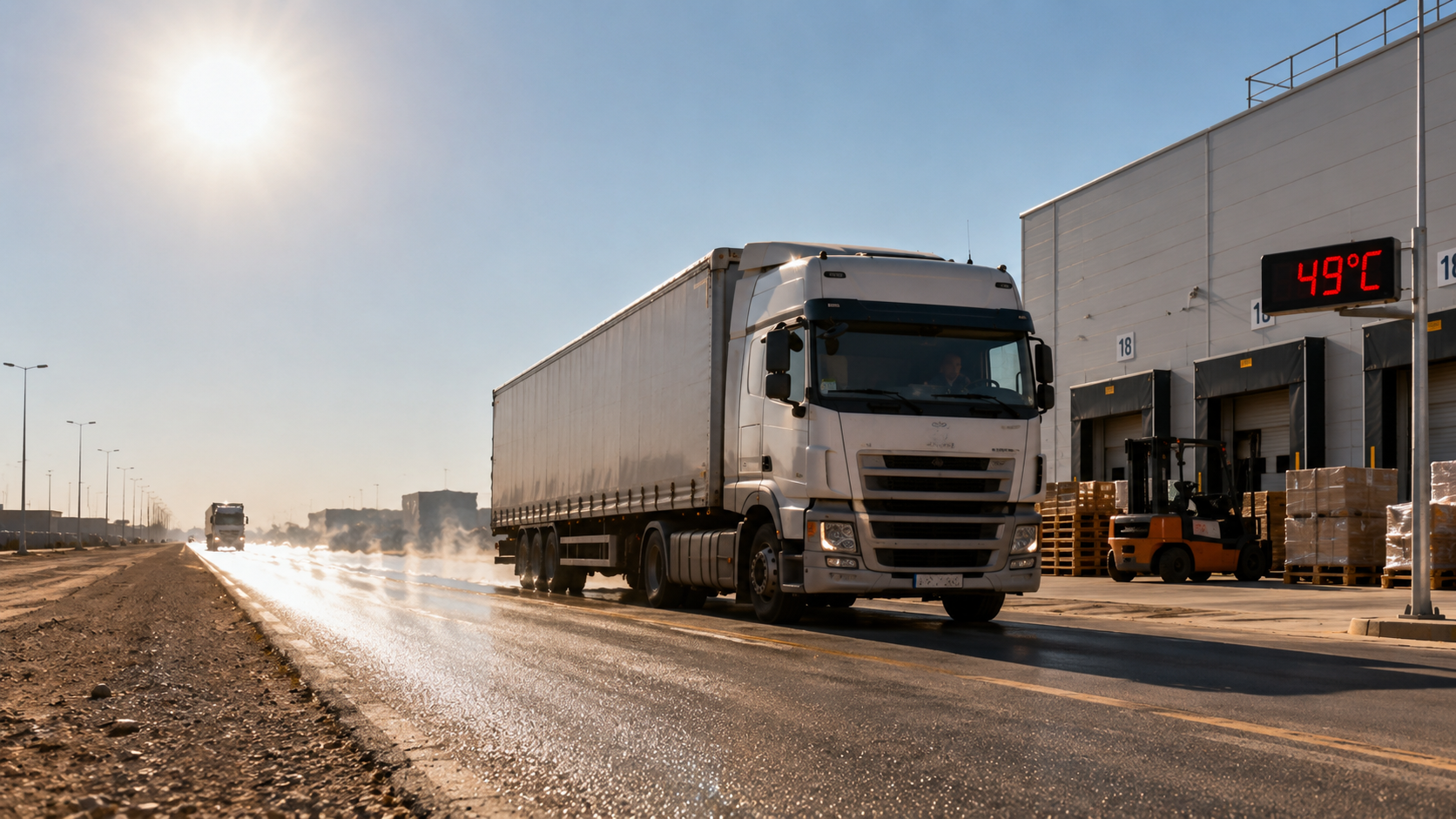
WMO Expects Heat to Intensify From August to October
The World Meteorological Organization, a specialised agency of the United Nations, has warned that temperatures are likely to remain above normal across many parts of the world during August–October 2026.
A rapidly strengthening El Niño is becoming the main climate driver. Exceptionally warm ocean temperatures are also continuing, while a positive Indian Ocean Dipole is expected to develop. Together, these conditions could intensify heat, drought, wildfires and water shortages in some regions while increasing the risk of heavy rainfall and flooding elsewhere.
For logistics, this does not create one universal disruption scenario. Operators may face extreme heat and low river levels on some corridors, while other routes are affected by flooding, infrastructure damage and temporary closures.
Western Europe Has Already Set a Heat Record
The latest fully processed global data covers June 2026.
The average global surface air temperature reached 16.54°C. This was 0.56°C above the 1991–2020 average and around 1.39°C above the estimated 1850–1900 pre-industrial level. June was the second-warmest June on record globally.
Western Europe experienced its warmest June on record. The regional average reached 20.74°C, or 3.06°C above the 1991–2020 average. Numerous monthly and some all-time local temperature records were broken during the second half of the month.
The heat continued during July. In the United Kingdom, 2026 became the first year in which temperatures of at least 35°C were recorded in May, June and July. Several countries also experienced low rainfall, drought conditions and increased wildfire risk.
However, consolidated global temperature figures for July had not yet been published as of August 3. Current UN warnings therefore concern the high probability of further records rather than confirmation that August itself is already the hottest on record.
Road Freight Faces Greater Technical Stress
Extreme heat increases pressure on the truck, the driver and the cargo at the same time.
Engine cooling and cab air-conditioning systems must work harder. Tyres, batteries, braking systems and electronic components face higher thermal loads. In battery-electric trucks, cooling the batteries and cab may reduce the range available for freight operations.
Refrigerated transport is particularly vulnerable. The refrigeration unit must compensate for higher outdoor temperatures, solar heating of the trailer and warm air entering whenever doors are opened. Fuel or electricity consumption rises, compressors operate for longer periods and the risk of technical failure increases.
Carriers may need to move some journeys, loading operations and deliveries to early morning or night-time periods. Route planning should include access to safe parking, water, cooled rest areas and technical support rather than focusing only on congestion and driving restrictions.
Drivers and Terminal Workers Face Heat Stress
Drivers, warehouse loaders, couriers, dock workers and yard personnel may spend long periods outdoors or inside poorly cooled facilities.
High temperatures increase the risk of dehydration, heat exhaustion, reduced concentration and slower reaction times. In transport, this is not only an occupational health issue but also a direct road-safety concern.
Companies may need to revise shift patterns, provide more frequent breaks, ensure access to drinking water and establish cooled rest areas. The most physically demanding tasks should be moved away from the hottest hours where possible.
For road carriers, additional rest periods should be included in delivery schedules and drivers’ hours planning. Attempting to maintain an unchanged timetable during extreme heat can increase the risk of accidents and violations.
Railways May Introduce Speed Restrictions
Rail infrastructure is particularly sensitive to prolonged heat.
Steel rails become significantly hotter than the surrounding air, expand and may buckle under unfavourable conditions. High temperatures can also cause overhead electrical wires to sag.
Rail operators monitor track temperature and may introduce temporary speed restrictions on vulnerable sections. Slower trains reduce dynamic forces on the track but also lower line capacity and increase freight transit times.
A delay on one railway section can spread through the supply chain. Wagons arrive late at terminals, containers miss planned vessel departures and factories or warehouses receive raw materials behind schedule.
Intermodal operators may therefore need larger buffers between the rail leg, terminal handling and onward movement by sea or road.
Heat Can Reduce Air Cargo Payloads
High temperatures reduce air density and weaken aircraft take-off and climb performance.
The effect is most significant at airports with short runways, high elevations or a combination of heat and humidity. In some circumstances, an airline may have to reduce aircraft weight, carry less cargo or fuel, or delay departure until a cooler period.
Even a limited payload reduction matters in air logistics. Urgent shipments may be left behind for a later flight, while rates for the remaining capacity may rise.
Additional risks arise on the airport apron. Pharmaceuticals, biological materials, food and other sensitive products should spend as little time as possible between temperature-controlled storage and the aircraft during extreme heat.
Seaports Require More Power
High temperatures increase pressure on port refrigeration systems, container terminals, electrical equipment and workers.
Reefer containers consume more electricity while maintaining their set temperatures. A terminal handling a large number of refrigerated units simultaneously must have enough functioning power connections and backup capacity.
Even a local power failure can endanger food, pharmaceuticals, chemicals and other temperature-sensitive cargo. Terminals should therefore verify generators, fuel stocks, alarms and remote temperature-monitoring systems.
Heat may also affect vessel-handling productivity. Additional breaks for dock workers and equipment operators can reduce output during some shifts, lengthening vessel stays and increasing the risk of container congestion in the yard.
Low Water Threatens Inland Shipping
Extreme heat is often accompanied by prolonged low rainfall and declining river flow.
River discharge was already below average in June 2026 across large parts of France and Central and Eastern Europe. Continued dryness could impose draught restrictions on inland navigation.
When water levels fall, barges must carry less cargo to pass shallow sections safely. Moving the same volume then requires more voyages or additional road and rail capacity.
Coal, grain, metals, chemicals, fuel and industrial raw materials are particularly exposed. Reduced waterway capacity can raise freight rates and create shortages of alternative transport equipment.
Cold Storage Enters a Critical Risk Zone
Extreme heat can cause the largest financial losses in refrigerated logistics.
Compressors and condensers operate under greater stress while cooling efficiency declines. Electricity consumption rises, increasing operating costs and pressure on local power networks.
Power interruptions present a particularly serious threat. At a conventional warehouse, an outage may stop order processing. At a refrigerated facility, it can lead to temperature excursions and the loss of an entire cargo batch.
Backup generators must be capable of supporting critical refrigeration circuits rather than only lighting and information systems. Their output, fuel reserves and ability to operate continuously should be tested in advance.
During receiving and dispatch operations, doors should remain open for the shortest possible time and products should not wait unnecessarily on loading docks. Pharmaceuticals, meat, fish, dairy products, frozen goods and fresh produce may lose shelf life or become unsuitable for sale after even a limited temperature deviation.
Dry Warehouses Are Also Exposed
The absence of refrigeration does not mean that stored goods are protected from heat.
Temperatures inside uncooled buildings and freight containers may rise far above outdoor readings. This can damage cosmetics, household chemicals, paints, adhesives, aerosols, batteries, electronics, chocolate, beverages and some packaging materials.
Lithium-ion batteries and aerosol products require particularly careful monitoring because overheating can increase fire risk. Warehouses should verify ventilation, product separation, fire-detection systems and manufacturers’ temperature limits.
Operators should also account for heat accumulation beneath roofs and on upper rack levels. Temperatures can vary significantly within one building, making a single sensor near an office insufficient.
Last-Mile Delivery Becomes a Weak Link
During the last mile, cargo often leaves a controlled warehouse and enters a van, courier vehicle, parcel locker or collection point.
Temperatures inside a closed vehicle exposed to sunlight can rise rapidly. Medicines, food, cosmetics, flowers, electronics and batteries are especially vulnerable.
Operators may need to revise delivery sequencing, prioritise sensitive shipments and reduce the time parcels remain in vehicles. Some products will require thermal packaging, cooling elements or temperature-controlled vans.
Parcel lockers and collection points without air conditioning can also become weak links. Any temperature guarantee offered by a seller must cover the entire chain, including the period before the customer collects the shipment.
Fuel and Chemical Terminals Increase Fire Precautions
High temperatures require additional controls at fuel depots, chemical terminals and dangerous-goods warehouses.
Operators must monitor tank temperatures, ventilation and cooling systems, seals, grounding and firefighting equipment. Dry vegetation surrounding a facility can increase the risk of an external fire spreading into the terminal.
Battery-charging areas, fuel storage, chemical containers and products with maximum permitted storage temperatures require particular attention.
Logistics Is Moving From Seasonal Response to Permanent Readiness
The UN warning indicates that extreme heat can no longer be treated as a rare and short-lived event.
Logistics companies need dedicated high-temperature operating plans covering alternative routes, wider delivery windows, spare refrigeration capacity, backup power, cargo-temperature monitoring and clear procedures for responding to deviations.
Contracts should define responsibility for temperature excursions, access to sensor records and the actions required when weather-related transport restrictions cause delays.
As of early August 2026, a new global summer temperature record has not yet been confirmed. However, Western Europe’s record June, the strengthening El Niño and WMO forecasts provide sufficient reason for transport and warehouse operators to prepare for further pressure on infrastructure and cold chains.
Read also: Costly Design Mistakes Threaten Russia’s Cold Storage Market