

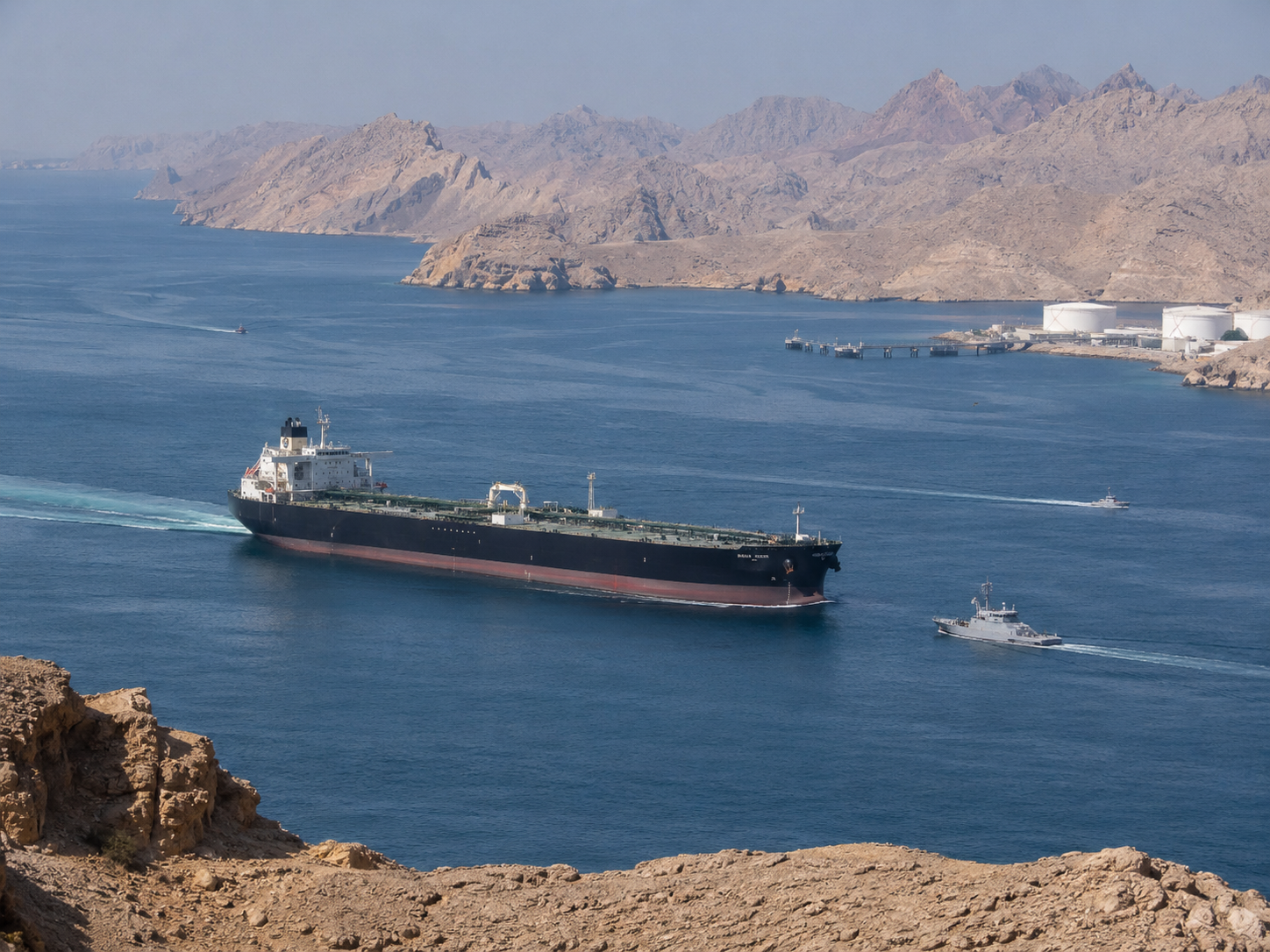
Iran and Oman Are Finalizing New Shipping Routes
Negotiations between Iran and Oman over navigation through the Strait of Hormuz are approaching completion.
Iranian Foreign Minister Abbas Araqchi said an agreement defining new shipping routes between the two countries was in its “final stages.”
Tehran has stressed, however, that the Oman agreement primarily establishes the future navigation framework and does not by itself mean the immediate full reopening of the strait to commercial shipping. The new routes would be used once other conditions are met and unrestricted passage is restored.
For shipping companies, this distinction is critical. A final Iran-Oman agreement should not yet be treated as confirmation that the Strait of Hormuz has returned to normal pre-conflict operations.
The Main Dispute Now Concerns U.S. Action
Iran is directly linking the reopening of the waterway to decisions by Washington.
Araqchi said U.S. compensation for damage caused by American strikes is among Tehran’s conditions.
Mohammad Baqer Zolqadr, secretary of Iran’s top national security body, set out a broader list that includes an end to further U.S. threats, an end to attacks against Iran and its regional allies, removal of the U.S. naval blockade, lifting sanctions and releasing frozen Iranian assets.
The talks over shipping arrangements have therefore become tied to a much broader political settlement between Tehran and Washington.
Iran says it is not engaged in direct negotiations with the United States. According to Araqchi, messages are instead being exchanged through intermediaries.
Washington Also Expects a Deal Soon
The United States has confirmed that progress is being made between Iran and Oman.
On August 7, a U.S. official told Reuters that an agreement was expected soon. The official said Washington would lift its blockade of Iranian ports once a deal was announced that restored commercial shipping without impediments.
The U.S. side also stressed that its actions would be linked to Iran’s implementation of its commitments.
This leaves a sequencing problem. Tehran wants U.S. measures to be implemented as a condition for fully reopening the strait, while Washington says its actions will remain tied to Iran’s performance under the agreement.
Resolving that sequencing dispute may prove more difficult than agreeing on the physical shipping lanes themselves.
Iran Wants Control Over Inbound Gulf Traffic
The navigation model under discussion would also differ significantly from the pre-conflict arrangement.
A senior Iranian source involved in the negotiations told Reuters that Tehran is seeking control over ships entering the Persian Gulf through Hormuz while retaining visibility over outbound traffic and the ability to intervene when necessary.
Under the proposal being discussed, outbound vessels would use a route between Iran and Oman, with exit clearance provided through Oman after Iran had been notified. Tehran had previously sought broader control over traffic in both directions.
Before the current crisis, vessels used an internationally established two-way traffic separation system. The strait passes through the territorial waters of both Iran and Oman but has traditionally functioned as an international maritime route.
For shipping companies, any additional clearance mechanism will be one of the most important practical elements of a future agreement.
Hormuz Remains One of Global Trade’s Most Critical Chokepoints
The significance of the negotiations extends far beyond Iran, Oman and the United States.
The Strait of Hormuz connects the Persian Gulf with the Gulf of Oman and the Indian Ocean. At its narrowest, the waterway is about 34 km wide and carries oil, petroleum products, LNG, fertilizers and other commodities from Gulf economies.
According to the U.S. Energy Information Administration, oil flows through the strait averaged 20.9 million barrels per day in the first half of 2025, equivalent to roughly 20% of global petroleum liquids consumption.
Hormuz is equally important for LNG. Its closure in 2026 effectively cut off around 20% of global liquefied natural gas supply, primarily affecting exports from Qatar.
Even a partial return to stable traffic could therefore affect energy markets, freight rates and marine insurance costs.
The Closure Has Already Reshaped Global Oil Flows
The Hormuz crisis has demonstrated how quickly disruption at a single maritime chokepoint can spread across global logistics.
The EIA says the effective closure of the strait from late February significantly disrupted international oil flows and contributed to major price volatility. Regional oil production shut-ins peaked at an estimated 11.2 million barrels per day in May.
Tanker movements increased after the June arrangements, helping reduce pressure on oil prices. However, much of the initial rise in traffic involved vessels that had previously been stranded on either side of the strait.
Renewed political disputes and the restoration of the U.S. blockade on Iranian shipping in July subsequently placed a full normalization of traffic back in doubt.
Actual Vessel Passage Matters More Than a Political Announcement
For the shipping industry, announcement of an agreement will only be the first step.
A meaningful reopening will depend on whether tankers, LNG carriers and other commercial vessels can transit Hormuz regularly without detention, major delays or uncertainty over authorization procedures.
Marine insurance will be another key indicator. As long as shipowners face a meaningful risk of attack, seizure or disruption, insurers may continue charging elevated war-risk premiums even after a political agreement is announced.
Predictability of the new rules will also be critical. If ships need additional authorization or notification, operators will need clarity on which vessels are covered, how long clearance takes and whether restrictions could differ depending on flag or cargo.
LNG Could Respond Particularly Quickly to a Reopening
A normalization of Hormuz could have an especially significant effect on the LNG market.
Qatar is one of the world’s largest LNG exporters and almost all of its seaborne exports depend on access through the Strait of Hormuz. Following the closure, Asian buyers were forced to compete more actively with European importers for alternative LNG supply on global spot markets.
A stable return of Qatari LNG carriers could therefore increase available supply and ease pressure on alternative exporters.
But the political announcement alone will not be enough. Shipping companies will require evidence that transit is safe, while energy buyers will need confidence that deliveries can continue reliably.
An Oman Agreement Would Not Yet Mean the Crisis Is Over
The Iran-Oman negotiations represent one of the most significant steps toward normalizing Hormuz traffic in recent months.
Statements from both sides, however, show that a technical agreement on new shipping lanes and a political decision to reopen the strait remain two separate stages.
If Washington and Tehran can agree on the sequence of reciprocal measures, a stable reopening would directly affect oil and LNG supplies, tanker markets, marine insurance and supply chains linking the Middle East with Asia and other regions.
If they cannot reach that compromise, even a finalized Iran-Oman agreement could remain merely a prepared navigation framework rather than a return to unrestricted international shipping.
Read also: Iran Proposes New Shipping Rules for the Strait of Hormuz