

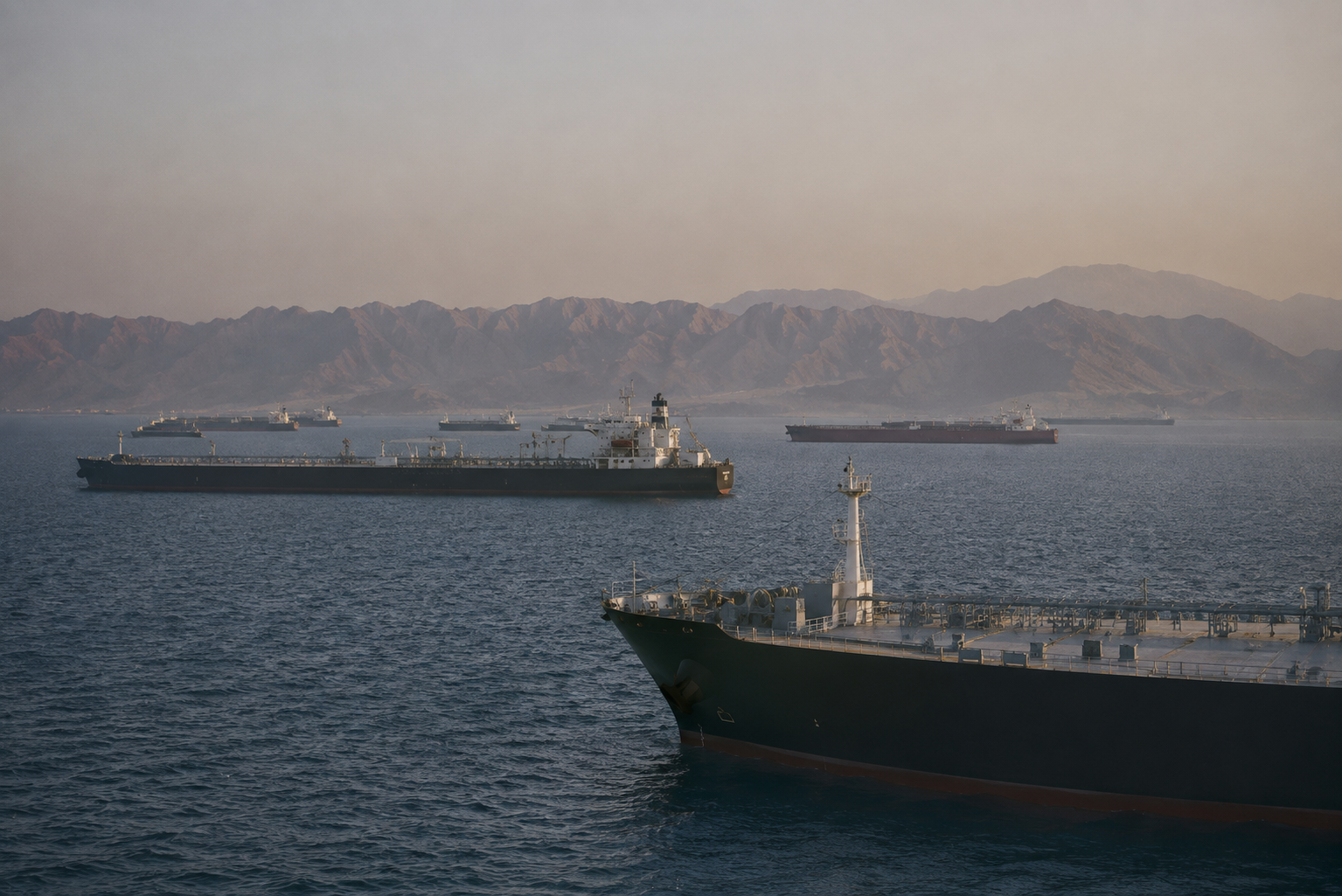
The situation around the Strait of Hormuz continues to weigh on global markets. U.S. Treasury Secretary Scott Bessent said the waterway could eventually become “irrelevant” as oil supplies are redirected through pipelines. His comments came as shipping traffic through the strait remained severely limited.
Iran said it was nearing completion of an agreement with Oman on new shipping routes through the strait. Tehran, however, stressed that the waterway would only fully reopen once Washington meets a number of its demands.
Additional risks are emerging in the Red Sea. The Houthis have announced a resumption of attacks around the port city of Mocha, potentially making shipping through the Bab el-Mandeb Strait even more difficult.
Against this backdrop, Brent crude rose 1% to $84.38 a barrel, while U.S. crude gained 0.7% to $78.75. Only two tankers passed through the southern Gulf on Friday.
The Strait of Hormuz remains one of the world’s most important oil shipping routes. Any sustained disruption is already affecting crude prices and forcing the United States and other market participants to explore alternative supply routes.
The pressure is not limited to energy markets. Shipping disruptions are unfolding amid continued uncertainty over the global economy and the Federal Reserve’s interest-rate decisions.
Read also: National Guard Joins Fight Against Massive Wildfires in the United States