

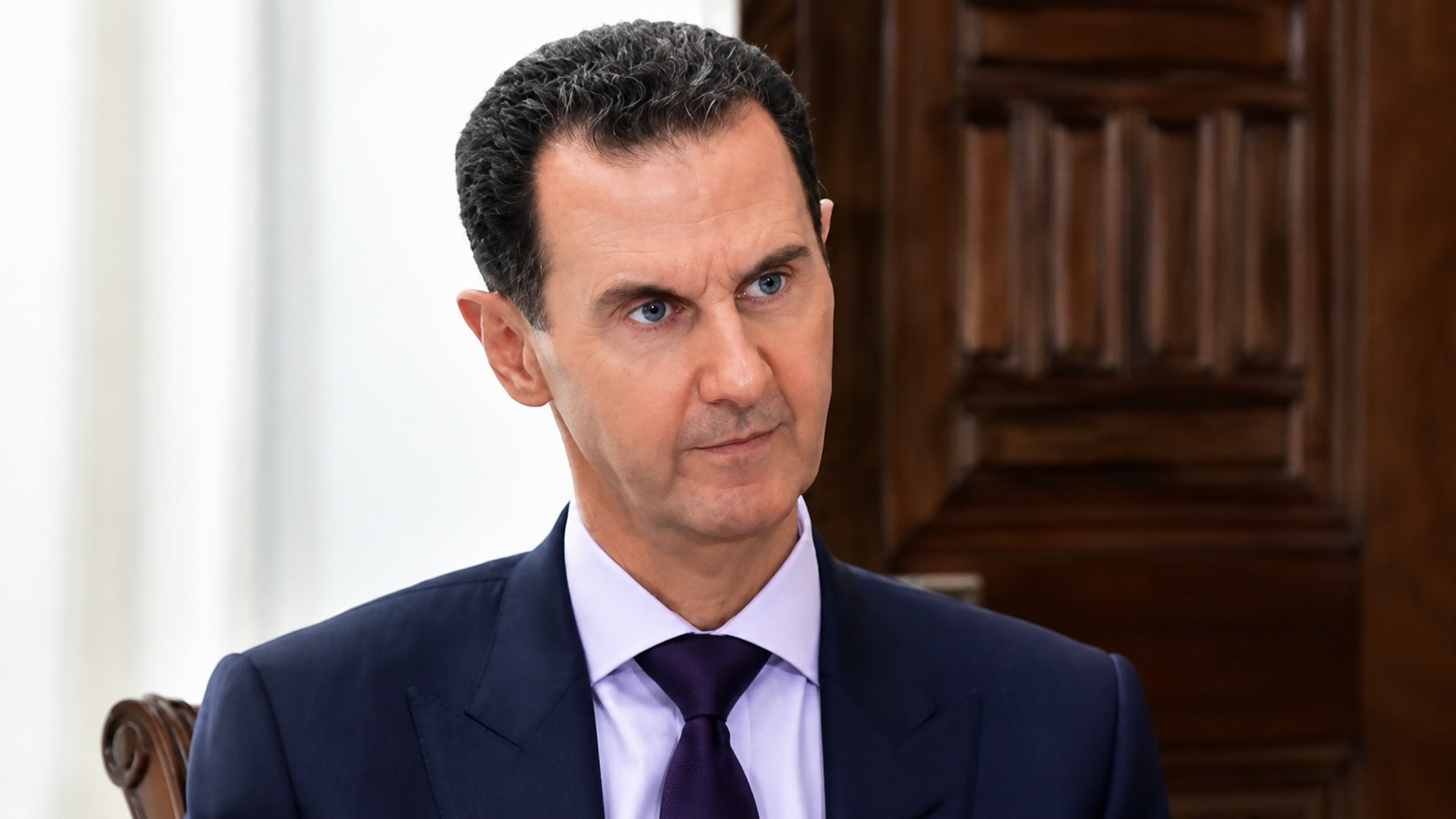
Bashar al-Assad Sentenced to Death in Absentia
A Syrian court on August 11 issued the first death sentence against former President Bashar al-Assad since his government collapsed in December 2024.
According to state news agency SANA, the Fourth Criminal Court in Damascus convicted Assad of intentional and premeditated murder involving multiple victims, including children, as well as torture, arbitrary detention and crimes against humanity.
Judge Fakhr al-Din al-Aryan said Assad bore responsibility as the highest decision-maker and had used state institutions in carrying out the violations.
The Associated Press also reported the judge as saying that Assad had used state agencies to commit war crimes and crimes against humanity. SANA’s formal account of the verdict specifically lists murder, torture, arbitrary detention and crimes against humanity.
That distinction is important when describing the legal basis of the ruling.
Nine Former Officials Received Death Sentences
Assad was not the only defendant sentenced to death.
His brother Maher al-Assad, the former commander of Syria’s Fourth Armoured Division, was also sentenced in absentia.
SANA identified other defendants as Fahd Jassem al-Freij, Mohammad Ayman Ayoush, Louay Ali al-Ali, Qusay Ibrahim Mahyoub, Wafiq Saleh Nasser and Talal Fares al-Aysami.
Assad’s cousin Atef Najib, the former political-security chief in the southern province of Daraa, also received a death sentence.
Unlike the most prominent defendants tried in absentia, Najib is in Syrian custody and was present in court when the sentence was announced. Syrian security forces detained him in early 2025.
In total, nine former officials, including Bashar al-Assad and Najib, were sentenced to death.
The Case Is Closely Connected to Daraa in 2011
Najib’s role makes the case particularly important in the history of the Syrian conflict.
He headed political security in Daraa, where some of the first major anti-government protests erupted in 2011.
According to the court, Najib participated in interrogations following the beginning of demonstrations, while the political-security branch he headed took part in operations against civilians and in the area of the Omari Mosque. The court characterized the conduct as crimes against humanity.
The arrest and alleged torture of teenagers accused of writing anti-government graffiti on a school wall became one of the catalysts for the demonstrations.
The government’s violent response to those protests helped drive an uprising that eventually developed into a nationwide civil war.
It Is Syria’s First Conviction of Assad
The ruling has substantial symbolic and political importance.
Reuters described it as the first Syrian conviction of Bashar al-Assad since the fall of his government. The proceedings lasted nearly four months and were presented by the new authorities as part of a wider transitional-justice process.
Assad remains outside Syria, making enforcement of the sentence impossible under current circumstances.
His brother Maher was also sentenced in absentia, while Najib was the most prominent defendant actually held by the Syrian authorities.
The sentencing hearing was broadcast on state television, while relatives of victims and other Syrians gathered around the courthouse.
Rights Groups Raised Fair-Trial Concerns
The proceedings have also drawn criticism.
Human Rights Watch reiterated its opposition to the death penalty and warned about its irreversible nature, particularly where guarantees of a fully fair trial remain uncertain.
The Syria Justice and Accountability Center, whose monitors attended Najib’s trial, described the conviction as an important moment in Syria’s transition but said the proceedings exposed significant weaknesses in the country’s justice system.
It cited concerns over the speed of the process, elements of witness testimony and the quality of Najib’s legal defense. Najib has the right to appeal.
The credibility of Syria’s broader transitional-justice effort will therefore depend not only on prosecuting former officials but also on demonstrating consistent standards of due process.
Death Sentence Could Complicate Extradition
Assad’s sentence remains largely symbolic because he is currently in Russia.
Following the ruling, Syrian lawyer and rights advocate Anwar al-Bunni told Reuters that the use of capital punishment could make extradition more difficult, since countries may refuse to transfer defendants who face execution.
Russia’s long-standing relationship with Assad adds an additional political dimension.
There has been no indication that Moscow intends to surrender the former Syrian president to the current authorities in Damascus.
Assad Has Been in Russia Since December 2024
Bashar al-Assad left Syria on December 8, 2024, as rebel forces entered Damascus and the government’s control of the capital collapsed.
Russia later confirmed that Assad and members of his family had received asylum. Russian Deputy Foreign Minister Sergei Ryabkov said the former president had been transported to Russia in an exceptionally secure manner but did not disclose operational details.
Assad subsequently said he had first left Damascus for Russia’s Hmeimim airbase and was later evacuated to Russia as the military situation deteriorated.
The Kremlin has not publicly disclosed details of his current residence.
Assad’s 24-Year Rule Ended in Days
Bashar al-Assad became president in 2000 after the death of his father, Hafez al-Assad.
The Assad family’s political system had ruled Syria for more than five decades by the time it collapsed.
Bashar’s own presidency lasted 24 years and ended in December 2024 when rebel forces swept through the country in an offensive lasting less than two weeks.
The forces that toppled the government were led by groups associated with Hayat Tahrir al-Sham under Ahmed al-Sharaa.
A new transitional political system was subsequently established.
Ahmed al-Sharaa Now Leads Syria
As of August 2026, Ahmed al-Sharaa is President of the Syrian Arab Republic during the transitional period.
Official Syrian sources refer to him as president, while Reuters describes the current authorities as the transitional leadership that emerged following Assad’s overthrow.
The new administration faces the simultaneous challenges of rebuilding institutions and infrastructure, reviving the economy, facilitating refugee returns, maintaining security and addressing crimes committed during the previous era.
Trials of senior Assad-era officials have become one of the most politically sensitive parts of that transition.
The Verdict Does Not Mean Assad Is About to Be Executed
Despite the significance of the ruling, the sentence does not mean Assad’s execution is imminent.
He remains in Russia and was tried without being physically present in Syria. Reuters reports that his return is considered unlikely, while Syrian legal experts have warned that the death penalty could make any future extradition even more difficult.
The immediate importance of the judgment is therefore primarily institutional and political.
For the first time, a Syrian court has formally assigned criminal responsibility to the former head of state and members of his inner circle for specific acts linked to the repression and war.
At the same time, concerns raised by rights organizations underline the next challenge for Damascus: demonstrating that accountability for the former government is accompanied by transparent procedures, meaningful legal defense and credible judicial safeguards.
The Assad verdict is therefore both a landmark break with Syria’s previous political order and an important test of the country’s emerging system of transitional justice.
Read also: Uzbekistan Builds New Freight Corridors to Kuwait and Syria