

Death Toll Rises to Six
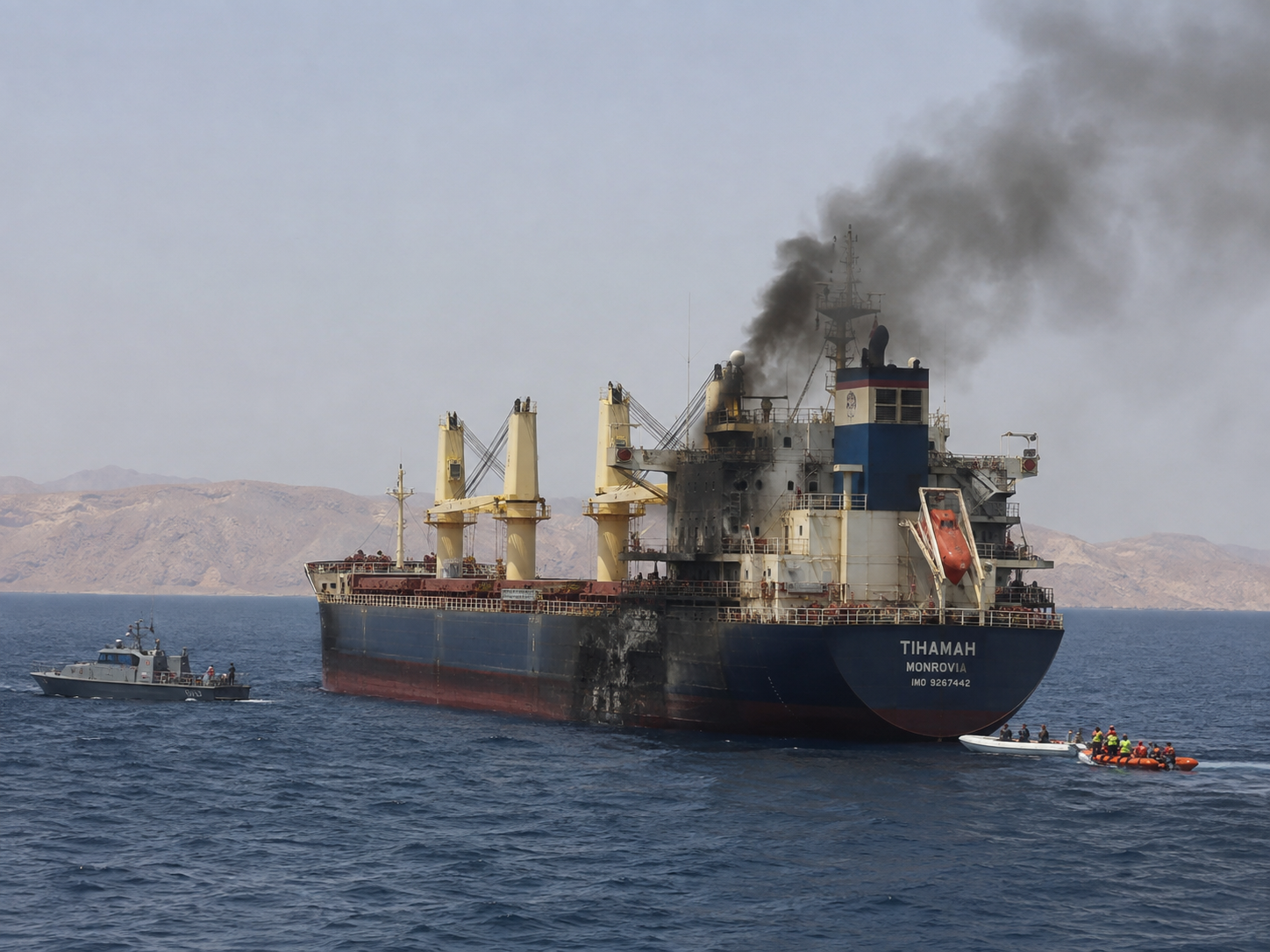
As of August 13, 2026, six people have been confirmed killed in the attack on the cargo vessel Tihamah near the Bab el-Mandeb Strait on August 11.
According to Yemen’s Transport Ministry, the dead included four crew members — three Pakistani nationals and one Indonesian national. Two members of Yemeni forces participating in the rescue operation were killed in a subsequent strike.
Yemen’s Coast Guard reported ten injuries. The wounded included seven Tihamah crew members, two Coast Guard personnel and one member of a unit involved in the rescue operation.
Vessel Was Carrying Food Supplies
Tihamah is a small cargo vessel built in 2024, with a deadweight capacity of approximately 520 tonnes and a length of around 63 metres. It sails under the Tanzanian flag, while Egyptian companies are listed as its owner and manager.
Reports describing the ship as belonging to the Yemeni government have therefore not been confirmed. Tihamah had departed from the government-controlled Yemeni port of Mocha before the attack.
Yemen’s Transport Ministry said the vessel was carrying food supplies. According to the ministry, three consecutive ballistic missiles struck the ship, causing a fire and leaving the crew unable to control the vessel.
Another missile was reportedly launched after rescue teams reached the scene. Yemeni authorities also said an explosive uncrewed boat approached the damaged vessel several hours later but was intercepted before making contact.
Claim of Military Cargo Remains Unverified
The Houthis claimed responsibility for attacking a vessel in the Bab el-Mandeb Strait, alleging that the target was linked to Saudi Arabia and carrying military equipment. However, the group did not directly identify the ship as Tihamah.
There is no independent confirmation that Saudi military equipment was on board, and Saudi authorities have not commented on the claim. Yemen’s Transport Ministry said the vessel was transporting food.
The four seafarers were the first confirmed fatalities from a Houthi attack on commercial shipping since the war involving Iran began on February 28, 2026. The conflict has now continued for almost six months.
US Strikes Separate Vessel off Pakistan
A separate incident occurred on the same day in the Gulf of Oman, not the Persian Gulf as initially reported. A US military helicopter fired two Hellfire missiles at the Panama-flagged container ship Vela Nova approximately 131 kilometres off Pakistan’s coast.
US Central Command said the vessel had ignored repeated warnings and attempted to breach the naval blockade of Iranian ports. The strike disabled its steering system. No fatalities or injuries were reported among the 17 people on board.
Shipping Risks Continue to Increase
According to Kpler, average daily traffic through the Bab el-Mandeb Strait has fallen from approximately 50 vessels to 32 since the Houthis announced their maritime blockade of Saudi Arabia. The fatal attack could raise war-risk insurance costs, discourage shipowners from using the Red Sea and accelerate diversions around Africa.
The situation is compounded by restrictions in the Strait of Hormuz. The International Energy Agency expects global oil supply to decline by an average of 4.3 million barrels per day in 2026. The US Energy Information Administration forecasts that most Middle Eastern production will return close to pre-conflict levels in early 2027, although disruptions of approximately 600,000 barrels per day could persist through the end of that year.
Simultaneous security threats in the Bab el-Mandeb and Hormuz straits are increasing pressure on fuel prices, marine insurance and freight costs, creating additional inflation risks for the global economy.
Read also: Houthis Declare Naval Blockade of Saudi Arabia as Red Sea Moves Closer to a Wider War