

The Existing Route Runs Through Georgia and Türkiye
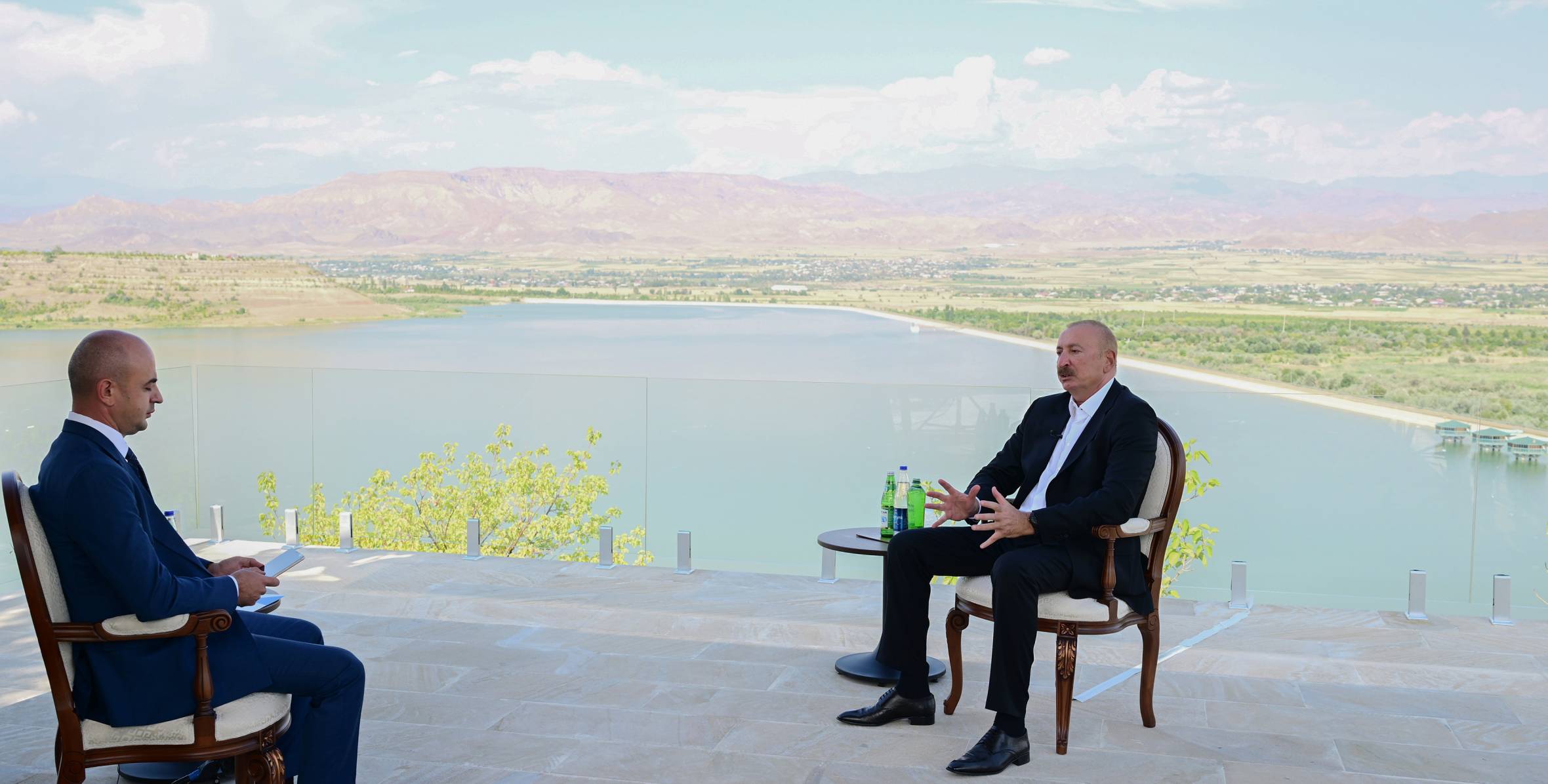
Azerbaijan plans to supplement its oil and natural gas exports with electricity supplies to the European market. President Ilham Aliyev outlined the strategy in an interview with Azerbaijan Television on August 11, 2026.
According to Aliyev, the only existing route for transmitting Azerbaijani electricity towards Europe currently runs through Georgia and Türkiye. Baku wants to increase the capacity of this connection and establish additional transmission lines that would reduce dependence on a single route.
Future exports will be supported by new generating capacity. The Azerbaijani president previously said that the country expects to have 2 GW of solar and wind capacity by the end of 2027 and 8 GW by the end of 2032.
Black Sea Cable Is Designed for Up to 1.3 GW
The Black Sea submarine electricity cable is expected to become one of the main components of the strategy. It would connect the power systems of the South Caucasus and the European Union, with landing points in Georgia and Romania.
Aliyev said the project’s feasibility study had been completed. However, completion of the study does not mean that construction has started. The participating countries must still finalise financing, the technical configuration, electricity market rules and cost allocation.
According to World Bank documents, the preliminary design envisages a high-voltage direct-current connection approximately 1,155 kilometres long. About 1,115 kilometres would consist of a submarine cable installed at depths of up to 2,200 metres. The proposed transmission capacity is up to 1,300 MW.
Azerbaijan, Georgia, Romania and Hungary are partners in the initiative. The European Commission describes it as infrastructure capable of enabling renewable electricity exports from the South Caucasus to the EU.
Caspian Cable Will Connect Kazakhstan and Uzbekistan
A second part of the proposed corridor would be an underwater electricity cable across the Caspian Sea. In November 2024, the presidents of Azerbaijan, Kazakhstan and Uzbekistan signed an agreement on strategic partnership in green energy development and transmission.
The project is intended to carry electricity from the eastern coast of the Caspian Sea to Azerbaijan. From there, the power could move through the Georgian grid and across the Black Sea to Romania, Hungary and other European markets.
Azerbaijan therefore aims to become an electricity hub connecting Central Asia, the South Caucasus, Türkiye and the European Union. The country could export its own electricity while also receiving renewable power from Kazakhstan and Uzbekistan for onward transmission.
Baku Is Developing an Alternative Overland Line
Azerbaijan is also working on a terrestrial electricity connection involving Georgia, Türkiye and Bulgaria. This route could provide an additional export option alongside the Black Sea submarine cable.
Multiple connections would improve the resilience of the regional energy system. Damage, maintenance or capacity restrictions on one line would be less likely to interrupt all electricity exports.
The projects will nevertheless require extensive upgrades to national grids, converter stations, energy-storage systems and cross-border network management. Operators will also need mechanisms to verify that exported electricity comes from renewable sources.
The Corridor Could Expand Europe’s Energy Options
If implemented, the projects would allow Azerbaijan to apply its established oil and gas corridor model to electricity exports. The country is already connected to European energy markets through the Southern Gas Corridor, while the proposed power lines would carry solar, wind and hydroelectric energy.
For Europe, the corridor could provide an additional source of electricity and greater supply diversification. For Kazakhstan and Uzbekistan, it would create a potential route to European customers through the Caspian Sea and the South Caucasus.
Final investment decisions and commissioning dates have not yet been announced. The initiative’s success will depend on coordination among the participating countries, national grid upgrades and the ability to secure financing for large-scale cross-border infrastructure.
Read also: Azerbaijan–NATO Trade Exceeds $2 Billion as Economic Ties and Regional Integration Strengthen