

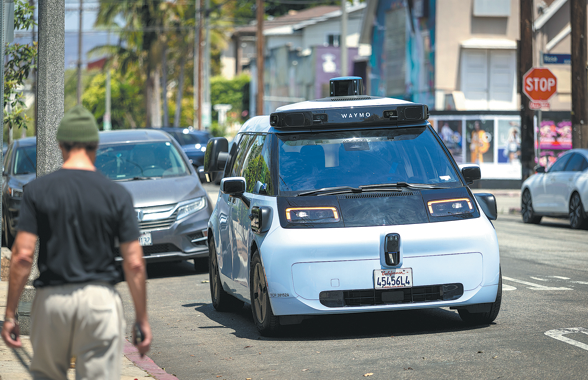
The US has made every effort to keep Chinese automakers out of American dealerships. EVs imported from China face steep tariffs, while new US rules restrict the use of Chinese technologies in connected vehicles. Yet this has not prevented Chinese companies from establishing a presence in one of the most promising segments of the American automotive industry — autonomous taxis.
As reported by China Daily, EV manufacturer Zeekr has supplied more than 3,000 vehicles to the United States since 2024 — specialized platforms designed specifically for robotaxis. More than 2,600 CM1e vehicles have already been delivered in 2026. Zeekr’s only known US partner is Waymo, which operates the vehicles as part of its autonomous ride-hailing service.
“Waymo does not need a conventional passenger car, but a specially designed robotaxi platform with a flat floor, low step-in height, sliding doors, a spacious cabin and the ability to withstand frequent operation,” Zhang Hong, a senior EV expert at the China Automobile Dealers Association, told China Daily.
According to him, China’s industrial supply chain allows vehicles to be adapted to the requirements of robotaxi operators more quickly.
The US market is therefore not receiving a standard Chinese electric vehicle, but a basic vehicle platform for autonomous driving systems. Waymo installs its own equipment, specialized computing systems and software. Final preparation of the vehicles takes place at the company’s facility in Mesa, Arizona.
“Tariffs may constrain demand for some vehicles among mass-market consumers, but they cannot block genuine demand from commercial fleets for proven, affordable and customizable platforms,” Zhang Hong told China Daily.
In his assessment, this model could become a sustainable form of cooperation between the two countries: China provides the manufacturing base and vehicle platform, while the US controls the software, data and intelligent systems. At the same time, the expert notes that Chinese manufacturers face the risk of remaining merely equipment suppliers, while more profitable areas — services, software and direct relationships with end customers — remain under the control of their American partners.
Читайте также: Strait of Hormuz Empties Out: Maritime Traffic Falls to a Weekly Low Amid Hostilities
