

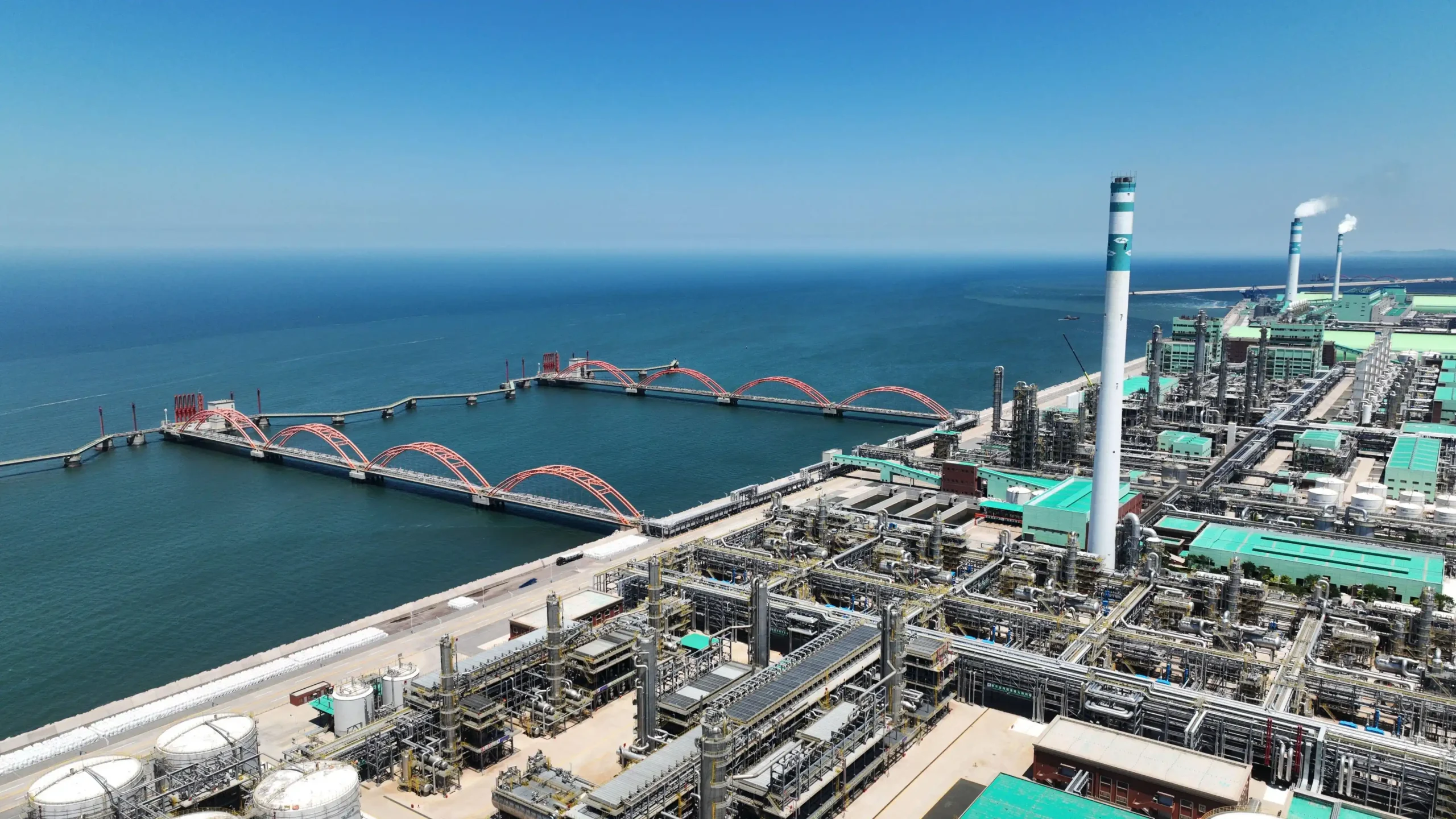
OFAC Sanctions Hengli’s Dalian Refinery
The U.S. Treasury Department’s Office of Foreign Assets Control sanctioned Hengli Petrochemical (Dalian) Refinery Co. Ltd. on April 24. The designation applies to the refining unit rather than the entire Hengli Group.
According to the U.S. Treasury Department, Hengli operates China’s second-largest independent “teapot” refinery and has become one of Iran’s largest customers for crude oil and petroleum products. Treasury alleges that the refinery purchased billions of dollars’ worth of Iranian petroleum.
Since 2023, the U.S.-sanctioned tankers BIG MAG, GALE and ARES delivered more than 5 million barrels of Iranian crude to Hengli, Treasury said. Some shipments were allegedly overseen by Sepehr Energy Jahan Nama Pars Company, the oil sales arm of Iran’s Armed Forces General Staff.
Hengli Denies Trading With Iran
The Wall Street Journal describes Hengli Group as a sprawling conglomerate with operations in refining, petrochemicals, textiles and shipbuilding. Company figures cited by the newspaper indicate that the group employs more than 300,000 people and generates over $100 billion in annual revenue.
Hengli’s Dalian refinery has capacity to process approximately 400,000 barrels per day, making it significantly larger than most independent Chinese refiners traditionally described as teapots.
Hengli has denied trading with Iran. The company said the U.S. allegations lacked a factual and legal basis and indicated that it would seek removal of the designation.
Beijing Orders Companies to Ignore the Sanctions
China has moved beyond diplomatic objections and taken direct legal action. On May 2, the Ministry of Commerce issued a blocking order prohibiting recognition, implementation or compliance with U.S. sanctions against Hengli and four other Chinese refineries.
China said the measures violated international law and basic norms of international relations.
The order creates conflicting legal obligations for banks, insurers, shipping companies and suppliers operating across both the Chinese and U.S. markets. Compliance with OFAC restrictions may expose a company to consequences in China, while following Beijing’s order could create sanctions risks in the United States.
What the Designation Means for U.S. Companies
Under OFAC rules, Hengli refinery property and interests in property located in the United States or controlled by U.S. persons must be blocked. U.S. individuals and companies are generally prohibited from providing goods, services or financing to the designated entity without authorization.
The restrictions also apply to entities owned 50% or more, directly or indirectly, by blocked persons. Treasury warns that sanctions violations may lead to civil or criminal penalties, while financial institutions and foreign counterparties can face exposure for facilitating prohibited transactions or sanctions evasion.
“Any person or vessel facilitating these flows risks exposure to U.S. sanctions,” Treasury Secretary Scott Bessent said.
In a separate risk alert for financial institutions, OFAC urged enhanced due diligence involving Chinese independent refineries. For U.S. banks, commodity traders, insurers and transportation companies, that means closer scrutiny of tanker ownership, vessel histories, ship-to-ship transfers, payment routes and cargo origin documentation.
The Hengli case is becoming a direct test of Washington’s ability to restrict Iranian oil revenue when Beijing has formally ordered Chinese companies not to comply with U.S. sanctions.
Read also: The Strait of Hormuz Again Becomes a Flashpoint Between the U.S. and Iran