

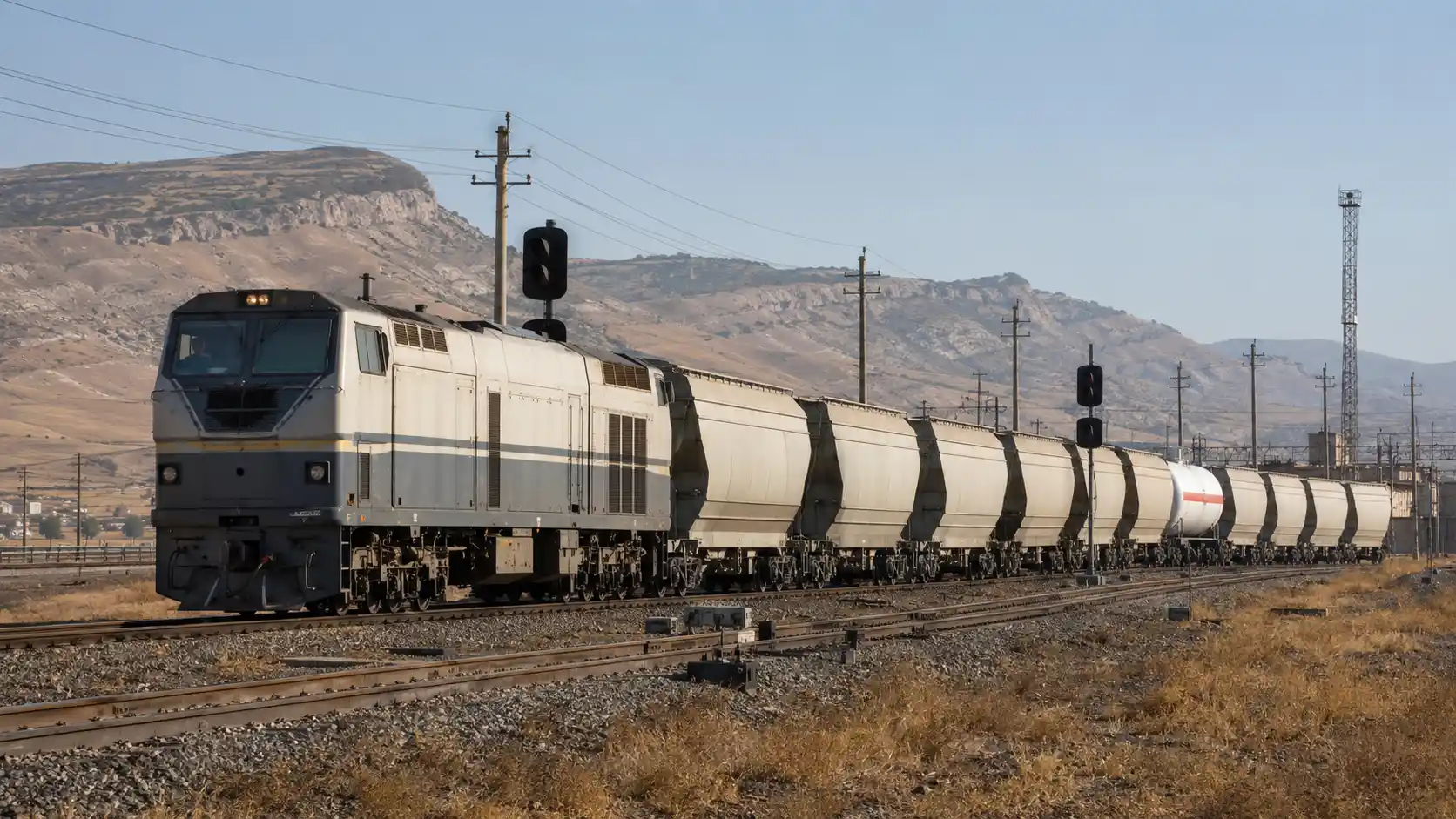
The ten-wagon train continued freight movements along the Russia–Azerbaijan–Georgia–Armenia rail route
Cargo Departed From Bilajari Station
Another shipment of Russian cargo was dispatched to Armenia in transit through Azerbaijan on August 22. The train consisted of nine wagons carrying 630 tonnes of wheat and one wagon loaded with 36 tonnes of propane.
According to the Azerbaijan State News Agency, the train departed from Bilajari station toward Boyuk Kesik. The latter is located near Azerbaijan’s border with Georgia, whose railway network provides the onward connection to Armenia.
The August 22 shipment therefore had a combined weight of 666 tonnes. Rail transport enables food, fuel and industrial materials to move in larger consignments without adding pressure to road border crossings.
Grain Remains the Main Transit Commodity
By the time of the August 22 dispatch, reported shipments from Russia to Armenia through Azerbaijan included:
- more than 49,000 tonnes of grain;
- approximately 9,000 tonnes of fertilizer;
- 1,136 tonnes of propane;
- 1,114 tonnes of coal;
- 133 tonnes of aluminum;
- 67 tonnes of timber.
Grain accounts for the largest share of the cargo flow, while the volume of fertilizer highlights the route’s importance to agricultural supply chains serving the Armenian market.
Operations continued after August 22. On August 24, AZERTAC reported that another seven wagons carrying 242 tonnes of propane had departed Bilajari for Boyuk Kesik.
Azerbaijan Is Also Exporting Fuel to Armenia
In addition to handling Russian transit cargo, Azerbaijan has begun exporting petroleum products directly to Armenia. By August 22, these supplies amounted to approximately 15,000 tonnes of diesel and about 5,000 tonnes of AI-92 and AI-95 gasoline.
The distinction between the two flows is important: Russian commodities move through Azerbaijan as transit cargo, while the gasoline and diesel are supplied by Azerbaijani exporters to Armenian buyers.
For Armenia, this trade channel could help diversify sources of fuel and raw materials. For Azerbaijan, it creates additional opportunities to utilize railway infrastructure and develop commercial relations across the South Caucasus.
Freight Operations Support Regional Rapprochement
The Armenian government has previously expressed its intention to expand bilateral trade and business contacts with Azerbaijan as the two countries work toward strengthening peaceful relations.
Regular freight movements provide a practical test for cooperation among railway operators, customs authorities and shippers. They may also create a commercial foundation for expanding the range and volume of goods transported along the corridor.
The route currently depends on the Georgian section and coordinated operations across three national railway systems. Further growth will require predictable tariffs, synchronized schedules, sufficient rolling stock and simpler transit procedures.
Read also: Why Kazakhstan and Georgia Are Becoming Key Hubs of Eurasia’s New Logistics Network