

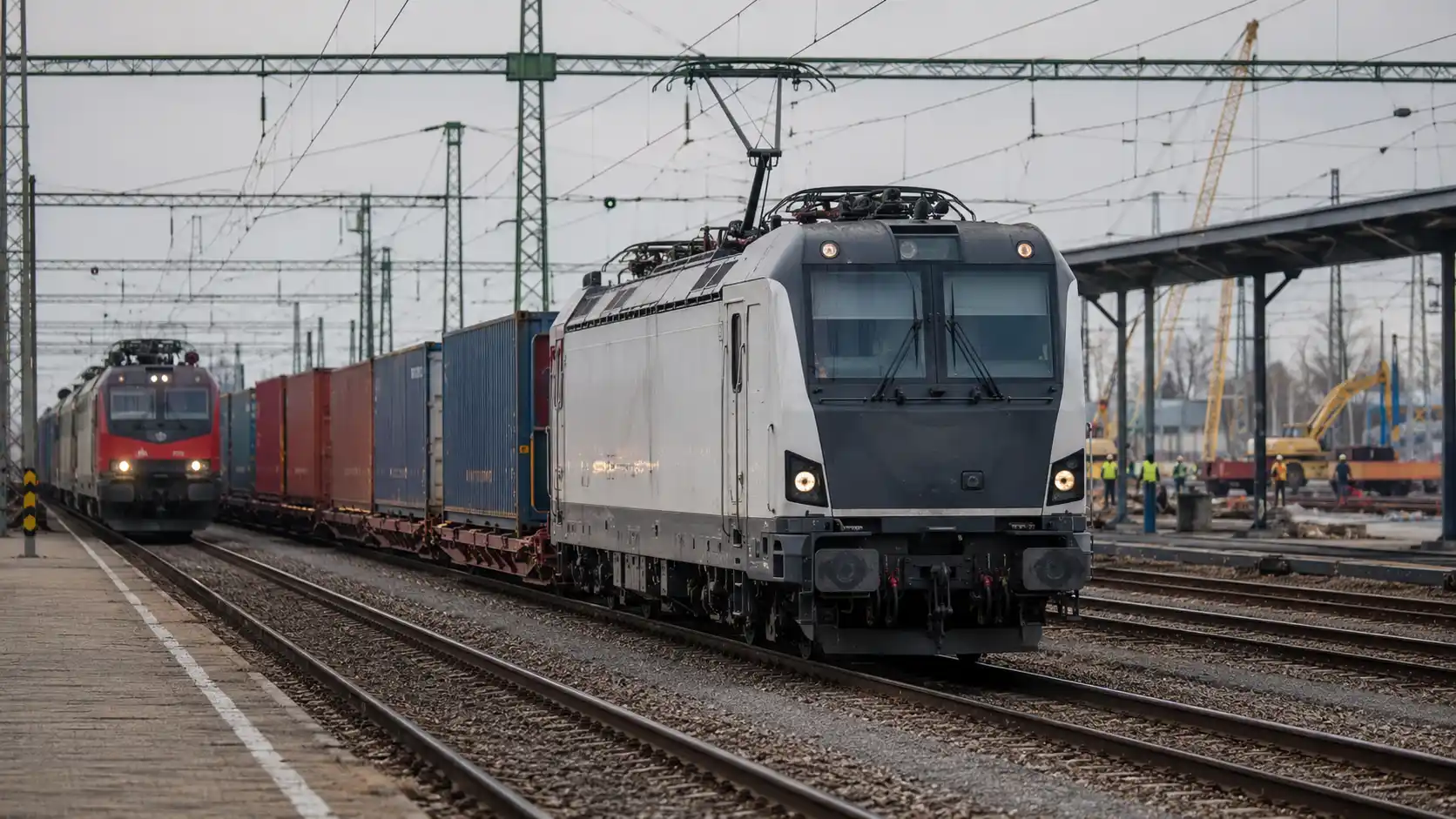
The €153 million project would modernise the Záhony–Chop and Eperjeske–Batovo border hubs handling rail freight between Ukraine and the European Union
Project Remains Under EIB Appraisal
The European Investment Bank is considering an approximately €74 million loan to modernise railway and transhipment infrastructure on the Hungary–Ukraine border. The project’s total cost is estimated at €153 million.
According to the EIB’s official project summary, the financing has not yet been approved. The operation remains under appraisal and negotiation, meaning that both the estimated cost and proposed loan amount may change before approval by the bank’s board and the signing of a financing agreement.
The work would be carried out on the Hungarian side of two railway border crossings:
- Záhony–Chop;
- Eperjeske–Batovo.
The project does not involve building a new railway. Investment would instead support the rehabilitation and capacity expansion of existing freight tracks and the installation or modernisation of cargo transhipment equipment.
Eastern European Corridor Could Handle More Freight
The Záhony and Eperjeske hubs connect Ukraine’s railway network with the European Union’s transport system. They are used to process freight trains, complete border and customs procedures and transfer cargo between wagons operating under different railway standards.
“The project is expected to increase freight and transhipment capacity at the Ukraine–EU border, accelerate border procedures and improve interoperability between the Ukrainian and European railway systems,” the EIB states
The upgrade is intended to remove some of the infrastructure bottlenecks on Hungary’s eastern border. Greater terminal capacity should allow more wagons to be processed, reduce the time trains spend at the border and improve the predictability of deliveries between Ukraine and Central and Eastern Europe.
For shippers, the final benefit will depend on more than the condition of the tracks. Transhipment equipment, locomotive and staff availability, customs controls and coordination between operators on both sides of the border will continue to affect journey times.
Part of the EU–Ukraine Solidarity Lanes
The investment forms part of the EU–Ukraine Solidarity Lanes, launched in May 2022 to keep Ukrainian imports and exports moving by rail, road and inland waterways.
According to the European Commission, Ukraine exported approximately 217 million tonnes of goods through these routes between May 2022 and March 2026. In March 2026, the Solidarity Lanes handled around 70% of Ukrainian imports, 60% of non-agricultural exports and 20% of grain, oilseed and related-product exports.
The Hungarian border project is therefore part of a wider programme to remove bottlenecks along overland routes between Ukraine and the EU. It is also expected to support the long-term integration of Ukraine’s transport system into the European network.
Benefits for Ukraine and Hungary
For Ukraine, additional border capacity would provide more options for exporting industrial and agricultural goods and importing fuel, equipment, components and other essential products.
The improvement is particularly relevant when maritime routes face disruption. Additional railway capacity cannot fully replace Ukraine’s seaports, but it can distribute freight across several corridors and reduce reliance on individual border hubs.
For Hungary, the project is expected to increase the use of railway infrastructure in the Northern Great Plain region, improve freight-service quality and reinforce the country’s position as a transit link between Ukraine and the EU single market.
Moving more freight by rail also supports EU transport and climate objectives. The EIB expects the investment to contribute to emissions reduction and pollution prevention, although environmental and social compliance will still be examined during the appraisal process.
Implementation Schedule Has Not Been Announced
The EIB has not provided a date for its final financing decision, the start of construction or the commissioning of the upgraded infrastructure. The project must first complete financial, environmental, social and procurement assessments.
If approved, the €74 million loan would cover approximately 48% of the project’s preliminary cost. The EIB summary does not provide a detailed breakdown of financing for the remaining amount.
The upgrade will not eliminate the technical differences between the Ukrainian and EU railway systems. However, it could accelerate operations along one of Eastern Europe’s most important overland freight routes, increase available capacity, reduce wagon delays and strengthen the resilience of Ukraine–EU supply chains.
Read also: Porubne–Siret Border Crossing to Add Four Truck Lanes