

Engineering Infrastructure Is Complete
The first phase of the freight terminal modernisation at the Porubne–Siret international road border crossing has been completed, according to Ukraine’s Ministry for Recovery, Infrastructure and Transport.
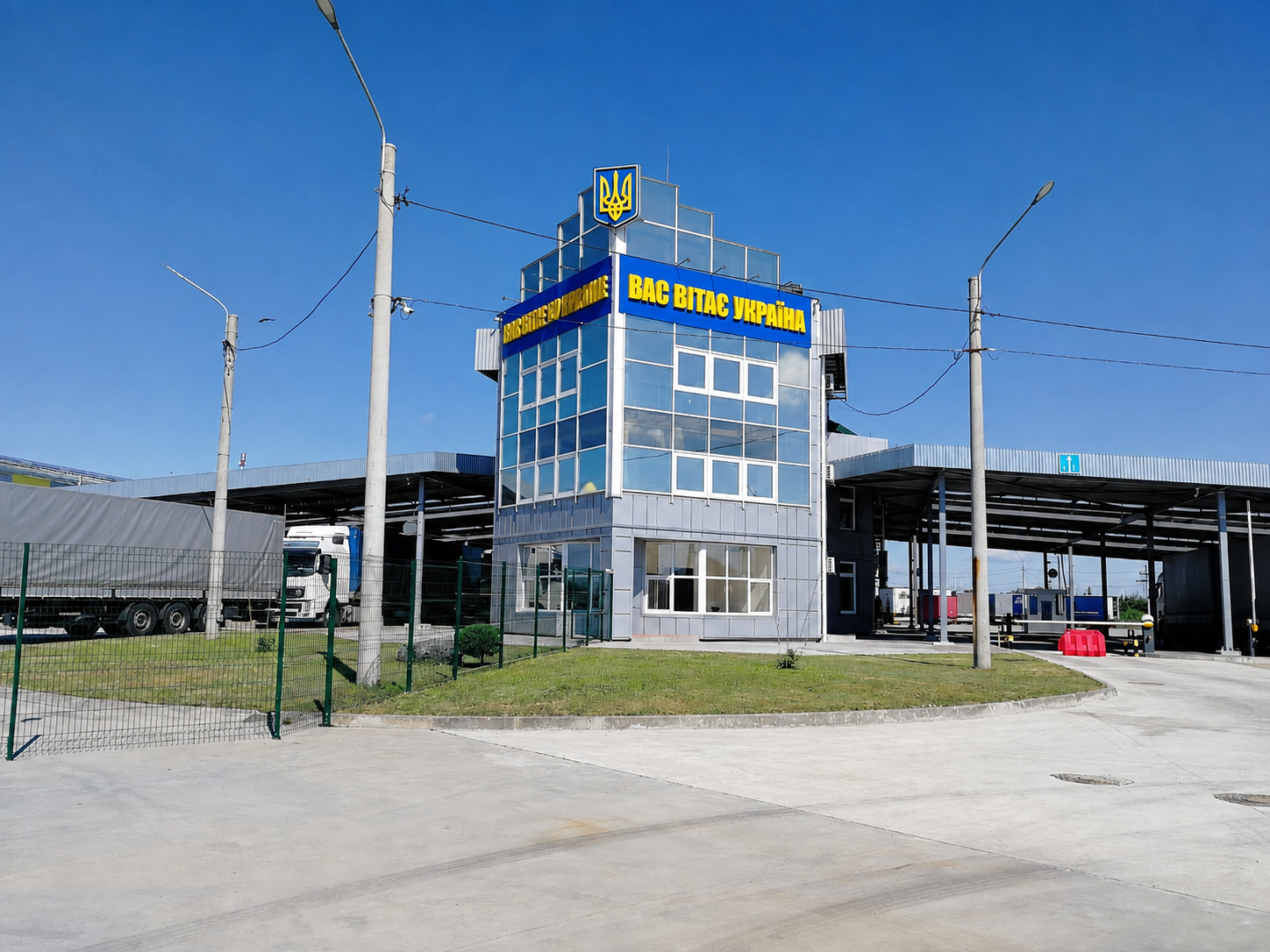
The completed works created the engineering infrastructure required for the terminal’s further expansion. Contractors installed cement-concrete pavement, drainage and wastewater treatment systems and a pavilion for the State Border Guard Service.
A stationary radiation-monitoring system, external lighting and other supporting infrastructure were also installed.
Completion of the first phase does not mean that the expanded terminal is fully operational. Its engineering foundation is ready, while technological equipment and the remaining facilities will be delivered during subsequent project stages.
Four Additional Truck Lanes Are Planned
The project includes the construction of four additional lanes for freight vehicles entering Ukraine. The terminal will also receive modern equipment for customs and border-control procedures.
A dedicated truck waiting area is planned to organise vehicle movements before inspection and reduce pressure on approach roads.
The ministry has not announced the final completion date or the terminal’s future design capacity. It is therefore not yet possible to quantify how much waiting and processing times will decrease.
Expansion Is Also Required on the Romanian Side
Ukraine’s First Deputy Minister for Recovery, Infrastructure and Transport, Serhii Derkach, said the crossing must be expanded on both sides of the border.
Additional capacity on the Ukrainian side alone will not deliver the full benefit if infrastructure at Romania’s Siret crossing remains unchanged. The result will depend on coordinated construction, traffic management and customs and border procedures between Ukraine and Romania.
Porubne–Siret is one of the principal road crossings on the Ukraine–Romania border. It handles international freight routes connecting Ukraine with Romania and the wider European Union.
EU and Ukraine Share the Cost Equally
The modernisation is being implemented under the Connecting Europe Facility, one of the European Union’s main instruments for developing the Trans-European Transport Network.
An EU grant covers 50% of the project, with the remaining 50% financed by Ukraine’s state budget. The works are coordinated by the infrastructure ministry and the State Agency for Restoration and Infrastructure Development of Ukraine.
The European Commission and the European Climate, Infrastructure and Environment Executive Agency support the project. The crossing is also considered an important node on the European E85 route and in overland logistics between Ukraine and the EU.
Upgrade Is Expected to Improve Freight Flows
Once all project phases are completed, Porubne–Siret should be able to process more freight vehicles. Additional lanes and modern inspection equipment are expected to accelerate clearance and make international truck journeys more predictable.
The final result will depend on more than the number of lanes. Border-crossing times are also affected by customs and border-service performance, bilateral data exchange, staff availability and the capacity of approach roads.
The completed first phase is therefore an important construction milestone, but the full increase in capacity will only be achieved after the terminal is equipped and the Romanian side is expanded in coordination with Ukraine.
Read also: Ukraine Upgrades Four Border Crossings with Moldova
