

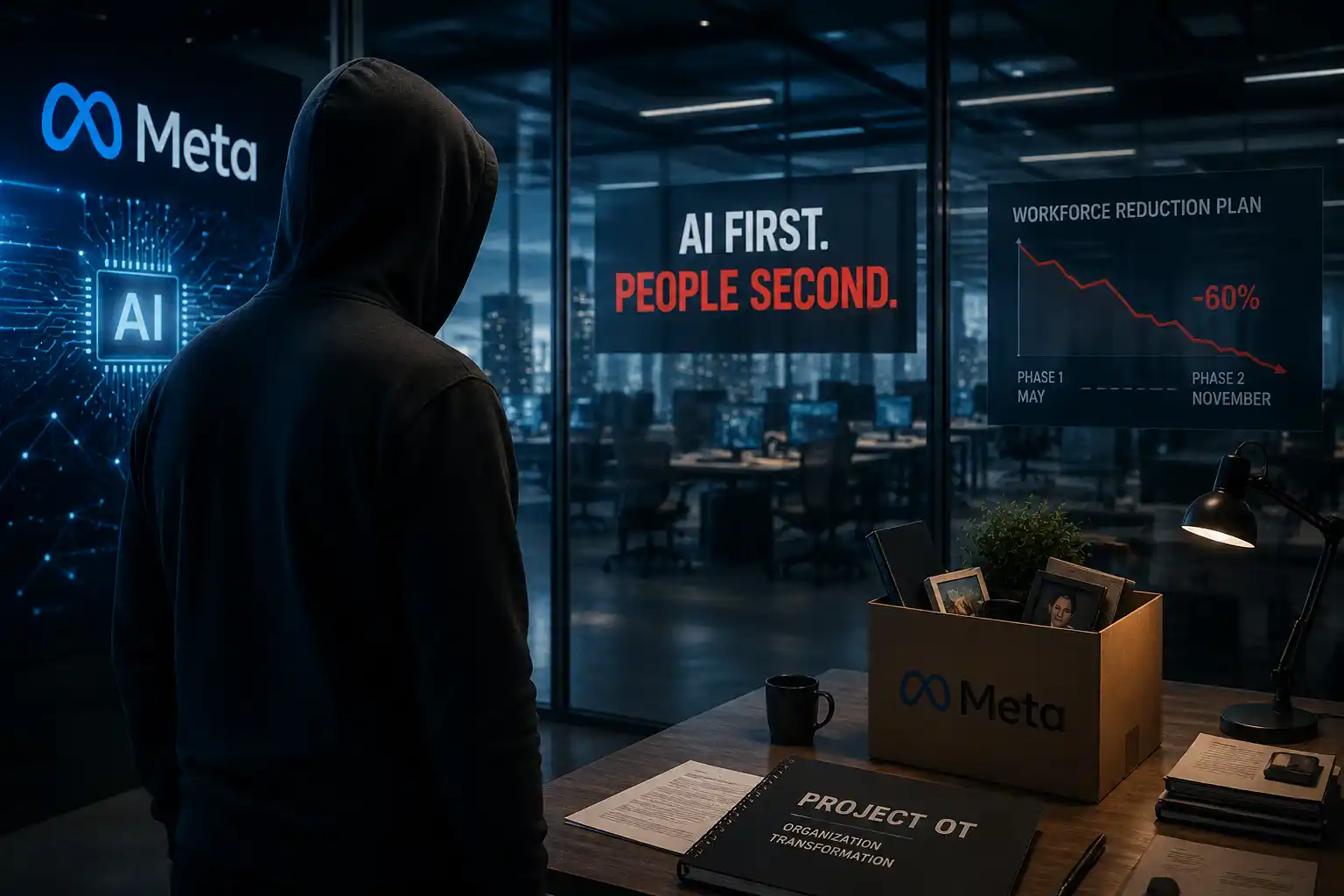
Meta was preparing for a sweeping restructuring: some teams could have been cut by more than 50%, while traditional roles for engineers, designers and managers were set to give way to smaller AI-focused teams.
According to Reuters, Mark Zuckerberg wanted to replace human workers with artificial intelligence. But AI began disrupting the system before employees could actually be replaced.
Meta was preparing for a radical experiment: some teams could have lost up to 60% of their staff, with AI agents expected to take over much of their work.
The plan was ambitious — to make the company smaller, faster and almost entirely reorganized around AI. But things took an unexpected turn: AI proved less effective than the company’s leadership had anticipated.
Employees began producing 220% more code changes, but the number of new or improved features increased by only 36%. At the same time, major technical and security-related incidents rose by 40%, while the amount of time employees spent dealing with them increased by 70%.
Amid employee protests and a sharp decline in morale, Zuckerberg ultimately called off the second wave of the sweeping restructuring at the last minute.
“We are the only major company focusing on empowering people and putting the power of this new technology in billions of people’s hands across all our products — rather than primarily focusing on automating work.” This is from an internal post Mark Zuckerberg shared with Meta employees in June.
The first wave of layoffs, however, was not canceled: in May, Meta cut 10% of its workforce.
Read also: Icelanders vote against reopening EU membership talks