

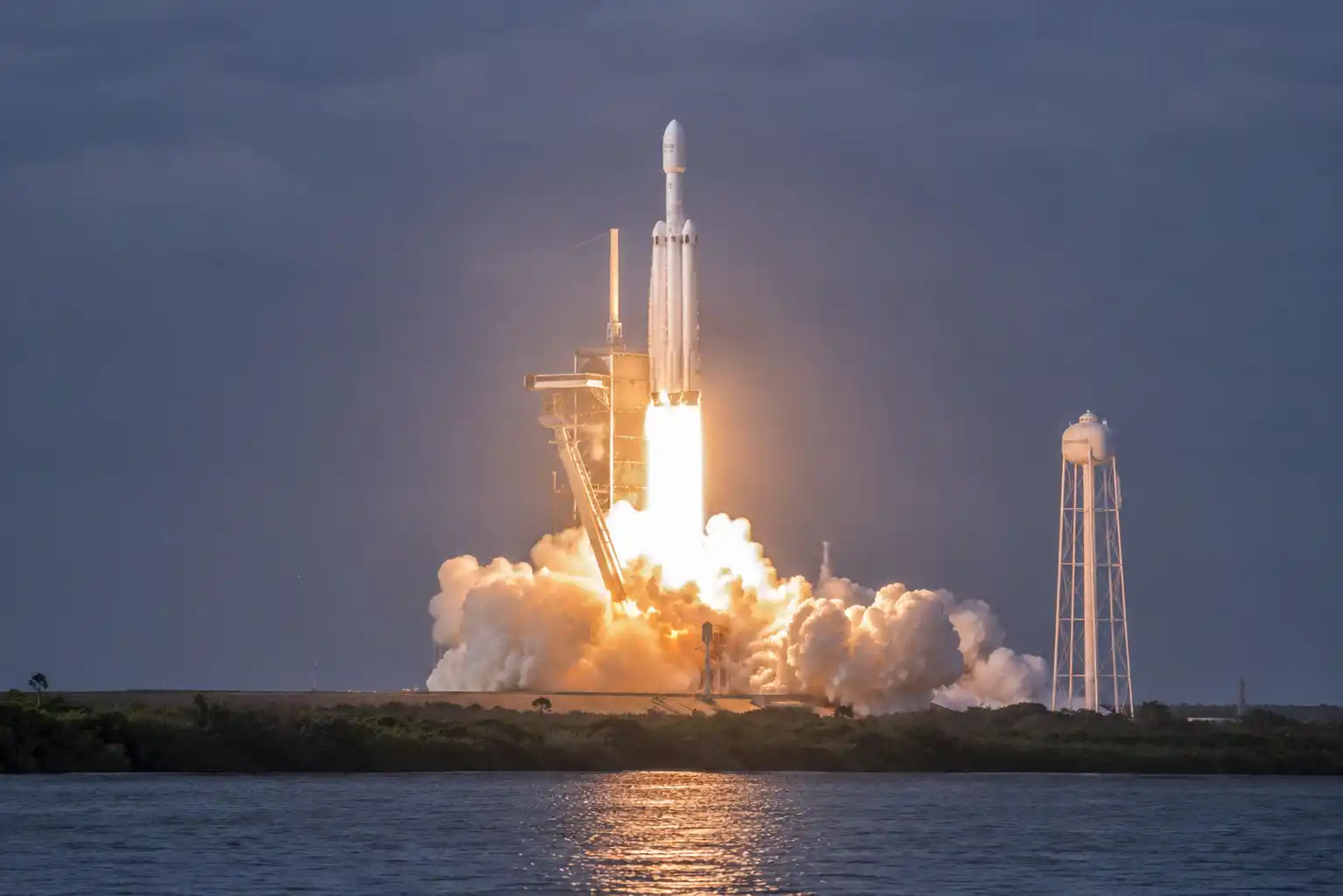
A new NASA space observatory has launched aboard a Falcon Heavy rocket and will soon begin creating an unprecedentedly detailed map of the Universe. The telescope will search for exoplanets and study the mysterious dark matter and dark energy.
According to Reuters, NASA has launched the Nancy Grace Roman Space Telescope, whose main mission is to help scientists better understand the nature of dark matter and dark energy, while also searching for thousands of new exoplanets. The observatory lifted off from Cape Canaveral, Florida, aboard a SpaceX Falcon Heavy rocket.
Roman has a rather unusual history. The spacecraft was originally developed as part of a US spy satellite program, but the project proved too costly and was eventually canceled. In 2012, the National Reconnaissance Office transferred the equipment to NASA, which repurposed it entirely for space science.
The telescope will now head toward Lagrange Point 2 (L2), located approximately 1.6 million km from Earth. Over the next 90 days, scientists will prepare the observatory for its scientific mission, with the first high-resolution images expected around the winter holidays.
Roman’s key advantage is its exceptionally wide field of view. According to scientists, the telescope could survey the entire Milky Way in roughly one month, while Hubble would need about a century to carry out a comparable survey.
During its primary mission, Roman is expected to create a three-dimensional map covering more than 2 billion galaxies. At the same time, the observatory will search for planets beyond our Solar System and collect data that could bring scientists closer to answering one of modern cosmology’s biggest questions: what is the Universe really made of, and why is its expansion accelerating?