

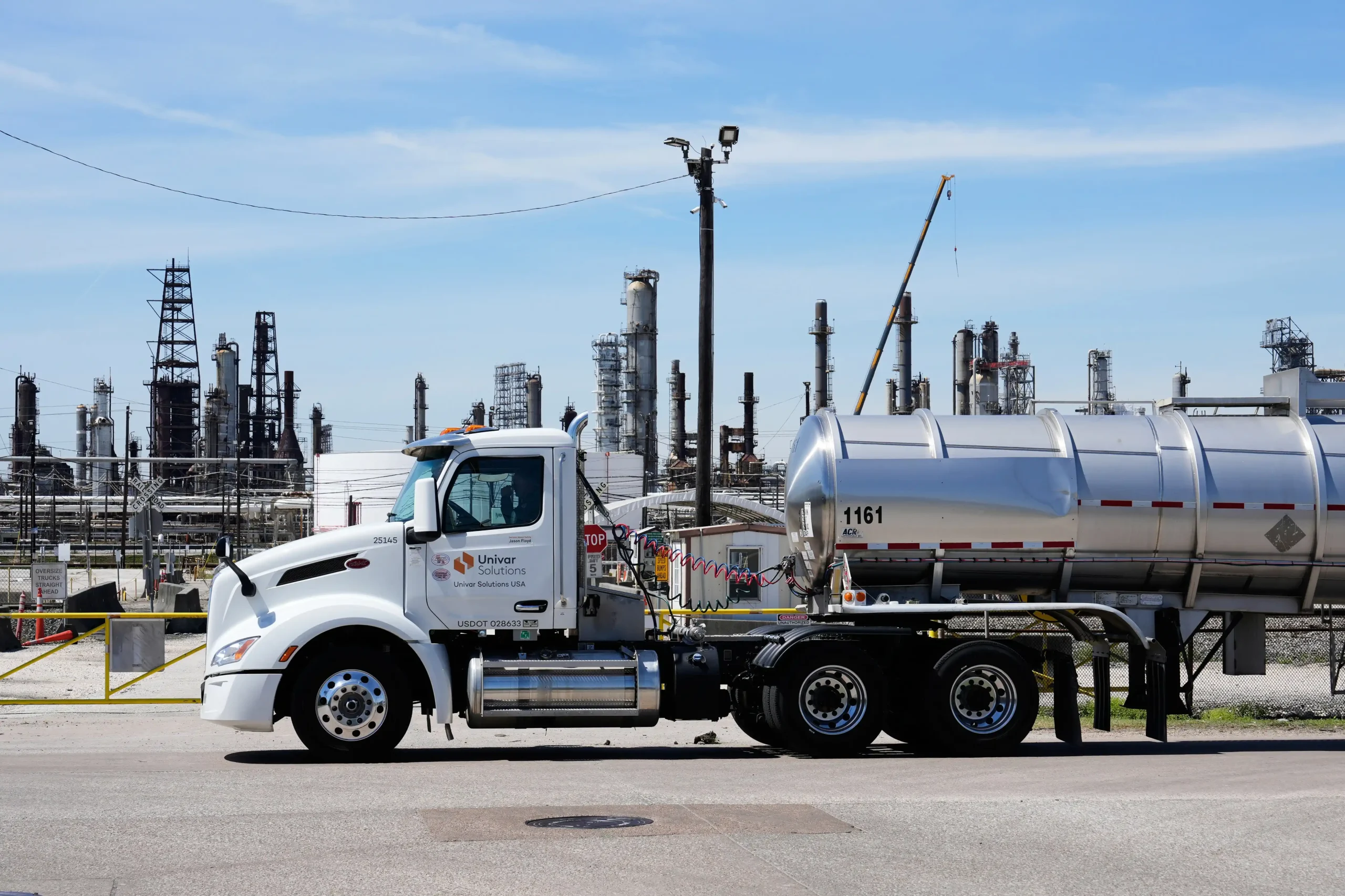
Record wholesale diesel prices are increasing cost pressure on US trucking, agriculture and domestic supply chains
Diesel reaches its highest level in two decades of assessments
US Gulf Coast ultra-low-sulfur diesel prices have climbed to an all-time high amid constrained global fuel supplies, geopolitical tensions and record American exports.
Platts, part of S&P Global Energy, assessed US Gulf Coast Colonial Pipeline ULSD at $4.6973 per gallon on September 1. The price increased by 27.17 cents in one session and reached its highest level since the assessment was launched in May 2006.
Data from the US Energy Information Administration, published by the Federal Reserve Bank of St. Louis, showed a comparable but slightly different figure of $4.734 per gallon, up from $4.488 on the previous trading day. The difference reflects variations in assessment methodology and timing.
“The screens are going nuts,” a broker told S&P Global Energy
Record exports compete with domestic demand
One of the main drivers has been the rapid expansion of US fuel exports. American diesel and gasoil shipments reached a record 54.2 million barrels in August, exceeding the previous monthly high set in July by 7.6 million barrels.
Strong international demand has reinforced the Gulf Coast’s role as a major source of replacement diesel for the global market. At the same time, outbound shipments are competing with demand from US transport operators, farmers and fuel distributors.
US ULSD inventories declined for a fourth consecutive week to 93.59 million barrels as of August 21. Domestic distillate demand remained within the normal seasonal range, while the agricultural harvest period created additional consumption from tractors, harvesters and other diesel-powered machinery.
Suppliers are also moving fuel toward New York and other northeastern markets to prepare inventories for the winter heating season.
Global disruptions tighten the market
The price surge reflects supply problems across several regions. Disruption at Middle Eastern refineries and uncertainty surrounding cargo movements through the Strait of Hormuz have reduced the availability of refined products on international markets.
Russia’s decision to extend restrictions on diesel, gasoil and marine-fuel exports through September 30 has added further pressure. Russia introduced the measure amid domestic fuel-market difficulties and damage to refining infrastructure resulting from its continuing aggression against Ukraine and subsequent Ukrainian strikes.
The Platts margin for prompt Gulf Coast pipeline ULSD against front-month WTI crude reached a record $98.153 per barrel on September 1. A separate US diesel crack indicator briefly exceeded $100 per barrel in August, demonstrating that the problem extends beyond refinery incentives and increasingly concerns the availability of replacement fuel in the global market.
Freight costs face additional pressure
Wholesale price movements do not immediately translate into an identical increase at truck stops, but sustained gains generally raise fuel costs for road carriers. Long-haul operators, small fleets and independent owner-drivers are particularly exposed because they have less capacity to absorb sudden increases.
Fuel surcharges allow some expenses to be passed to shippers, although these mechanisms are often adjusted with a delay. Carriers may therefore face temporary margin pressure, while cargo owners could see higher spot rates and distribution costs.
The consequences extend beyond trucking. Diesel powers agricultural equipment, construction machinery, some railway locomotives and backup generators. Persistently elevated prices could therefore affect the production, storage and delivery costs of food, building materials and manufactured goods.
Market outlook remains uncertain
The next phase will depend on US export volumes, domestic inventories, refinery operations and security conditions in the Middle East. An easing of geopolitical tensions could reduce the risk premium, but seasonal demand and the need to rebuild stocks may continue supporting prices.
Logistics operators may need to review fuel surcharges more frequently, shorten budgeting periods and prepare for further transport-cost volatility. Even if wholesale prices stabilize, the impact of the record increase could remain visible in freight rates for some time.
Read also: Hormuz Traffic Falls to 7 Vessels as Iran and Oman Negotiate Shipping Corridor