

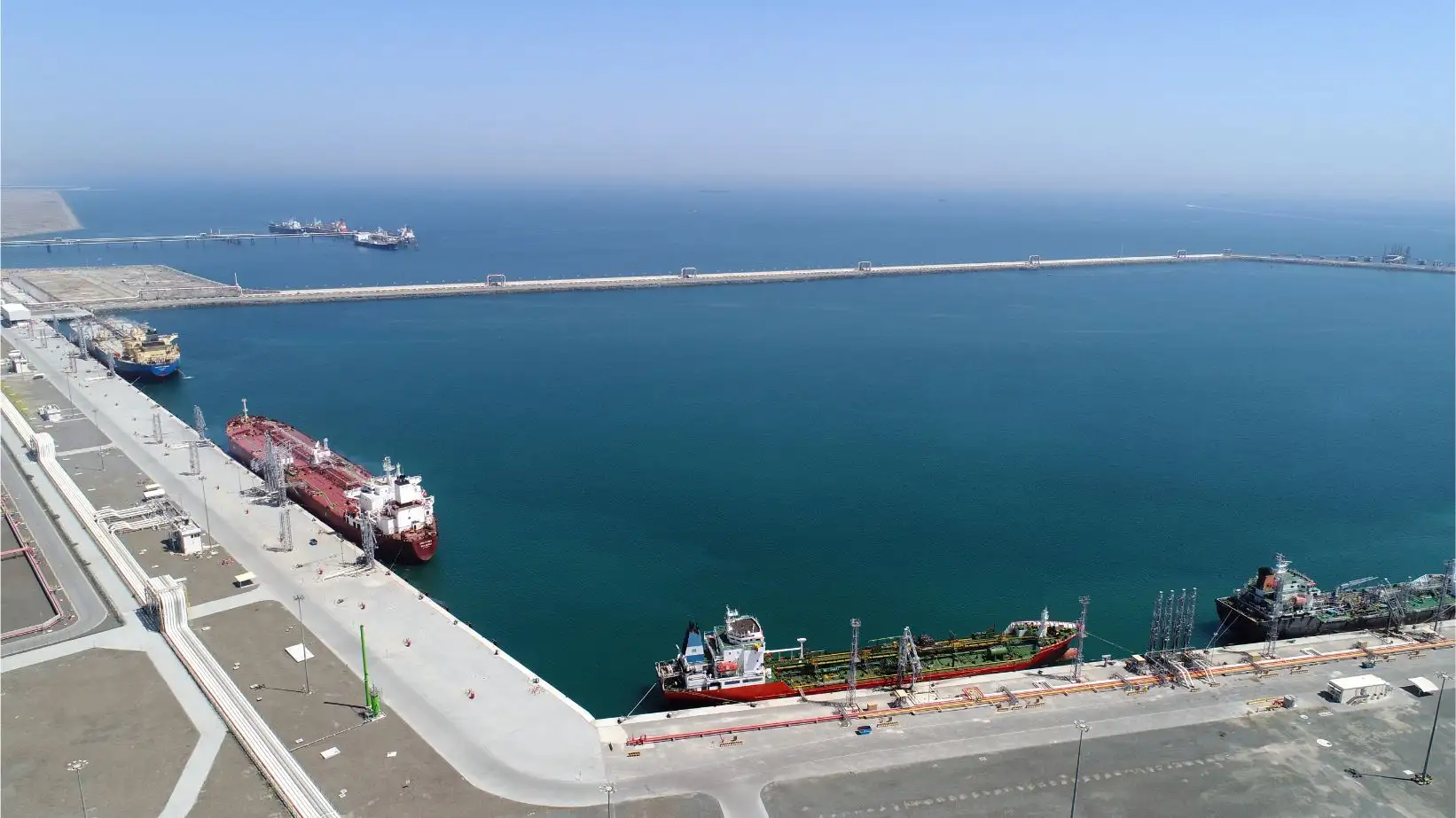
Saudi Arabia and the UAE are accelerating pipeline, port and inland-corridor projects to redirect energy and container cargo flows
Hormuz Crisis Changes Investment Priorities
Gulf countries are accelerating the development of transport and energy infrastructure capable of reducing the region’s dependence on the Strait of Hormuz. Investment is being directed towards oil pipelines, ports on the Red Sea and Gulf of Oman, container terminals, inland depots and railway corridors.
Hormuz remains one of the world’s most important trade chokepoints. Before the disruption, approximately 20% of global oil flows passed through the waterway. Restricted navigation demonstrated that dependence on a single route creates risks not only for energy exports but also for container shipping, industrial supply and the delivery of imported goods.
According to Reuters, some cargo has already been redirected through Saudi ports on the Red Sea and facilities on the UAE’s eastern coast. Existing alternatives, however, have considerably less capacity than the volumes traditionally transported through Hormuz.
Saudi Arabia Strengthens Its Red Sea Gateway
Saudi Arabia’s main bypass route is the East–West Pipeline, which connects oil fields and processing facilities in the east of the country with terminals on the Red Sea coast.
The infrastructure allows some crude exports to reach international markets without passing through the Strait of Hormuz. Saudi authorities and Saudi Aramco are considering additional capacity, although the final parameters and schedule of any expansion have not been publicly approved.
The growing strategic role of the pipeline is increasing the importance of Jeddah, Yanbu and other western ports. They can handle additional energy and container flows, but large-scale cargo diversion will also require investment in terminals, warehouses, roads and railway access.
Saudi infrastructure could eventually support neighbouring exporters. Kuwait is discussing the potential use and expansion of pipeline systems in Saudi Arabia and the UAE to accommodate part of its oil shipments.
UAE Doubles Export Capacity Through Fujairah
The United Arab Emirates already operates the Habshan–Fujairah Pipeline, also known as ADCOP. It carries oil from Abu Dhabi directly to Fujairah on the Gulf of Oman, avoiding the Strait of Hormuz.
The existing system can transport approximately 1.8 million barrels per day. The UAE is also accelerating the West–East Pipeline project, which is expected to increase the country’s total bypass capacity through Fujairah. Commercial operation is not expected before 2027 and will depend on the completion of both the pipeline and associated port infrastructure.
DP World plans to develop two container terminals in Fujairah while also working on inland container depots. This indicates that the UAE’s strategy extends beyond crude oil to containerised and general cargo.
The projects should not yet be treated as a complete replacement for Hormuz. They provide a backup system for part of the region’s trade but cannot accommodate all crude oil, refined products, LNG and container volumes currently dependent on the strait.
Qatar and Kuwait Remain More Exposed
The geographical options available to individual Gulf countries differ considerably. Saudi Arabia has direct access to the Red Sea, the UAE has infrastructure on the Gulf of Oman, and Oman operates ports located outside the Strait of Hormuz.
Qatar, Kuwait and Bahrain do not have comparable direct routes capable of bypassing the waterway on a large scale. Qatar is particularly exposed because much of its LNG export system depends on secure navigation out of the Persian Gulf.
Building overland pipelines through neighbouring countries would require major investment, long-term interstate agreements and security guarantees. Such routes cannot therefore be introduced immediately, even if funding is available.
Railways Could Complement the Port Network
The region is also considering new land corridors alongside energy pipelines. Türkiye and Saudi Arabia have discussed a railway connection through Jordan and Syria. Turkish officials have suggested that the project could be developed within three or four years, but no final route, cost or financing structure has been approved.
Iraq is seeking to increase exports through Türkiye’s Ceyhan terminal and is considering routes to Syria’s Baniyas port and Jordan’s Aqaba. These plans would require new or restored pipelines, railway sections and road infrastructure.
K2Cargo.News previously reported that transit container traffic through Aqaba increased by 155.1% during the first half of 2026. Much of the growth was generated by Iraq-bound cargo transported approximately 760 kilometres by road from the Jordanian port.
Alternative Routes Are Becoming a Permanent Strategy
Gulf governments are not treating the new infrastructure solely as a temporary response to the current disruption. Ports, pipelines and overland corridors are intended to form a long-term backup network capable of supporting trade during future interruptions.
For cargo owners, this could create more routing options but also make logistics planning more complex. Diversion through the Red Sea, Fujairah, Aqaba or Ceyhan adds inland transport, additional handling operations and new customs procedures.
The Strait of Hormuz will remain strategically important even after the planned projects are completed. Its location, established port network and the scale of Gulf exports make full replacement impractical. Regional investment is therefore aimed primarily at reducing concentrated risk and preserving a minimum level of supply-chain continuity.
Read also: Aqaba Transit Cargo Jumps 155% Amid Hormuz Disruption