

As global attention remains focused on wars, tariffs, and the battle among the world’s largest economies for control of supply chains, a development in South Texas is quietly reshaping the future of North American trade.
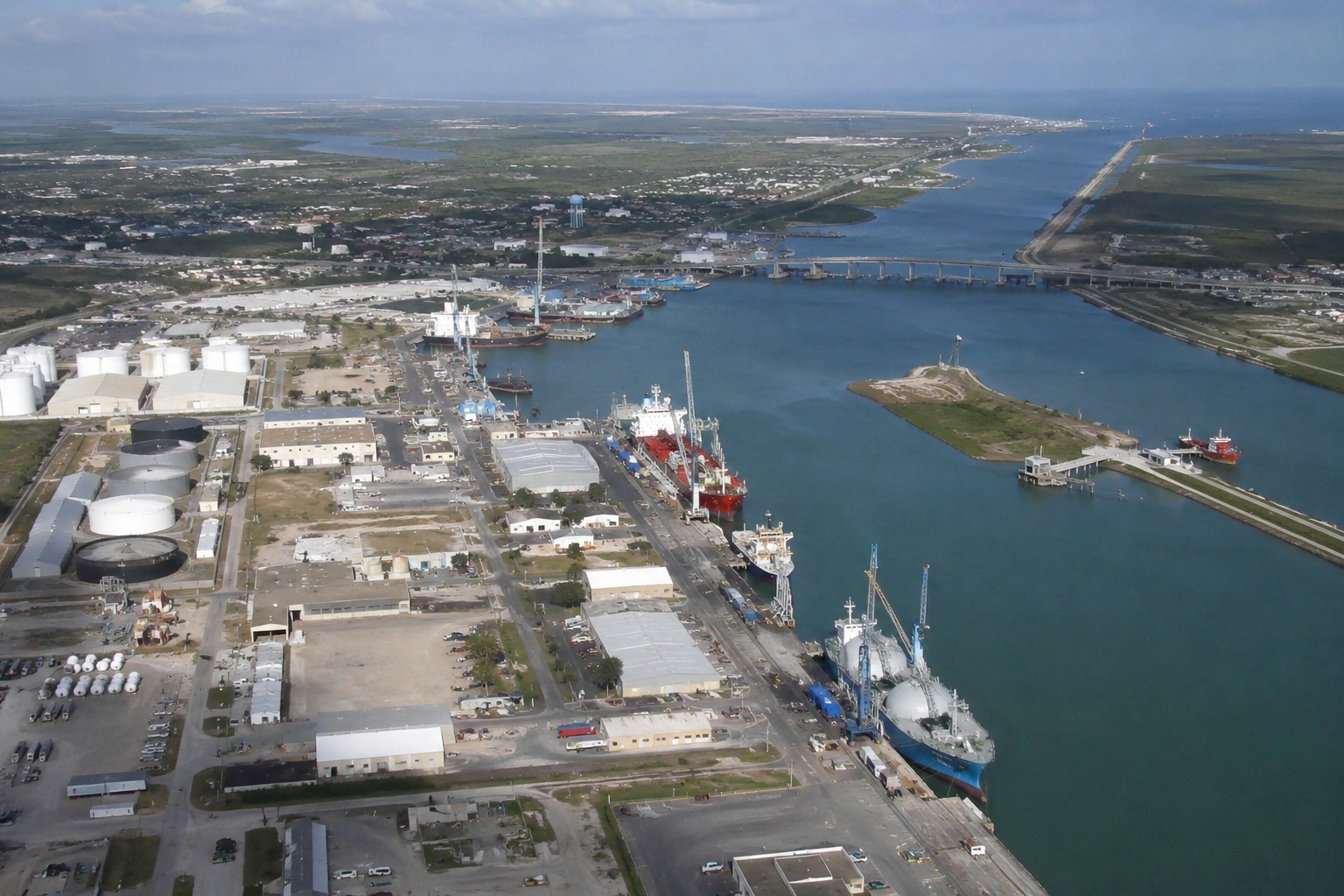
The Port of Brownsville has completed its largest navigation channel modernization project in decades, investing nearly $295 million to transform one of the region’s most strategically important maritime gateways. At first glance, it may appear to be another infrastructure project. In reality, it represents a much larger shift in the way North American logistics will operate in the years ahead.
Every additional foot of channel depth allows vessels to carry more cargo, reduces the number of voyages required to move the same volume of freight, lowers transportation costs, and strengthens export competitiveness. This is how modern supply chains are being rebuilt—not through headlines, but through engineering.
A Port Connecting Two Economies
Brownsville occupies a unique position on the map.
It is the only deepwater seaport located directly on the U.S.-Mexico border. Its 17-mile ship channel serves as a critical gateway for steel, refined petroleum products, industrial equipment, construction materials, and a broad range of project cargo. More than 80 percent of the port’s international trade is linked to Mexico.
With the completion of the expansion project, that gateway has become significantly more capable.
The main navigation channel has been deepened from 42 feet to 52 feet, while entrance and turning basin channels have increased from 44 feet to 54 feet. For the maritime industry, those numbers translate into something far more meaningful: larger vessels can now arrive fully loaded rather than being forced to reduce cargo because of draft restrictions.
Port officials describe the project as transformational. The deeper channel opens the door to international shipping services that previously bypassed Brownsville because of draft limitations.
But this story is about much more than one port.
It is about the continued evolution of one of the world’s most important manufacturing and trade corridors.
Manufacturing Is Following Logistics
Almost simultaneously with the completion of the Brownsville project, new investments are emerging on both sides of the border.
U.S.-based specialty chemical distributor Palmer Holland has officially established its first operations in Mexico.
The company selected Querétaro, one of the country’s fastest-growing industrial hubs.
Rather than opening a simple sales office, Palmer Holland has established a legal entity, launched warehouse operations, built a local commercial team, and expanded Spanish-language customer support across the country.
Investments of this scale are rarely driven by short-term market conditions.
Instead, they reflect growing confidence that cross-border manufacturing and supply chains between the United States and Mexico will continue expanding for years to come.
The Next Chapter: The Battery Economy
Perhaps even more significant is a project currently under evaluation in Northeast Texas.
At TexAmericas Center, developers are considering the construction of a $500 million manufacturing facility that would produce lithium iron phosphate (LFP) cathode active materials for next-generation batteries.
The project is being advanced through a partnership between EnergyX and Wildcat Discovery Technologies.
If approved, the facility would initially produce approximately 15,000 metric tons of cathode material annually, with additional expansion planned in future phases.
This is far more than another industrial plant.
It represents another critical link in North America’s emerging battery supply chain, supporting electric vehicles, grid-scale energy storage systems, unmanned technologies, and advanced defense applications.
Its proposed location—adjacent to EnergyX’s Project Lonestar lithium operation and the U.S. Army’s Red River Army Depot—highlights a broader industrial strategy: bringing the production of critical energy materials closer to home while strengthening domestic manufacturing resilience.
Redrawing the Logistics Map of North America
Viewed individually, each of these announcements may appear to be an isolated regional development.
Together, however, they tell a much larger story.
- A deeper maritime gateway.
- New warehousing and distribution infrastructure.
- Domestic battery material manufacturing.
- Expanded rail and industrial logistics capacity.
These are not independent investments. They are pieces of a broader strategy through which North America is reshaping its supply chains, reducing dependence on distant manufacturing centers while strengthening economic integration between the United States and Mexico.
For the global logistics industry, this represents the emergence of another powerful freight corridor—one built not only on geography, but on long-term investments in infrastructure, manufacturing, and supply chain resilience.
Projects like these rarely dominate international headlines. Yet history often shows that it is infrastructure—not politics—that quietly determines how global trade, maritime transportation, and supply chains will function for decades to come.
