

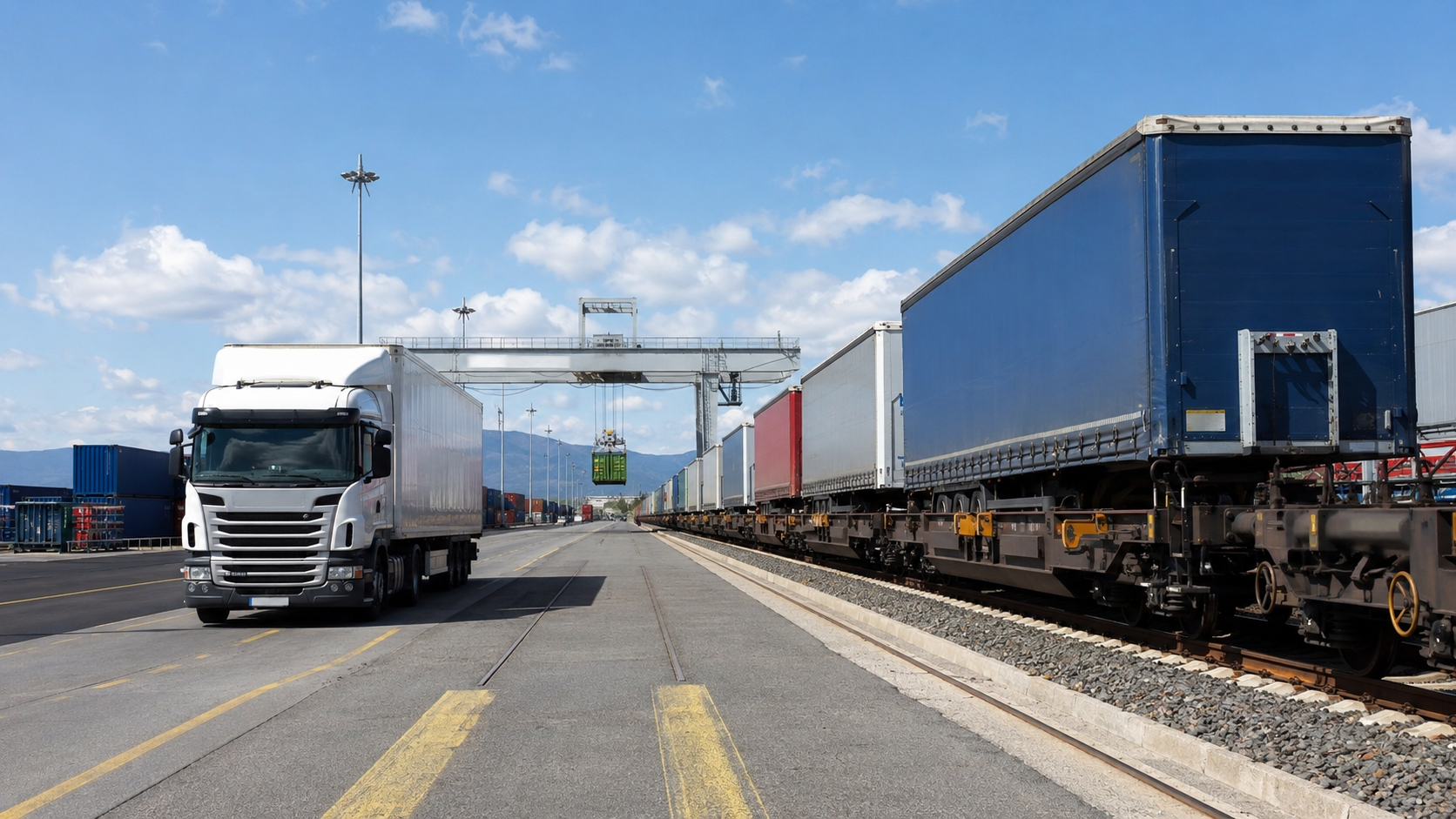
Combined transport is gaining new strategic importance in Europe as the road freight sector faces a growing shortage of truck drivers. Fuel pressure, rising operating costs, electrification and digitalisation are all major challenges for carriers, but the lack of people behind the wheel remains one of the most urgent problems.
According to industry analysis cited by RailFreight.com, up to 20% of truck drivers may retire by 2030. Replacing them will be difficult because younger workers are not entering the profession fast enough.
This creates a major problem for road freight, but also an opportunity for rail. If more long-distance freight is moved by train, while trucks handle only short first- and last-mile legs, logistics companies can reduce their dependence on long-haul drivers.
As K2Cargo News previously reported in Can the Middle Corridor Become Eurasia’s Main Alternative?, modern logistics is increasingly based on corridor thinking, multimodal links and the ability to combine different modes of transport. Europe’s driver shortage may accelerate the same shift inside the continent.
Driver Shortage Becomes Structural
The shortage of truck drivers is no longer a temporary post-crisis problem.
IRU describes it as a long-term structural issue. The organisation estimates that more than 3.6 million truck driver positions remain unfilled globally. In Europe, the shortage is especially severe, with hundreds of thousands of vacancies across the sector.
The age profile is one of the biggest concerns. IRU data shows that nearly a third of truck drivers are over 55, while drivers under 25 represent only a small share of the workforce. This means the problem may worsen as older drivers retire.
The job itself remains difficult to sell to young people. Long periods away from home, irregular schedules, pressure from customers, strict enforcement, lack of safe parking and high responsibility make long-haul trucking unattractive for many potential recruits.
Higher Pay Is Not Enough
In theory, higher wages should attract new workers.
In practice, the situation is more complicated. Better pay helps, but it does not fully compensate for weeks away from home, night driving, time pressure and poor roadside conditions. For younger workers, work-life balance often matters as much as salary.
This is where combined transport becomes relevant. If the long-distance part of the route is moved by rail, truck drivers can focus on shorter regional movements. That means more drivers can return home daily or more frequently, which makes the profession more attractive.
The model changes the role of the truck driver. Instead of spending days or weeks on international routes, the driver may deliver a semi-trailer, container or swap body to a terminal and then handle local distribution.
One Train Can Replace Many Trucks
The main advantage of combined transport is scale.
One freight train can move the equivalent of dozens of truckloads. This means one train driver and a terminal-based operating model can reduce the number of road drivers needed for long-distance movements.
For carriers, this can reduce exposure to driver shortages. For shippers, it may improve resilience. For policymakers, it supports decarbonisation goals by shifting more freight from road to rail.
The road sector does not disappear in this model. Trucks remain essential for collection and delivery. But the most driver-intensive and fatigue-heavy part of the route — long-haul road transport — can be partly transferred to rail.
Environmental and Cost Benefits
Driver shortages are not the only reason to consider combined transport.
Rail can also help reduce greenhouse gas emissions, especially when routes are electrified and trains are well loaded. Companies can use this to meet sustainability targets and report lower transport-related emissions.
There may also be cost advantages on long corridors. Fuel, tolls, driver wages, parking pressure and vehicle wear all affect road freight costs. Rail is not always cheaper, but on suitable routes with reliable terminals and regular volumes, it can become competitive.
The strongest case appears where several conditions meet: long distance, predictable flows, available rail capacity, efficient terminals and reliable short-haul trucking at both ends.
Obstacles Still Remain
Combined transport is not a simple solution for every shipment.
Europe still faces bottlenecks in rail infrastructure, terminal capacity, cross-border coordination and service reliability. If trains are delayed or terminals are congested, shippers may lose confidence and return to road-only transport.
The model also requires planning. Trucks are flexible and can often react quickly to customer changes. Rail needs scheduled capacity, terminal slots and stronger coordination between operators.
This means combined transport will grow fastest where logistics flows are stable and regular: retail distribution, automotive, chemicals, consumer goods and containerised freight.
A More Realistic Future for Freight
The driver shortage may force the transport sector to rethink how road and rail work together.
For decades, rail and truck transport were often presented as competitors. The new reality suggests they may need to become stronger partners. Rail can take over the long distance, while trucks provide the flexibility that rail cannot offer.
This does not remove the need to improve working conditions for drivers. Europe still needs better parking, fairer enforcement, safer rest areas and a more attractive career path. But combined transport can reduce pressure on the most difficult part of the job: long international routes.
The shift will not happen overnight. It requires investment in terminals, rolling stock, digital booking systems and cross-border rail reliability. But the logic is becoming stronger every year.
If Europe cannot find enough long-haul truck drivers, it will have to use each driver more efficiently. Combined transport offers one of the clearest ways to do that.
Read also: Can the Middle Corridor Become Eurasia’s Main Alternative?