

Service Suspended Until Further Notice
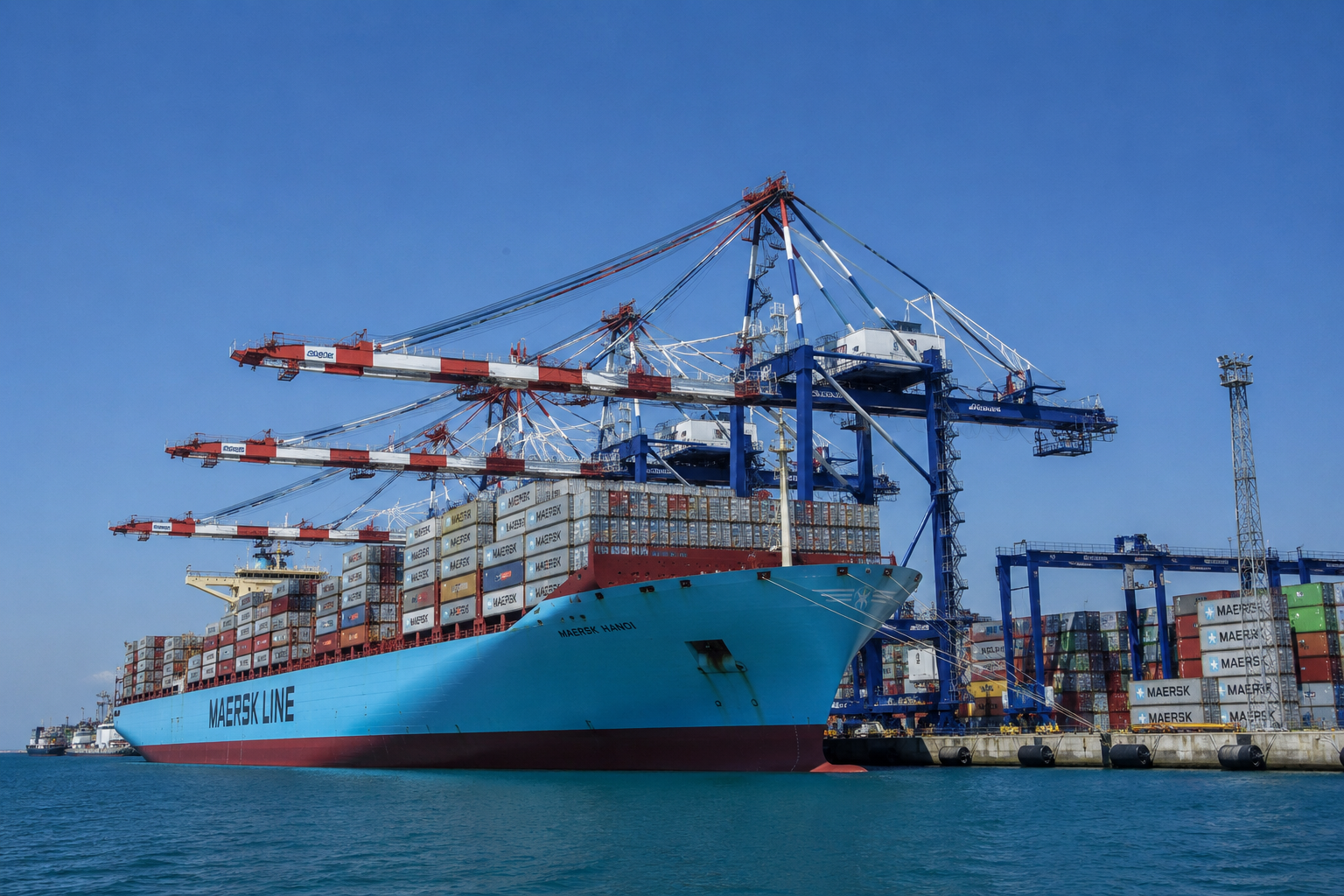
Maersk has temporarily suspended its container service to Ukraine via the Black Sea Fishing Port in Chornomorsk, Odesa region.
The company said that the current security situation was affecting operations and preventing the feeder operator from continuing the service.
The suspension applies specifically to the service through the Black Sea Fishing Port rather than to every Maersk operation involving Ukrainian ports. No date has been announced for its resumption.
The decision follows an intensification of Russian attacks against port infrastructure and civilian shipping in the Black Sea. Facilities in Odesa, Chornomorsk and other Ukrainian port cities have been repeatedly targeted during July.
MEDKON MIRA Will Be Diverted to Constanța
The vessel MEDKON MIRA V.629S, carrying import containers scheduled for discharge in Chornomorsk, will instead be diverted to the Romanian Port of Constanța.
Import shipments destined for Chornomorsk that are currently in Port Said, Egypt, or expected to arrive there will also be rerouted to Constanța.
Maersk plans to coordinate with customers regarding onward delivery options from Romania to Ukraine.
The change creates an additional inland leg in the supply chain. Once discharged in Romania, containers will have to continue to Ukraine by road, rail or a combination of transport modes.
Constanța Becomes an Alternative Gateway
Constanța already serves as an important alternative gateway for Ukrainian trade. The Romanian port handles containerized and bulk cargo that cannot be processed directly through Ukrainian terminals or must be diverted because of security risks.
Rerouting cargo through Constanța keeps shipments moving, but it also lengthens the logistics chain. Operators must arrange transit procedures, border crossings and final delivery from Romania to the Ukrainian consignee.
This may increase transport times, inland-haulage costs and demand at border infrastructure. Cargo owners may also face additional terminal handling, storage and container-return expenses.
Export Bookings Can Be Cancelled Without Penalties
For export bookings with Chornomorsk as the port of loading, Maersk is offering free cancellation without standard amendment or cancellation charges.
The measure is intended to limit the losses of exporters that had already reserved vessel capacity but can no longer deliver their cargo to the suspended service.
Exporters will nevertheless need to find another port or mode of transport. Alternatives may include Romanian ports, terminals in Poland and the Baltic region, or road and rail routes through Ukraine’s western borders.
The most suitable option will depend on the cargo, available container equipment, inland transport costs and ocean-service schedules.
The Disruption Extends Beyond the Sea Leg
The Maersk decision affects the entire container supply chain.
Importers must review transport documents, delivery terms, transit procedures and arrangements for the onward journey from Romania.
Particular attention may be needed for contracts that originally specified delivery through a Ukrainian port. Moving the discharge point to another country may change the allocation of costs and responsibilities between the seller, buyer, carrier and freight forwarder.
Cargo owners should confirm whether transport from Constanța is included in the existing contract or must be arranged separately.
For urgent shipments, companies should check truck and rail capacity in advance. Congestion or limited capacity at individual border crossings could create further delays.
Attacks Are Increasing Insurance and Freight Risks
The service suspension comes as risks for vessels trading with Ukrainian ports rise sharply.
Strikes against terminals and civilian ships affect the decisions of shipowners, insurers and port operators. Continued attacks could raise war-risk premiums, increase freight rates and reduce the number of carriers willing to enter Ukraine’s Black Sea ports.
In July, attacks damaged Ukrainian terminals and foreign-flagged vessels. Kernel suspended operations at its Chornomorsk terminal after loading equipment, power infrastructure, grain silos and sunflower-oil tanks were damaged.
K2Cargo.News previously reported that attacks on Ukrainian ports increased sharply in 2026. Disruptions in Odesa, Chornomorsk, Pivdennyi, Izmail and Reni directly affect the cost and reliability of international cargo flows.
What Cargo Owners Should Do
Customers whose containers are already in transit should obtain written confirmation of the new discharge port and clarify the arrangements for delivery from Constanța.
They should review updated transport documents, free-storage periods, container-return conditions and possible additional charges at the Romanian terminal.
Exporters must decide whether to cancel their bookings or move cargo to an alternative route. When comparing options, companies should calculate not only the ocean freight rate but also the cost of transporting the container to another port.
Freight forwarders should establish who is responsible for rerouting the cargo, completing transit formalities and paying additional expenses.
Resumption Will Depend on Security Conditions
Maersk has not announced when the Chornomorsk service may resume.
Any return will depend on security conditions, the state of port infrastructure and the feeder operator’s ability to make calls safely.
The carrier will also need to assess vessel availability and insurance coverage before restoring the route.
Until then, Constanța will serve as the alternative discharge point for some imports originally destined for Chornomorsk.
The diversion will increase delivery times and costs for Ukrainian businesses. However, routing cargo through Romania allows international container traffic to continue without a complete interruption of supplies.
Read also: Ukraine Weighs War-Risk Cover for Port Infrastructure