

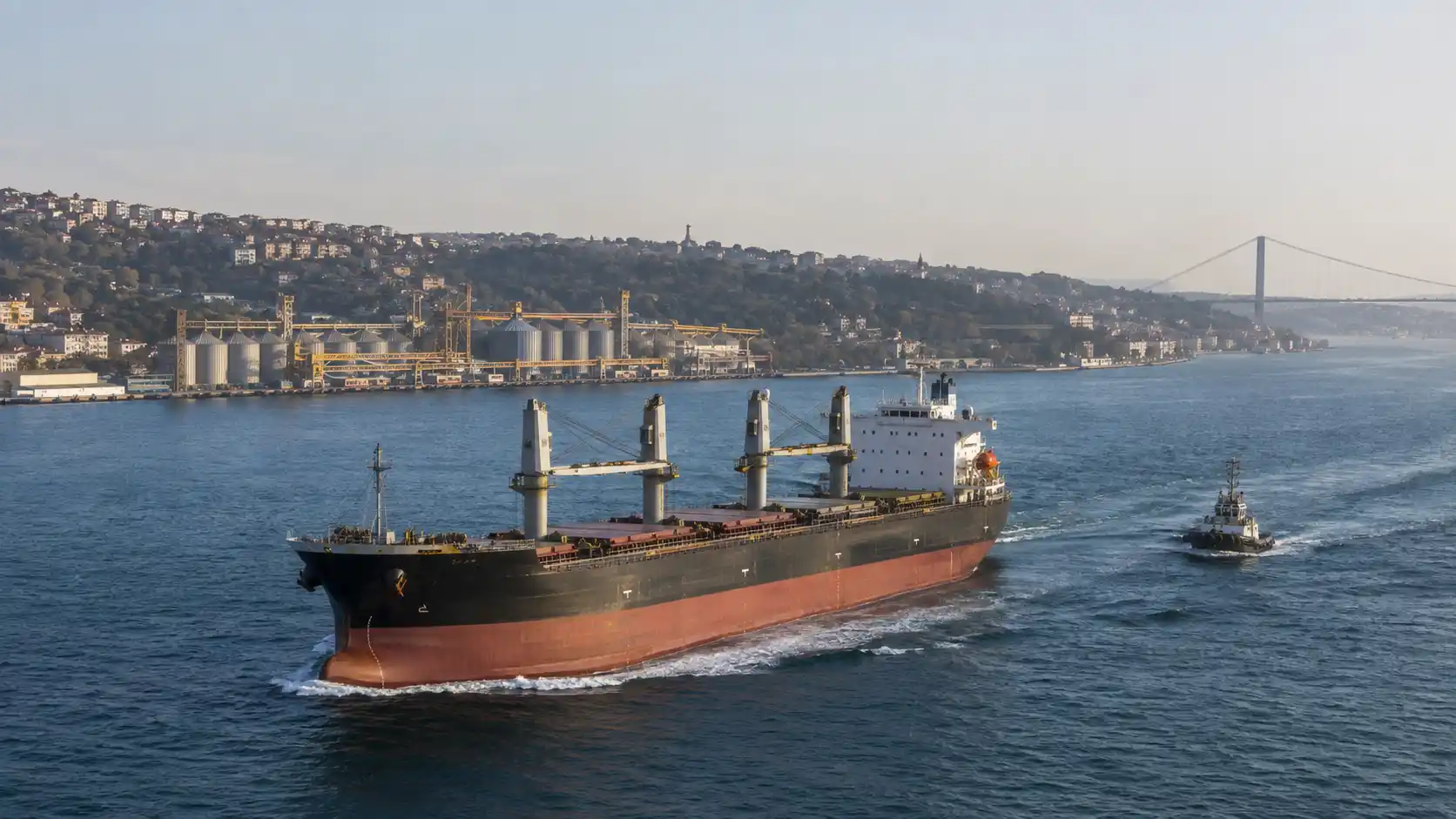
Ankara is discussing a safe grain-export framework with Ukraine and Russia, but no agreement or launch date has been approved
Türkiye has prepared a plan for the safe transportation of grain through the Black Sea and is discussing it with Ukraine and Russia. Foreign Minister Hakan Fidan announced the initiative at a press conference in Istanbul on August 31.
“We have prepared a plan and we are in contact with both sides regarding this plan. If the necessary conditions emerge, we are working in particular to achieve another agreement similar to the grain deal,” Hakan Fidan said
The Turkish government has not disclosed the proposed shipping routes, participating ports, inspection procedures or security guarantees. No timetable has been announced. The initiative therefore remains a diplomatic proposal rather than an approved grain-export arrangement, according to Reuters.
Ankara wants to establish a mechanism resembling the Black Sea Grain Initiative concluded with the mediation of Türkiye and the United Nations on July 22, 2022. The agreement enabled food exports from Ukrainian ports during the war.
Nearly 33 million tonnes of grain and other agricultural products were shipped from Ukraine while the initiative was in effect. Russia declined to extend the agreement in July 2023, ending the jointly coordinated mechanism.
A new arrangement could provide coordinated guarantees for commercial vessels, but its final structure would depend on negotiations between the parties. Restoring a comparable framework would require agreements covering maritime security, insurance, port operations and vessel inspections.
The talks are taking place amid renewed attacks on Ukrainian ports and export facilities. Damage to terminals and temporary interruptions force traders to redistribute cargo between seaports, Danube terminals, railway crossings and road corridors.
This puts additional pressure on alternative infrastructure and raises delivery costs. The limited capacity of Danube and overland routes means they cannot fully replace deepwater Black Sea ports when large grain volumes must be transported.
As K2Cargo.News previously reported, more than 8,000 vessels have used Ukraine’s maritime corridor since it began operating. This route is separate from the former agreement with Russia and remains an essential export channel, although its operation depends on the security situation, shipowners’ decisions and the availability of insurance.
A negotiated corridor could make shipments more predictable and reduce the war-risk premiums included in freight and insurance costs. More reliable access to Black Sea ports would also improve planning for exporters, grain traders, shipping companies and international buyers.
The initiative could be particularly important for import-dependent markets in the Middle East, North Africa and Asia. Greater availability of Black Sea grain might ease pressure on international prices, but this effect would only emerge after regular and demonstrably safe shipping had resumed.
Until an agreement is reached, logistics operators should not treat the Turkish plan as guaranteed additional export capacity. Risks involving delays, voyage cancellations, higher insurance costs and the diversion of cargo to more expensive routes remain.
Türkiye is expected to continue separate contacts with Ukraine and Russia. Moving from a diplomatic proposal to an operational corridor will require the parties to agree on security conditions, vessel movements and responsibility for implementing the arrangement.
The role of the United Nations also remains unclear. Ankara has referred to a framework resembling the previous grain initiative, but no new joint agreement involving the UN has been formally announced.
Read also: Ukraine Grain Corridor Passes 8,000 Vessels