

The digital transformation of logistics has moved far beyond GPS tracking.
Today, the industry’s leading technology companies are no longer selling fleets individual devices or isolated software applications. Instead, they are building intelligent operating layers that connect trucks, warehouses, construction equipment, manufacturing facilities, and millions of frontline workers into a single AI-powered ecosystem.
That is exactly where Samsara believes the future is headed.
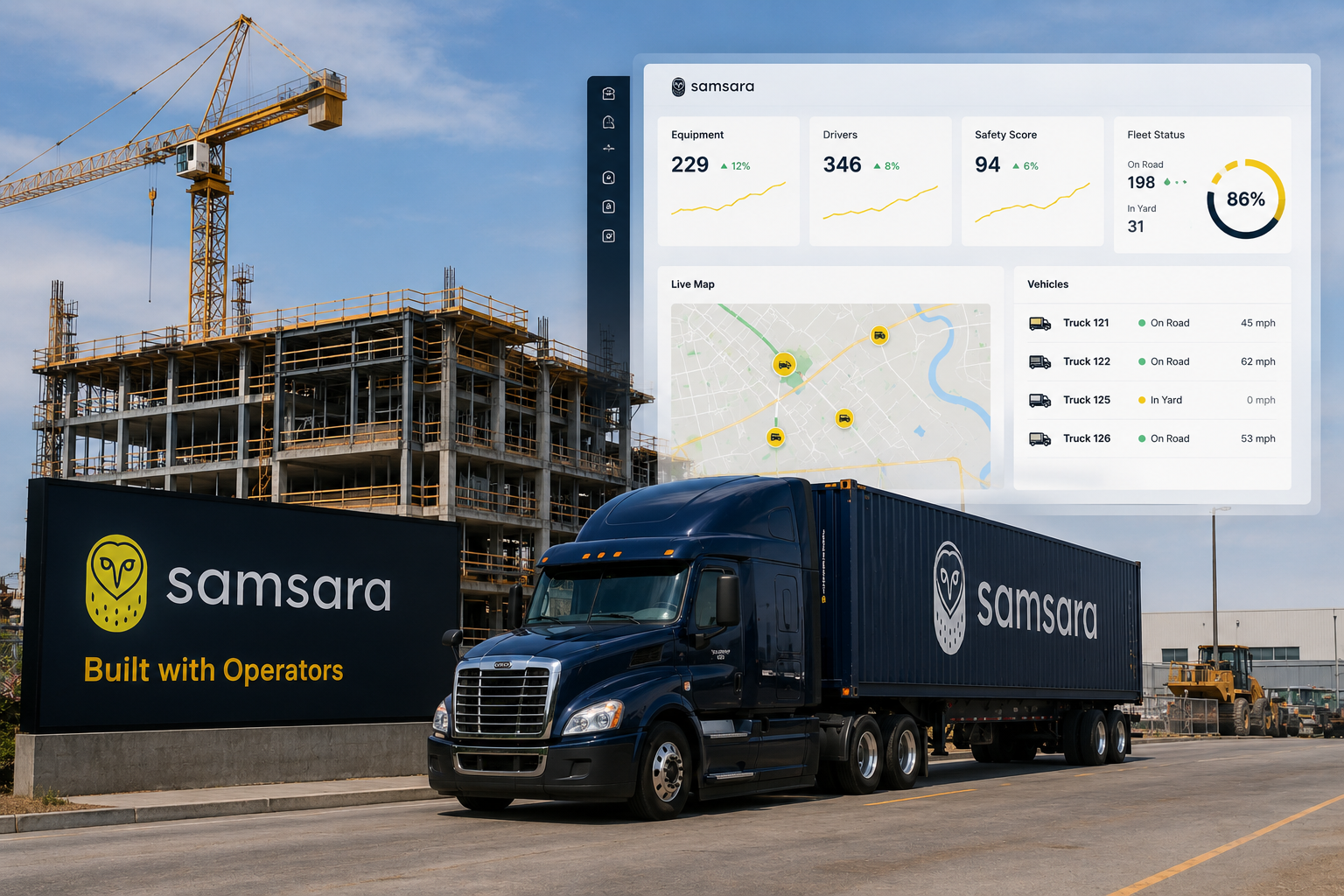
This week, the San Francisco-based company unveiled the first major rebranding in its history. On the surface, it appears to be a new visual identity. In reality, it signals something much larger to the logistics and technology industries: the era of standalone telematics is ending, and the era of Physical AI is beginning.
From GPS Tracking to an Operating System for Logistics
When Samsara entered the market a decade ago, it was primarily recognized as a provider of fleet telematics and vehicle tracking solutions.
Today, the company’s vision has expanded dramatically.
Its cloud platform now connects:
- Commercial trucks;
- Trailers;
- Construction equipment;
- Industrial machinery;
- Warehouses;
- Manufacturing plants;
- Energy infrastructure;
- Field employees and mobile workforces.
Every connected asset continuously generates operational data that flows into a centralized cloud platform, where artificial intelligence analyzes conditions in near real time.
Rather than simply monitoring vehicles, Samsara is positioning itself as an operating system for the physical economy.
A New Brand Reflects a New Philosophy
The company’s rebranding is far more than a cosmetic redesign.
Samsara introduced:
- A redesigned owl symbol;
- A custom typeface created from the handwriting of Samsara engineers;
- A bright industrial yellow inspired by construction sites and heavy equipment.
But the visual changes are only part of the story.
The company says the new identity was developed alongside the people who actually operate trucks, maintain infrastructure, manage construction projects, and run logistics operations every day.
Dozens of customer interviews and on-site visits shaped every aspect of the redesign.
The result is captured in the company’s new philosophy:
Built with Operators.
Why This Matters for Logistics
Transportation technology has undergone a fundamental transformation over the past several years.
Traditional telematics once focused on:
- Vehicle location;
- Fuel consumption;
- Speed monitoring;
- Hours-of-service compliance.
That is no longer enough.
Modern logistics platforms now analyze:
- Driver behavior;
- Vehicle health;
- Trailer utilization;
- Warehouse operations;
- Route optimization;
- AI-powered video analytics;
- Safety compliance;
- Workforce productivity;
- Predictive maintenance.
The true breakthrough comes from combining all of these data streams into a single operational platform.
That is why Samsara increasingly describes its technology not as telematics, but as Physical AI.
Artificial Intelligence Moves Beyond the Office
Most AI systems today work with digital information—documents, emails, spreadsheets, and software applications.
Samsara is focused on something entirely different.
Its AI interacts with physical assets, including:
- Freight trucks;
- Shipping containers;
- Construction cranes;
- Manufacturing facilities;
- Energy infrastructure;
- Utility equipment.
Millions of sensors, cameras, and connected devices continuously feed information into the platform, allowing AI to identify risks, recommend actions, and support operational decisions before problems occur.
This represents a shift from analyzing completed events to managing physical operations in real time.
Financial Results Support the Company’s Strategy
The rebranding coincides with a major business milestone.
Samsara’s annual recurring revenue has reached $2 billion, representing approximately 30% year-over-year growth.
Perhaps even more significant is the company’s long-term investment strategy.
Since its founding, Samsara has invested more than $1 billion in research and development.
The company now releases more than 200 new product features every year.
Recent innovations include:
- AI Multicam;
- Agent Studio;
- Samsara Tracking Label;
- AI-powered driver coaching;
- Advanced asset management solutions.
These newer products are already generating approximately $150 million in annual recurring revenue and account for more than 20% of all new customer bookings.
That suggests Samsara’s future growth is increasingly being driven by AI-powered operational software rather than its original telematics business.
Customers Are Expanding Beyond Fleet Management
Only a few years ago, most customers implemented Samsara primarily to monitor vehicle fleets.
Today, many of the company’s largest enterprise customers use the platform to manage nearly every operational aspect of their businesses.
That includes:
- Transportation;
- Safety management;
- Construction operations;
- Equipment maintenance;
- Asset management;
- Industrial workflows.
The result is a unified digital ecosystem where data flows across departments, enabling artificial intelligence to coordinate people, equipment, infrastructure, and logistics operations through a single platform.
Why This Could Change Global Logistics
The logistics industry is rapidly evolving from automating individual tasks to building fully connected digital supply chains.
Companies once purchased separate solutions for GPS tracking, dash cameras, maintenance management, warehouse software, and driver safety.
Today, the industry is moving toward unified intelligent platforms capable of managing every operational layer simultaneously.
That is precisely where Samsara hopes to establish its leadership.
If the company’s strategy succeeds, artificial intelligence will become far more than a digital assistant for dispatchers or operations managers.
It could evolve into the central operating system for the physical economy—coordinating millions of vehicles, warehouses, factories, construction sites, and critical infrastructure through a continuously learning AI platform.
For global logistics, this represents the next phase of digital transformation—one in which competitive advantage will depend less on the size of a fleet and more on the quality of operational data, the speed of decision-making, and the ability of artificial intelligence to orchestrate complex physical operations in real time.
