

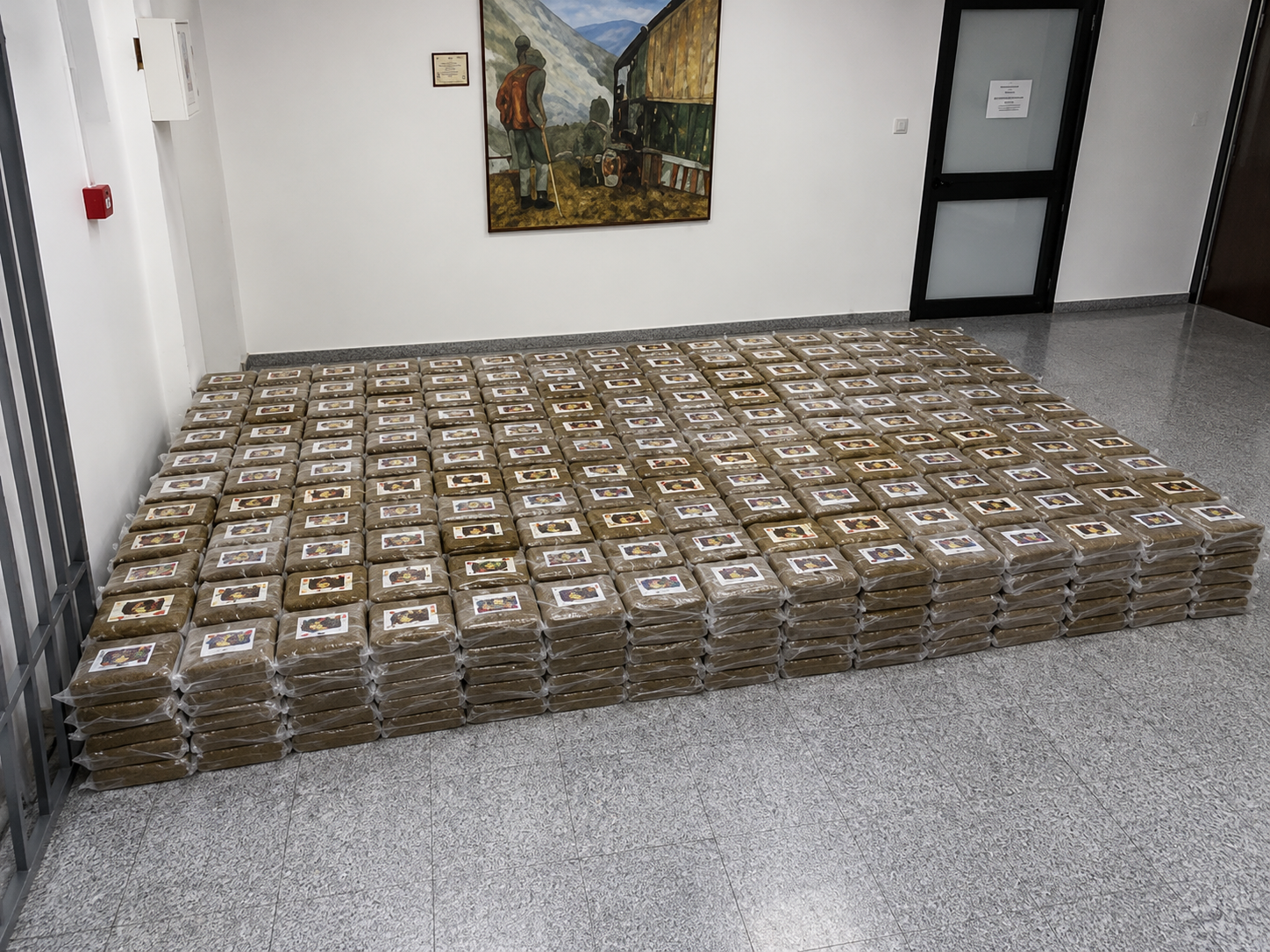
Italy Seizes More Than 770 kg of Cocaine
Italy’s Guardia di Finanza and customs authorities have intercepted a major cocaine shipment at the Port of Vado Ligure in the province of Savona.
The operation was carried out on July 20, 2026. Officers found 650 packages of drugs inside a refrigerated container that had arrived from one of Ecuador’s principal ports.
The cocaine had been concealed among dozens of pallets of bananas. Its total weight, including packaging, exceeded 770 kg. Initial testing identified the substance as high-purity cocaine.
Italian authorities estimated that the drugs could have been worth more than €250 million on the illegal retail market. They described the operation as one of the most significant seizures conducted at Vado Ligure in recent years.
It was not the first large cocaine shipment intercepted at the port during the month. Earlier in July, customs officials and financial police had reported the seizure of another 340 kg of cocaine.
Vado Ligure Is Becoming a Major Container Gateway
Italian law enforcement agencies are paying closer attention to commercial routes connecting South America with ports in Liguria.
Vado Ligure is handling growing container volumes and becoming an increasingly important entry point for goods moving into Southern and Central Europe. As legitimate trade expands, the port also becomes more attractive to international trafficking organisations.
K2Cargo.News previously reported that Savona-Vado was Italy’s highest-ranked port in the global performance index, placing 51st worldwide and becoming the country’s only port in the top 100.
Fast container processing is a major advantage for shippers, but it also requires an effective risk-analysis system. Customs authorities must identify suspicious cargo without creating extensive delays for time-sensitive and perishable products.
Another 240 kg Seized in Portsmouth
A second large cocaine shipment was discovered in the United Kingdom two days after the Italian operation.
On July 22, Border Force officers supporting the National Crime Agency inspected the refrigerated cargo vessel MV Atlantic Klipper at Portsmouth Docks.
The vessel had travelled from South America via the Caribbean. During the inspection, officers found 240 kg of cocaine concealed inside crates of bananas.
The drugs were estimated to have a UK street value of approximately £19.2 million. The shipment was transferred to a secure location, while the NCA opened an investigation into its origin and the organised crime networks potentially involved.
Authorities did not immediately report any arrests directly connected with the discovery.
Why Traffickers Use Banana Cargoes
The two seizures again demonstrate how banana shipments are repeatedly exploited to move cocaine from South America into Europe.
Bananas travel in large, regular volumes and must be kept within a controlled temperature range. They are transported in refrigerated containers and on specialised vessels operating established international services.
A single container can hold dozens of pallets and thousands of boxes. Criminal groups may attempt to hide drugs between crates, inside pallets, within container structures or alongside legitimate cargo.
The perishable nature of the product also requires rapid port handling. Lengthy inspections can affect cargo quality, which encourages customs authorities to rely on route analysis, scanning technology and targeted searches instead of unloading every container.
The discovery of drugs in a commercial shipment does not by itself indicate involvement by the banana producer, carrier or consignee. Criminal organisations may interfere with the supply chain at different stages and exploit legitimate companies without their knowledge.
Europe Has Recorded Much Larger Seizures
Banana cargoes have been linked to several major cocaine interceptions at European ports.
In June 2020, customs officers in Rotterdam found 2,020 kg of cocaine inside a banana container shipped from Guayaquil, Ecuador. The consignment was due to continue to a company in Hungary.
In August of the same year, Dutch authorities intercepted another 743 kg of cocaine hidden in a banana shipment from Ecuador.
In February 2024, the UK’s NCA and Border Force found 5.7 tonnes of cocaine in a banana container at Southampton Port. The shipment was valued at more than £450 million and was described at the time as the largest seizure of Class A drugs in UK history.
An even larger consignment was intercepted in Spain in October 2024. Authorities found more than 13 tonnes of cocaine behind bananas shipped from Ecuador to the Port of Algeciras. It became the largest drug seizure in Spanish history and one of the biggest ever recorded in Europe.
Ports Need More Detailed Cargo Controls
Drug trafficking through legitimate trade creates additional risks for refrigerated supply chains.
More extensive inspections can increase container dwell times, raise handling costs and delay deliveries of perishable products. Insufficient controls, however, allow criminal groups to exploit international transport infrastructure for large-scale drug movements.
Ports require modern scanning equipment, restricted access to container yards, seal verification and stronger information sharing between customs agencies in origin and destination countries.
Digital data analysis is becoming particularly important. An unexpected route change, documentation inconsistency, container opening or unusual transit time can provide grounds for a more detailed inspection.
Using these tools consistently can strengthen security without stopping legitimate cargo flows. K2Cargo.News has examined the wider role of such systems in modern port operations.
