

Driver Was Fully Acquitted
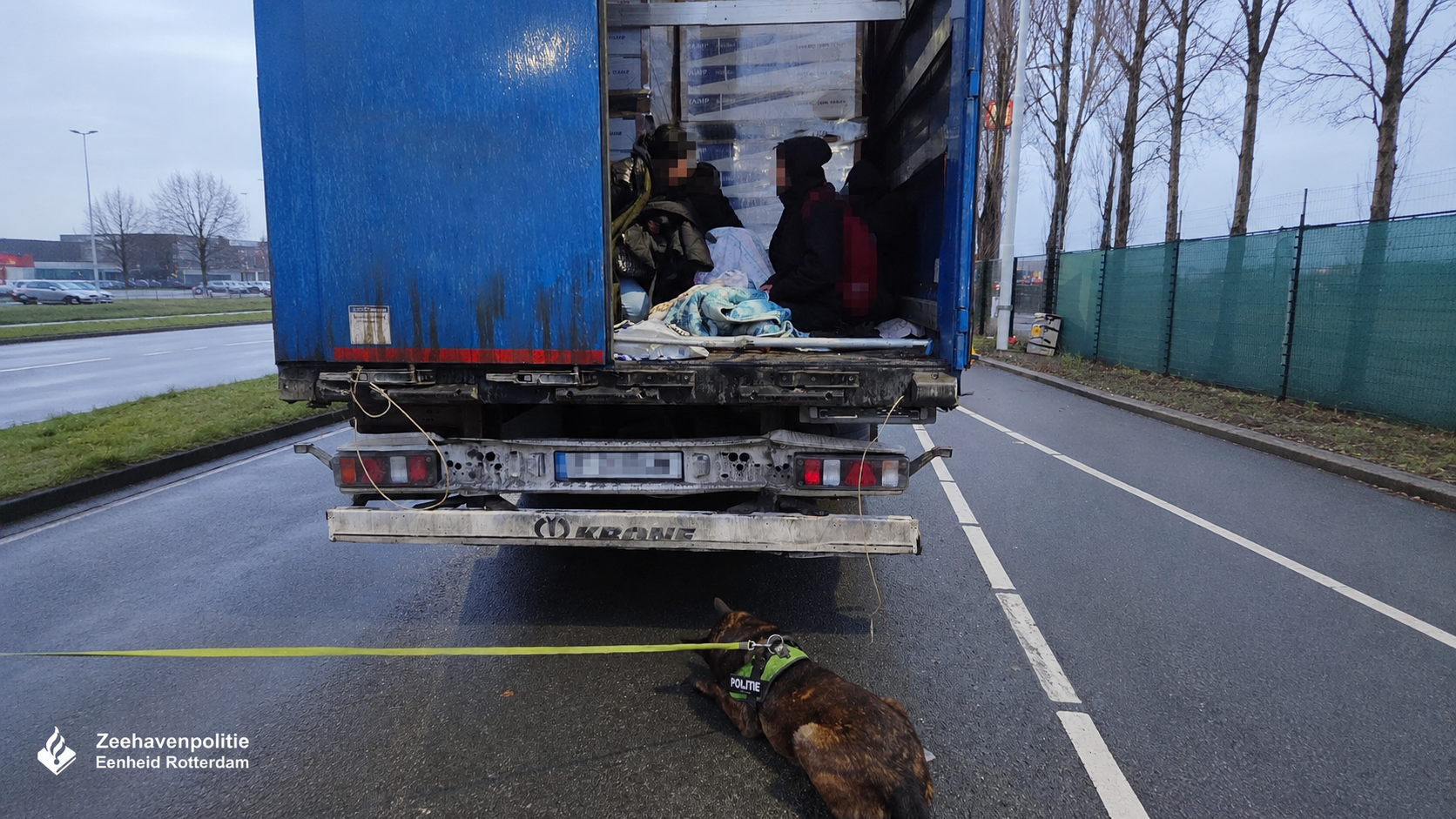
A Rotterdam court has fully acquitted a truck driver accused of illegally transporting six migrants from the Netherlands toward the United Kingdom.
The court concluded that the prosecution had not produced sufficient evidence to establish that the driver knew people were concealed inside the trailer.
The discovery of migrants among the cargo was not, by itself, sufficient to prove that the driver had participated in their attempted illegal journey.
The ruling is important for international road transport. It demonstrates that a driver cannot automatically be treated as guilty simply because unauthorised people are found inside the vehicle under their control.
A conviction requires evidence that the driver knew about the migrants or consciously participated in transporting them.
Shipment Was Destined for Manchester
The incident occurred on February 20, 2026.
The driver flew from Turkey to the Netherlands specifically to perform the international delivery. He received instructions through WhatsApp identifying the location of the truck and providing information about the assignment.
He was expected to collect the vehicle and deliver the cargo from the Netherlands to Manchester.
This working arrangement is common in international road freight. A driver may arrive by air or another form of transport, collect a preloaded and sealed trailer and proceed directly toward a ferry terminal.
Under this model, the person performing the journey may not have attended the loading operation and may have limited knowledge of what happened to the vehicle before the keys and documents were handed over.
That period before the driver’s arrival became central to the court’s assessment.
Detection Dog Alerted at the DFDS Terminal
The truck arrived at the DFDS Seaways terminal in Vlaardingen for onward transport to the United Kingdom.
During a border inspection, a police migration-detection dog alerted officers to the trailer. Once the seal was broken and the load space opened, six people were found among the cargo: five Iraqi nationals and one Afghan national.
Dutch police initially reported that the Turkish driver had been arrested on suspicion of people smuggling. The six clandestine entrants were also detained, including one minor.
The driver became the principal suspect because he was operating the vehicle intended to carry the trailer to Britain.
The subsequent investigation, however, changed the initial understanding of the incident.
Migrants Entered Before the Driver Arrived
Investigators established that the migrants had entered the trailer during the night, before the defendant collected the truck combination and began the journey.
The finding confirmed that the driver was not present when unauthorised access took place.
There was therefore a gap between the migrants entering the load space and the vehicle being handed over to the driver. During that period, the trailer remained outside his direct control.
This provided a credible explanation for how the six people could have entered without the driver’s involvement or knowledge.
The prosecution needed to disprove that explanation and demonstrate that the driver was nevertheless connected to the entry or had been informed about it. The available evidence did not achieve that.
TIR Seal Had Been Restored Without Visible Damage
The condition of the TIR seal became one of the most important elements of the defence.
The investigation found that the seal had previously been damaged and subsequently restored. The manipulation was performed in a way that was not visible during an ordinary external inspection.
The trailer appeared closed and sealed when the driver collected it. There was no obvious external indication that the load compartment had been opened.
The case illustrates a serious limitation of conventional cargo-security systems. A seal proves integrity only when it cannot be removed, damaged, replaced or repaired without detection.
A seal that appears intact does not always guarantee that unauthorised access has not occurred.
Knowledge Was the Central Legal Question
The central question was not whether migrants were present, but whether the driver knew they were there.
Dutch courts assessing people-smuggling cases consider the full circumstances, including the route, the driver’s behaviour, stops, communications, vehicle condition and possible links to organisers.
In earlier cases, the Rotterdam court has stated that migrants found inside a truck, combined with other suspicious circumstances, can indicate driver knowledge. That inference may nevertheless be displaced by a plausible and verifiable explanation of the journey and surrounding events.
In this case, there was a confirmed opportunity for the migrants to enter before the trailer was handed over. The concealed manipulation of the seal strengthened that explanation.
The court could therefore not establish that the driver had deliberately transported the six people.
WhatsApp Instructions Did Not Prove Involvement
Investigators knew that the driver had received the truck location and transport instructions through WhatsApp.
Using a messaging application to provide parking coordinates, shipping documents and instructions is common in road freight operations. The existence of such messages does not prove participation in an illegal operation.
Relevant evidence would have included messages concerning the migrants, instructions for bypassing security controls, contact with organisers or an agreement for additional payment.
The material presented to the court did not establish that the driver’s work-related communications were connected to the clandestine entry.
The court could not replace missing evidence with an assumption that a professional driver must know everything that happened to a trailer before collecting it.
Acquittal Does Not Deny the Illegal Entry Attempt
The judgment does not mean that the six people were travelling lawfully or that they were not attempting to reach the United Kingdom without authorisation.
The acquittal concerns only the criminal responsibility of the individual driver.
The court found that his intentional participation had not been proved. This is an important distinction between people being physically transported in a vehicle and the driver being legally responsible for people smuggling.
A driver can objectively carry clandestine entrants without knowing that they are present. Control of the vehicle alone is not sufficient for a criminal conviction.
Driver Faced Serious Consequences Before Trial
Even a case ending in acquittal can cause significant damage to a professional driver.
Following the discovery, the driver was arrested, questioned and placed under criminal investigation. He had to defend himself against an allegation capable of resulting in imprisonment and effectively ending his international driving career.
Possible additional consequences include lost income, legal costs, travel restrictions and reputational damage.
The transport company may also experience vehicle downtime, cargo delays, requests for documentation and the need to find a replacement driver.
A full acquittal removes criminal liability but does not automatically compensate the driver and company for every financial or professional loss.
A Seal Should Not Be the Only Security Check
The principal operational lesson is that recording a seal number and conducting a visual inspection may not be enough.
When collecting a trailer, the driver should check whether the seal number matches the transport documents and whether there are signs of damage to the cable, lock, doors, roof or side panels.
Differences in colour, shape or wear may indicate that part of the sealing system was replaced. Fresh adhesive, heat marks, cuts and rejoined sections can also suggest manipulation.
Even a careful inspection cannot guarantee that a professionally executed breach will be detected.
Carriers should therefore require not only an inspection but also evidence that the inspection took place.
Photographs and Video Can Protect the Driver
The condition of the trailer should be photographed or recorded when the truck is collected.
The images should include the seal number, doors, lock, roof, side panels and an overall view of the vehicle. Digital files can retain the time of creation and, where location services are enabled, the place where the inspection occurred.
A digital checklist signed by the driver can provide further evidence, particularly where it contains a timestamp and a record of any visible damage.
Such records do not guarantee that liability will be avoided. They can, however, help reconstruct the sequence of events and demonstrate the condition in which the vehicle was received.
In the Rotterdam case, the timing of the handover was critical. Without reliable documentation, responsibility between the warehouse, trailer owner, carrier and driver can become difficult to establish.
Trailer Handover Requires a Formal Procedure
Companies using relief drivers and detached trailers need a complete vehicle-handover process.
Sending a location through WhatsApp and providing a registration number is not sufficient.
The procedure should record the recipient’s identity, arrival time, seal number, condition of the load space and the period during which the trailer remained unattended.
Parking areas and logistics sites should use access control, lighting, fencing and video surveillance, while retaining recordings for a suitable period.
Where a trailer has remained for several hours in an unsecured area, the carrier should recognise that an apparently intact seal does not exclude interference.
In an investigation, access-control and camera records may demonstrate that unauthorised people approached the vehicle before the driver arrived.
Electronic Sensors Can Support Conventional Seals
Technology can reduce dependence on visual checks.
Electronic seals can record the time when a door is opened, while door sensors can send an alert to a dispatcher when the locking system is disturbed.
Telematics can preserve trailer coordinates, movements and stops. External and internal cameras can provide additional evidence of unauthorised access.
Sensors monitoring light, movement or temperature may be useful for valuable or sensitive cargo. If a closed trailer is opened during the night, the system may record a sudden change in internal conditions.
The technology is effective only where alerts are actively monitored. A warning that is received and ignored may create additional questions for investigators and insurers.
Unauthorised Entry Is Also a Cargo-Crime Risk
Migrants are not the only people seeking covert access to trucks.
Criminal groups break into trailers to steal goods, insert prohibited items or use commercial vehicles for other illegal operations.
K2Cargo News previously examined how Spain dismantled a gang robbing moving trucks. The group allegedly used specially modified vehicles to approach trailers from behind while drivers remained unaware of the intrusion.
Both cases demonstrate the same vulnerability: drivers cannot always see what is happening around the load compartment, particularly when a trailer is unattended or approached from the rear.
UK Rules Create a Significant Financial Exposure
Because the shipment was destined for Manchester, the carrier also had to consider the United Kingdom’s clandestine-entrant liability regime.
A driver, owner, hirer or operator can face a penalty of up to £10,000 for every clandestine entrant carried. A separate fine of up to £6,000 may apply where a goods vehicle has not been adequately secured, even when no person is found inside.
In this case, the six migrants were detected in the Netherlands before the truck departed for Britain. There is no public confirmation that the UK penalty regime was applied to this driver.
For companies regularly serving the British market, however, the financial exposure remains substantial. Six clandestine entrants can produce potential liabilities amounting to tens of thousands of pounds for each responsible person.
UK Guidance Requires Checks After Every Stop
British authorities require hauliers to operate an effective system for preventing clandestine entry.
After loading, the driver should secure the load space, record the seal number and inspect accessible lockers, axles and structural areas.
The body, roof, security devices and potential access points should be checked again after every stop. A final inspection is required before immigration control.
Where a driver suspects that someone may have entered the vehicle, the police or Border Force should be informed and the vehicle should not board a ferry or shuttle service.
The procedure is intended not only to prevent entry. A properly completed checklist can also provide evidence that the driver and operator acted responsibly.
Accreditation Benefits Drivers From 2026
The United Kingdom operates an accreditation scheme for hauliers maintaining a robust system against clandestine entrants.
From January 1, 2026, drivers employed by an accredited company at the time of an incident may also benefit from the programme.
Operators must train personnel, provide instructions in a language drivers understand, retain completed checklists for at least six months and review the quality of inspections. Simply handing a driver a written instruction sheet is not considered sufficient training.
For international carriers, accreditation can become an important defence against major penalties and evidence that the company maintains a functioning security system.
A Compromised Seal Can Affect the Cargo
The discovery of people inside a trailer creates risks beyond the criminal investigation.
Cargo may require a new inspection, recount or safety assessment after the load space has been opened. This is particularly important for food, pharmaceuticals, cosmetics and other sensitive products.
A consignee may refuse the shipment where sanitary or temperature-control conditions can no longer be verified.
Customs authorities may request an explanation for the broken or replaced seal. Insurers will examine where the trailer was parked, who had access and whether the carrier followed its security procedure.
Even where the migrants caused no direct damage, delivery can fail because the vehicle and cargo remain unavailable during the investigation.
Migration Pressure Leads to More Truck Inspections
European governments continue to balance the free movement of goods against stronger border security.
Migration routes toward the United Kingdom pass through ports, ferry terminals, rail crossings and truck parks on major freight corridors. Commercial vehicles are attractive because people can attempt to cross a border while concealed alongside legitimate cargo.
More inspections increase the chance of detection but can also extend vehicle-processing times and contribute to queues.
Read also: European Commission Urges Nine Schengen Countries to End Border Controls