

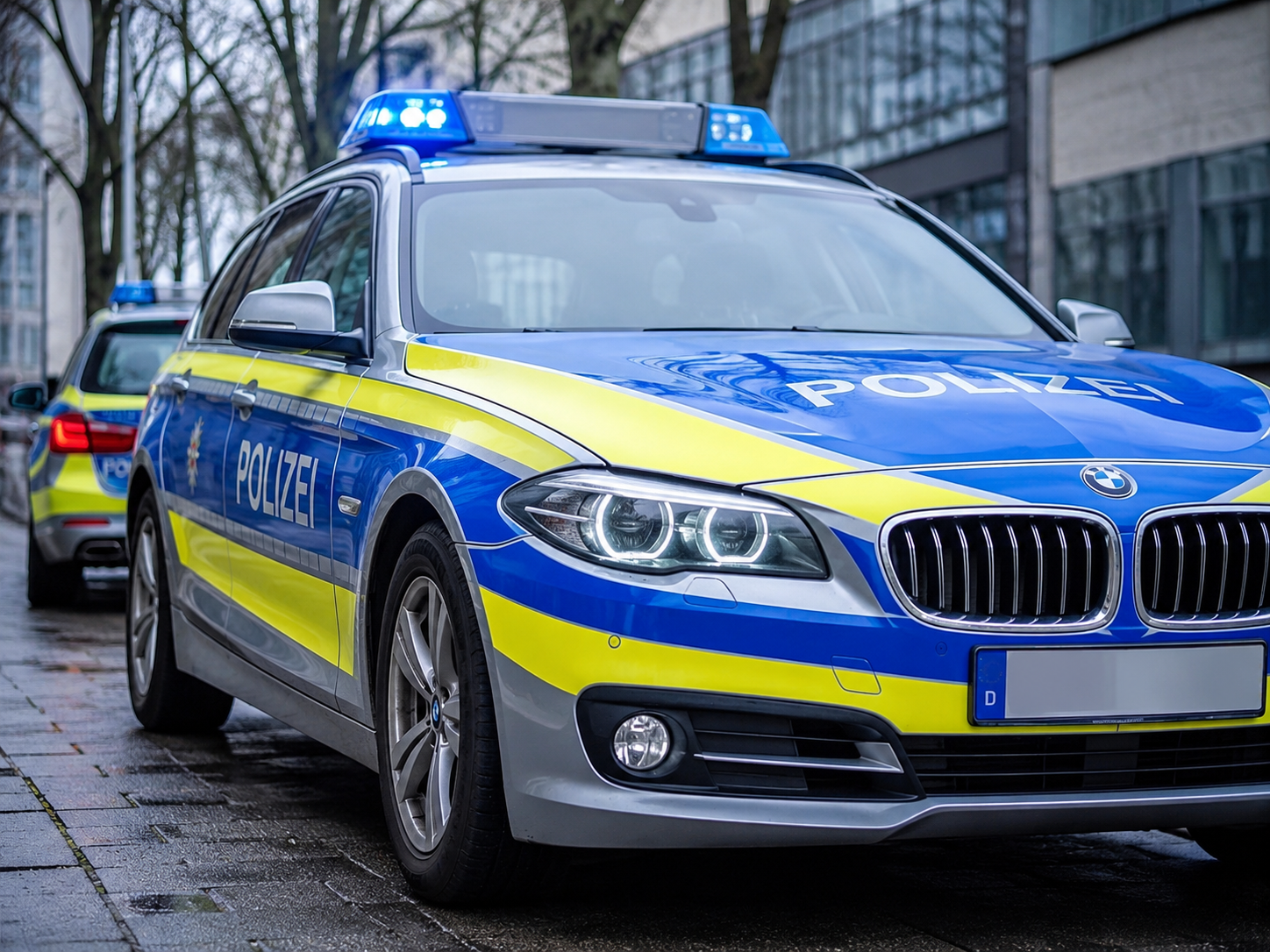
Incident Took Place at an Achim Fuel Station
Two Polish truck drivers were defrauded by men posing as German police officers.
The incident occurred during the afternoon of August 2, 2026, at a fuel station on Werner-von-Siemens-Straße in Achim, Lower Saxony.
The principal information source is the Verden/Osterholz Police Inspectorate. Its official statement was published on August 3 and distributed through Presseportal.
According to police, the two drivers, aged 36 and 34, had parked their Polish-registered truck at the filling station. At approximately 3:35 p.m., a light-blue Volkswagen passenger car with German registration plates stopped in front of the truck.
Two men were inside. One was wearing clothing resembling a police uniform, while the other was dressed in civilian clothes.
Fraudster Presented the Encounter as a Police Check
The uniformed man left the Volkswagen and approached the drivers under the pretext of conducting an official inspection.
During the encounter, he gained access to the truck cab and discovered cash in Polish currency.
The purported officer took the money, claiming the banknotes were counterfeit and had to be confiscated. Police have not published the exact amount, describing it only as a four-figure sum.
The man then returned to the Volkswagen. Both suspects drove away in the direction of Käthe-Kruse-Straße.
Only after the vehicle had left did the drivers realise they had been deceived and contact the real police.
Police-Style Uniform Helped the Suspect Enter the Cab
The perpetrators exploited the drivers’ trust in public authorities.
The first suspect did not simply wear dark clothing. His outfit included several details designed to resemble an authentic German police uniform.
The word “Polizei” appeared on the chest and peaked cap, while a German flag was displayed on the sleeve.
Those details may have made the situation appear legitimate, particularly to foreign drivers who may not be familiar with the uniforms used by different German police units or with local inspection procedures.
The suspects also selected a location where the presence of enforcement officials would not necessarily appear unusual. Fuel stations and roadside parking areas are commonly associated with checks covering documents, vehicle condition, driving and rest times, and cargo.
Police Released Descriptions of Both Suspects
The first suspect, who wore the police-style uniform and took the cash, was described as approximately 40 years old and around 1.80 metres tall.
The victims described him as appearing North African. This information is based solely on witness accounts and forms part of the police appeal.
The second suspect was described as a bald, light-skinned man approximately 50 to 60 years old. He apparently remained close to or inside the vehicle and did not personally conduct the purported inspection.
Police have not identified the exact Volkswagen model. The vehicle was described only as a light-blue passenger car with German registration plates.
The full registration number was either not recorded by the victims or has not been released publicly at this stage of the investigation.
Achim Police Are Seeking Witnesses
The Achim police station is investigating the case.
Officers are asking anyone who saw the two suspects, the light-blue Volkswagen or a suspicious roadside check near the Werner-von-Siemens-Straße filling station to provide information.
Witnesses can contact the Achim police station on 04202-9960.
CCTV recordings from the fuel station, neighbouring businesses and surrounding roads may be relevant. Investigators may also be able to examine vehicle-recognition cameras or recordings from vehicles travelling toward Käthe-Kruse-Straße at around 3:35 p.m.
Police have not publicly confirmed which video or registration-recognition material is available.
Counterfeit-Cash Claim Was a Carefully Chosen Pretext
By claiming that the Polish banknotes were counterfeit, the suspect was able to present the removal of the money as an official procedure.
Police involvement with suspicious currency is not inherently implausible. The Deutsche Bundesbank confirms that money believed to be counterfeit may be transferred to the police or submitted for professional examination.
The central bank also warns that known counterfeit currency must not be returned to circulation and should be reported immediately.
However, the handling of suspected counterfeit money should be part of an official and verifiable process, rather than ending with unidentified individuals immediately leaving the scene with the cash.
In the Achim case, the purported officer took the money and departed with his accomplice. The drivers received no information about the responsible police unit, the status of the investigation or the procedure for returning the banknotes if they were found to be genuine.
How Drivers Can Verify a Police Officer
The German Police Crime Prevention Programme of the Federal States and Federal Government advises people to ask any person claiming to be a police officer or public official to show official identification.
Where doubts remain, the person being checked should independently contact the authority the purported officer claims to represent. The telephone number should be found separately rather than accepted from the stranger.
German police also stress that people should not hand money or valuables to unknown individuals merely because they claim to be police officers. A uniform, identification card and confident manner do not by themselves prove authenticity.
Drivers should not physically confront a suspicious person or attempt to detain them by force. Personal safety remains the priority.
They should remember the suspects’ appearance, direction of travel, vehicle make, colour and registration number, and then contact the police immediately.
Warning Signs During a Roadside Check
Several features of an encounter similar to the Achim incident may indicate fraud.
Drivers should become cautious when cash is demanded without clear documentation, when a person attempts to enter the cab without properly explaining the legal basis, or when the purported officer refuses to provide identification.
Pressure, threats and an effort to leave immediately after taking money are additional warning signs.
A driver can ask the officer to provide their name, unit and reason for the inspection. Where doubts remain, the cab should remain secured while the driver independently contacts the local police.
The caller can provide their location, describe the purported officers and report the registration number of their vehicle.
Foreign Truck Drivers Can Be Attractive Targets
International drivers may be more vulnerable because of language barriers and limited familiarity with local procedures.
Fraudsters rely on the expectation that a foreign driver will be reluctant to challenge a person appearing to represent the authorities.
Fear of fines, vehicle detention, cargo inspection or accusations of possessing counterfeit money can create additional psychological pressure.
Fatigue can also reduce a driver’s ability to assess the situation quickly. After a long journey, a person may automatically follow instructions from somebody in uniform, particularly at a fuel station or roadside parking area.
Criminals may target foreign trucks because they assume the cab contains cash in several currencies for fuel, parking, minor repairs, food and emergency expenses.
Carriers Should Limit Cash Kept Inside Cabs
The Achim incident demonstrates the need to review policies covering cash during international journeys.
Transport companies should use fuel cards, corporate payment cards and electronic road-payment systems wherever possible.
The amount of cash carried in the vehicle should be limited to what is reasonably required for unforeseen circumstances.
Money should not be stored visibly or concentrated in one easily accessible location. Hidden storage alone is not a complete solution because criminals who enter the cab may conduct a wider search and damage the vehicle.
Companies should also record the amount and currency issued to each driver before departure. This can help substantiate a loss when reporting it to the police, employer, insurer or customer.
Drivers Need Multilingual Emergency Instructions
Carriers can prepare a short procedure explaining what to do during a suspicious inspection.
It should include the European emergency number 112, the German police number 110, and the round-the-clock contact details of the dispatcher, insurer and local transport partner.
Drivers must know whom to call immediately rather than waiting for the company’s office to reopen.
The procedure should make clear that an unknown person must not gain uncontrolled access to the cab.
Documents can be shown through the window or after the purported officer’s identity has been verified, where it is safe to do so.
Company rules should prohibit the voluntary transfer of cash without verification of authority and documentation confirming that the money has been taken.
Video Recordings May Become Key Evidence
A forward-facing dashcam may not capture activity near the driver’s door or inside the cab.
Side cameras and recording systems that continue operating while the truck is parked can provide additional protection.
Where a driver believes that an encounter is suspicious, recording can be activated without provoking a confrontation. Operators must still comply with national privacy and data-protection requirements.
After an incident, recordings should be saved immediately so that they are not overwritten during the rest of the journey.
Telematics, vehicle-location records, fuel receipts and telephone logs may also help establish the exact time and location of the offence.
The Risk Extends Beyond the Loss of Cash
An unauthorised person entering the cab may steal documents, payment cards, telephones, keys, consignment notes or tachograph data.
Even where only cash appears to be missing, the carrier should check whether documents were photographed and whether any fuel or bank cards have disappeared.
The loss of a driving licence, passport or vehicle documents can stop a journey for several days.
Cargo information can also be used to target the carrier or consignee in a later theft attempt.
Following such an incident, the driver and company should inspect the cab, block missing payment instruments and notify partners where criminals may have obtained information about the load.
Achim Case Is a Warning for International Carriers
The incident did not involve reported violence, but the suspects gained access to the truck and obtained a four-figure sum using only a convincing uniform and authoritative behaviour.
The investigation remains open and neither suspect has been identified.
The principal confirmed source is the Verden/Osterholz Police Inspectorate. Guidance on recognising fake officials is provided by the German Police Crime Prevention Programme, while the procedure for handling suspicious currency is explained by the Deutsche Bundesbank.
For transport companies, the case shows that driver protection involves more than secure parking and cargo security.
Verifying the identity of enforcement personnel, limiting cash inside the cab and ensuring immediate access to the dispatcher and genuine police are equally important.
Read also: Spain Dismantles Gang Robbing Moving Trucks