

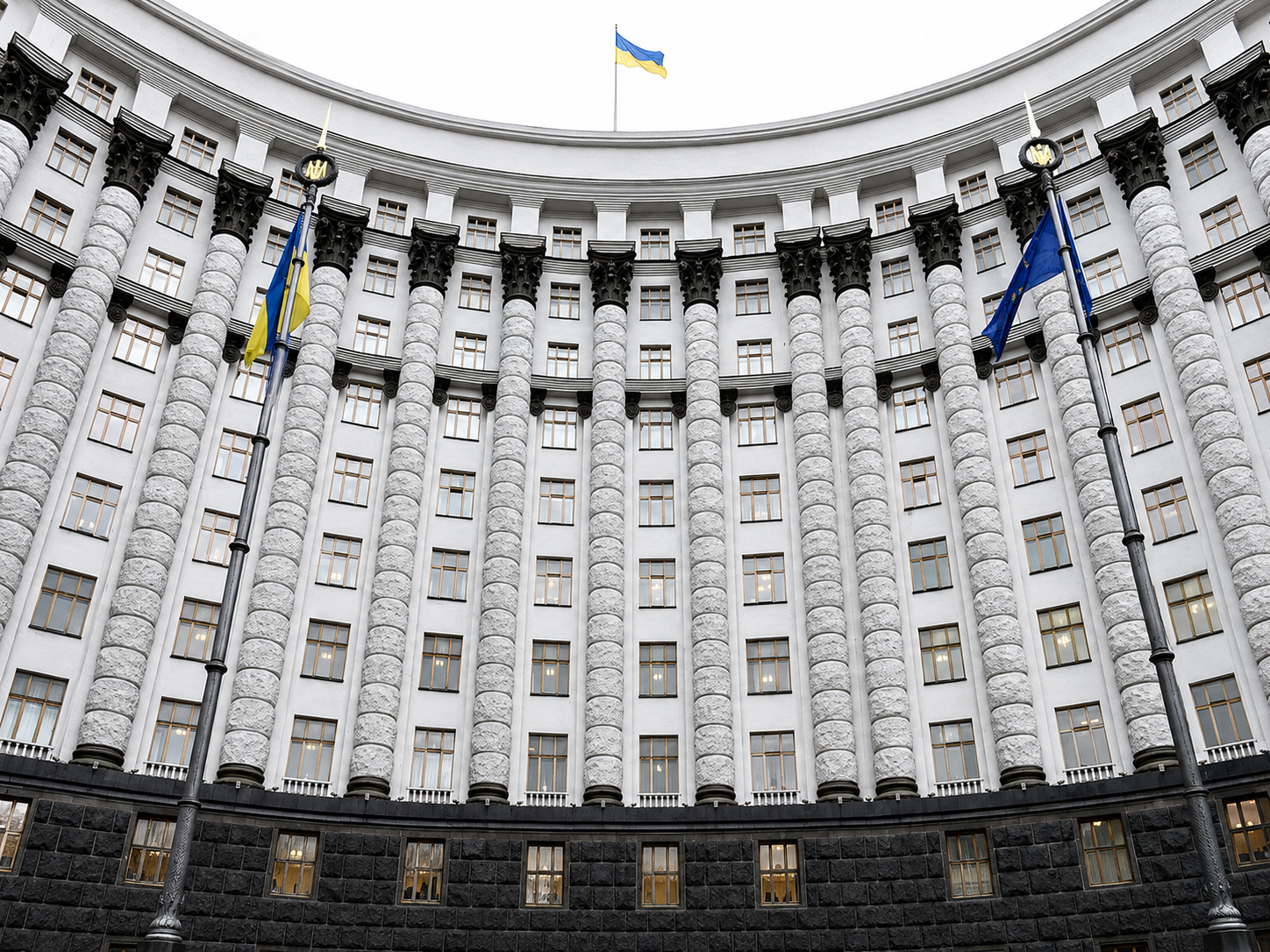
UGA Appeals to the Prime Minister
The Ukrainian Grain Association contacted Prime Minister Serhii Koretskyi at the end of last week, requesting an urgent package of measures to support the agricultural sector.
The Ukrainian Grain Association is the principal source of the information. It links the need for emergency intervention to the critical deterioration of security in the Black Sea and the rapid reduction of Ukraine’s ability to export grains, oilseeds and processed agricultural products.
According to UGA, Koretskyi convened an urgent meeting with representatives of the agricultural sector on Sunday, August 2. The participants outlined a joint action plan covering the restoration of maritime exports, diversification of transport routes and additional financial assistance for producers.
A separate government document containing the complete list of decisions and implementation deadlines had not been published when this article was prepared. Information about the meeting and the preliminary plan is therefore presented as reported by UGA.
Koretskyi has served as Ukraine’s prime minister since July 16, 2026. His appointment was supported by 289 members of the Verkhovna Rada.
Ports Remain Open Only in Formal Terms
Ukraine has not officially closed its deep-water Black Sea ports to commercial shipping.
Actual vessel movements have nevertheless fallen sharply because shipowners and crews consider the risk of entering Ukrainian waters unacceptable.
Agricultural Policy and Food Minister Taras Vysotskyi previously confirmed that vessel calls involving agricultural cargo had been temporarily suspended following the escalation of attacks. He stressed that the Ukrainian authorities had not imposed the restriction; shipowners themselves were declining voyages. The source of that information is Interfax-Ukraine.
UGA estimates that Greater Odesa ports previously received between 10 and 12 vessels per day. The current rate has reportedly fallen to only one or two vessels per week.
This means that the formal legal status of an open port no longer guarantees a functioning export corridor. The market requires available vessels, crews, insurance coverage and freight rates that remain commercially viable.
Attacks Increase Risks for Crews and Port Workers
Russia has intensified attacks on Ukrainian port infrastructure and civilian merchant vessels calling at, remaining in or departing from Ukrainian ports.
The threat extends beyond grain terminals and warehouses. Strikes expose seafarers, pilots, dock workers, drivers, railway employees and personnel supporting export operations to direct danger.
The International Maritime Organization reported a renewed increase in attacks against civilian merchant shipping in the Black Sea and Sea of Azov on July 13.
IMO Secretary-General Arsenio Dominguez said such actions endanger seafarers, threaten navigational safety and disrupt international supply chains.
IMO also states that the continuing armed conflict creates a serious and immediate threat to crews and vessels operating in the region.
Grain Is Accumulating Inside Ukraine
Reduced maritime shipments quickly affect the entire agricultural supply chain.
Exporters cannot complete some foreign-trade contracts within the agreed periods. Grain intended for port delivery and vessel loading remains at inland and port silos.
As existing capacity fills, new consignments must be moved to more distant warehouses, placed at temporary sites or stored in grain bags.
Each additional operation raises expenditure on loading, unloading, drying, aeration, transport and quality control.
The longer crops remain in storage, the greater the risk of weight loss, quality deterioration and pest damage.
The pressure is particularly severe during the main harvest. Producers must free machinery and warehouses for incoming crops while older stocks remain inside the country.
Export Disruption Removes Working Capital
For many agricultural companies, crop sales provide the principal source of cash.
Revenue is used to pay for fuel, seeds, fertiliser, crop-protection products, land rent, wages, machinery maintenance and bank loans.
When exports slow, traders reduce purchases or lower domestic prices to reflect more expensive logistics and the risk of delayed delivery.
The crop may be physically present in a warehouse, but the producer cannot convert it into working capital.
As the disruption continues, the risk of overdue bank payments and unpaid supplier obligations increases.
UGA warns that low domestic prices, expensive storage and insufficient liquidity could produce widespread financial distress across the sector.
Greater Odesa Remains Irreplaceable
Under normal conditions, the deep-water ports of Greater Odesa can handle approximately 6–7 million tonnes of grain per month.
They can serve large ocean-going vessels, providing the lowest transport cost per tonne for shipments to Asia, Africa, the Middle East and Europe.
UGA estimates that Danube ports can normally support around 1–1.5 million tonnes of agricultural exports per month. Road and rail routes provide a further combined capacity of approximately 1–1.5 million tonnes.
A separate assessment by UGA President Mykola Horbachov indicates that the Danube corridor has theoretical technical capacity for up to 2.5 million tonnes of various cargoes per month.
He stressed, however, that such volumes are currently unrealistic because of low water levels, draft restrictions, barge shortages, inspections and continuing security risks.
Even at maximum utilisation, the Danube, railways and road crossings cannot fully replace the deep-water terminals of Greater Odesa.
Low Water Restricts Danube Capacity
Danube water levels have fallen to some of their lowest readings in several decades.
According to Horbachov, some barges are operating at only around one-third of their normal carrying capacity.
Lower utilisation increases the cost per tonne and requires more voyages to move the same amount of cargo.
Further constraints include navigational depth, fleet availability, Romanian port controls and technical requirements for vessels.
Market participants estimate that using the Danube can cost an additional $20–30 per tonne compared with Greater Odesa ports.
Development of the Danube cluster remains essential, but the route should be considered a reserve and supplementary corridor rather than a complete replacement for deep-sea exports.
Western Border Routes Have Their Own Limits
Rail and road logistics across Ukraine’s western border face limited terminal and crossing capacity.
Rail operations are complicated by the difference between the Ukrainian gauge and that used by most EU countries. Cargo must be reloaded, wagon bogies must be changed or goods must be transferred into European rolling stock.
Road transport is suitable for smaller and urgent consignments but is too expensive for mass long-distance exports of maize, wheat and barley.
The harvest in neighbouring countries creates further pressure.
Polish, Romanian, Hungarian, Slovak and Moldovan carriers, warehouses and terminals are simultaneously handling their own crops.
The current crisis may therefore be more difficult than the situation in 2022 because spare transport and storage capacity in neighbouring markets is constrained by seasonal demand.
Nearly 52 Million Tonnes of Exports Are at Risk
The Ukrainian Grain Association raised its 2026 grain and oilseed harvest forecast to 84.6 million tonnes on July 30.
With stable logistics, exports during the 2026/2027 marketing year could approach 52 million tonnes.
Ukraine exported approximately 41.1 million tonnes of grains and oilseeds during the previous season.
UGA forecasts 23.7 million tonnes of wheat, 32.1 million tonnes of maize, 5.5 million tonnes of barley, 13.3 million tonnes of sunflower seed, 3.5 million tonnes of rapeseed and 4.6 million tonnes of soybeans.
Potential wheat exports are estimated at 18 million tonnes, maize exports at 27 million tonnes and barley shipments at approximately 2.3 million tonnes.
UGA itself describes the forecast as optimistic. It depends on the restoration of Greater Odesa port operations, safe navigation and an end to attacks on transport, port and energy infrastructure.
UGA Proposes Five Emergency Measures
The association is asking the government to implement the following steps:
- request a formal International Maritime Organization statement describing the security risks to shipping in Ukrainian waters;
- begin consultations with the European Commission on temporarily increasing the EU tariff quota for Ukrainian wheat to 5 million tonnes until the end of 2026;
- suspend export duties on rapeseed and soybean seeds until the end of the year;
- expand programmes supplying farmers with grain bags and other temporary storage equipment;
- review agricultural financial-support programmes and mobilise additional resources to preserve producer liquidity.
Each measure addresses a separate part of the crisis.
An IMO statement would document the security risk, an expanded EU quota would provide an additional market, duty suspension could support oilseed exports, grain bags would protect the harvest, and finance would reduce the risk of insolvency.
An IMO Statement Could Support Contract Claims
Ukrainian exporters face situations in which a shipowner declines a voyage because of crew-safety risks, while a foreign buyer refuses to accept this as sufficient grounds for releasing the supplier from liability.
UGA believes that a specific International Maritime Organization statement could provide internationally recognised documentary confirmation of the exceptional danger.
Such a document would not automatically establish force majeure under every contract.
The International Chamber of Commerce explains that force majeure depends on the wording of the agreement, the governing law, the causal connection between the event and non-performance, and the measures taken to mitigate the consequences.
The existence of war or danger does not necessarily release a party from its obligations automatically.
An IMO statement could strengthen an exporter’s evidence, but the outcome of a dispute would still depend on the contract and the relevant court or arbitration tribunal.
Wheat Quota Could Rise From 1.3 to 5 Million Tonnes
From 2026, the EU annual duty-free tariff quota for specified categories of Ukrainian wheat is set at 1.3 million tonnes.
That volume is established in European Commission legislation applying from January 1, 2026.
UGA is seeking a temporary increase to 5 million tonnes by the end of the year.
Greater access to the European market could partially offset the reduction in maritime shipments.
Moving several additional million tonnes would nevertheless require railway capacity, border terminals, European-gauge wagons and agreement from EU member states.
The proposal may also require consultations with European producers concerned about pressure on domestic prices.
Duty Suspension Could Accelerate Oilseed Exports
Ukraine operates an export-duty system for soybeans and rapeseed while providing exemptions for verified producers and cooperatives exporting crops they have grown.
Eligibility is confirmed through the State Agrarian Register.
The updated procedure applies to rapeseed from July 1, 2026, and is scheduled to cover soybeans from September 1.
The sources are the Verkhovna Rada of Ukraine and the Ministry of Economy and Environment of Ukraine.
UGA is proposing a broader temporary suspension of the duty rather than relying only on individual exemptions.
The association expects this to simplify transactions, attract more buyers and release storage space before further harvest volumes arrive.
Duty suspension would not solve the physical transport problem. Exporters would still require ports, border crossings, trains and trucks.
Grain Bags Could Prevent Crop Losses
Grain bags are sealed polymer storage systems that can be deployed near farms or elevators.
They can add temporary capacity without the time and expense required to construct permanent warehouses.
The technology is particularly useful when elevators are full but harvesting cannot stop.
Grain can remain in the bags until transport or permanent storage becomes available.
The systems are not a complete substitute for elevators. They require prepared ground, loading and unloading machinery, moisture control, protection from damage and regular monitoring.
A government programme would therefore need to cover not only the bags themselves but also equipment, staff training, insurance and subsequent transport.
Financial Assistance Must Arrive Before Insolvency
One of the main risks is that assistance may come too late.
Agricultural businesses need funding during the harvest and before the next sowing campaign, not after formal insolvency proceedings begin.
Possible instruments include preferential working-capital loans, state guarantees, storage-cost compensation, debt restructuring and insurance for selected war-related risks.
Support should be linked to documented blocked inventory and verified logistics losses.
The government would also need controls ensuring that funds reach active producers genuinely affected by export disruption.
Consequences Will Extend Beyond Ukraine
A prolonged decline in Ukrainian exports could affect countries dependent on imported wheat, maize, vegetable oils and feed ingredients.
The problem is not limited to the total global availability of grain. Buyers need specific volumes at agreed times and commercially acceptable prices.
When Ukrainian supply is removed, importers must find more distant origins, pay higher freight rates and compete for available cargoes.
The International Maritime Organization has warned that attacks on merchant vessels disrupt global supply chains and undermine the principles of free navigation.
Low-income countries with limited foreign-currency reserves and high food-import dependence are likely to be the most exposed.
Government Needs a Measurable Crisis Plan
An emergency meeting alone will not restore agricultural exports.
The market needs concrete decisions: which authority will contact IMO, when European Commission consultations will begin, how many grain bags will be supplied, which producers will qualify for finance and how western border capacity will be increased.
The government also needs scenarios covering further security deterioration, partial restoration of vessel calls and another temporary suspension of shipping.
The most resilient strategy would preserve the deep-water maritime route while expanding reserve corridors through the Danube, Moldova, Romania, Poland, Slovakia and Hungary.
Land logistics cannot fully replace Greater Odesa. Distributing part of the flow among several routes can nevertheless reduce losses during future disruption.
The Next Several Weeks Will Be Decisive
Ukraine is entering the peak arrival period for the new harvest while maritime logistics remain severely constrained.
Without renewed vessel calls, available elevator capacity will decline rapidly, while pressure on domestic prices and producer working capital will increase.
The projected 84.6 million-tonne harvest could provide a major resource for Ukraine’s economy and global trade.
It must not only be harvested but also stored safely, financed and delivered to buyers.
UGA’s proposals provide the foundation for a potential emergency package.
The decisive issue is how quickly the government can turn the industry appeal into official decisions, funding and functioning export corridors.
Read also: New Ship Strike Reported off Odesa
