

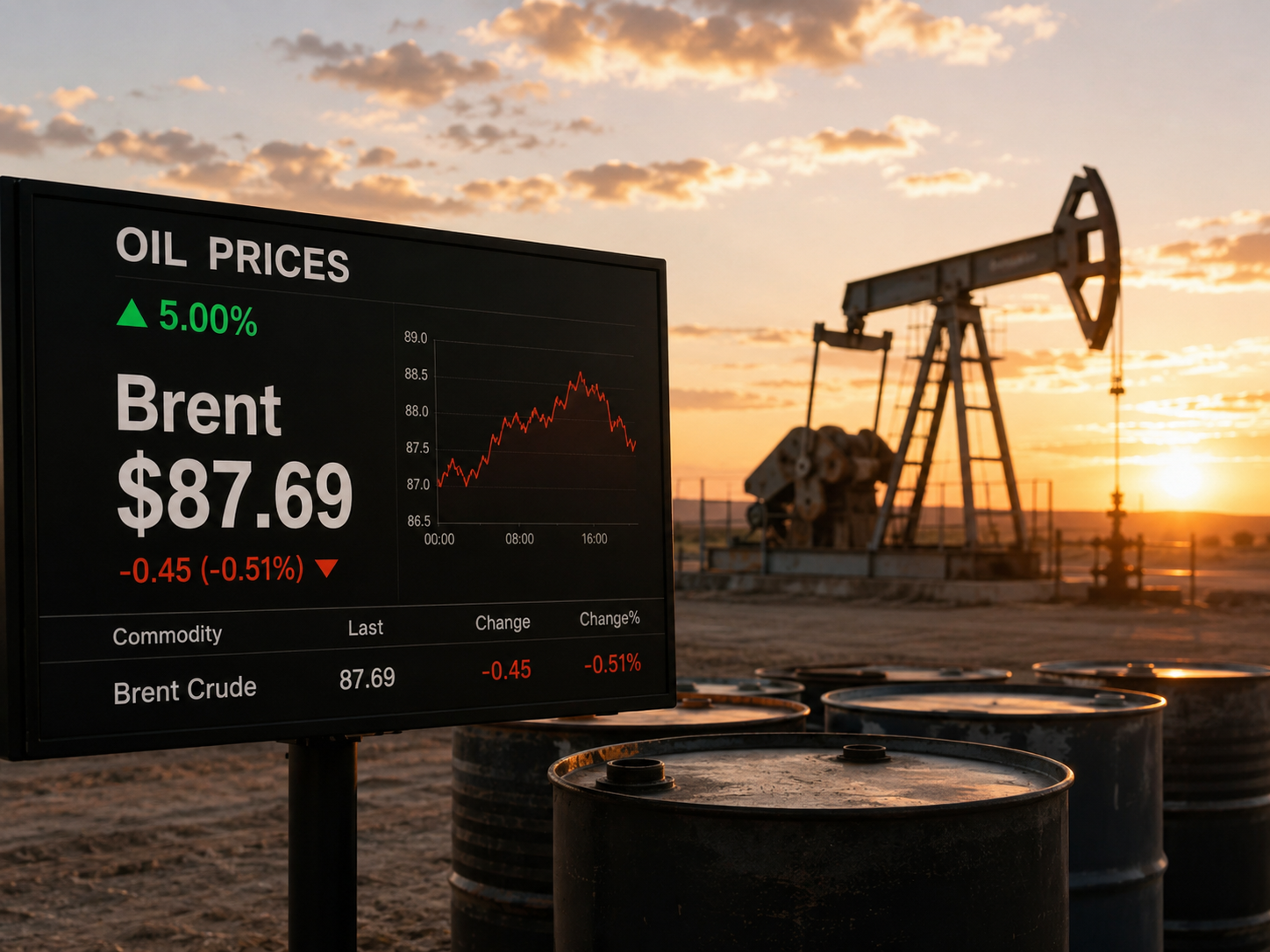
Price Rally Gives Way to a Correction
Oil prices rose sharply on August 10 as hopes faded for an imminent US-Iran agreement and the full restoration of shipping through the Strait of Hormuz.
According to Reuters, Brent futures gained 4.99% to settle at $87.72 per barrel. US West Texas Intermediate rose 5.05% to $82.13. The percentage gains were the largest for both benchmarks since July 29.
The market changed direction on the morning of August 13. Brent fell 1.5% to $87.69 per barrel, while WTI declined 1.6% to $81.97. Oil is therefore not rising continuously: geopolitical supply risks are keeping prices elevated, but weaker demand forecasts and inventory data are driving significant volatility.
US-Iran Negotiations Remain Deadlocked
A senior Iranian source told Reuters that no progress had been made on reviving the interim agreement reached in June or defining a timetable for its implementation.
Tehran is demanding sanctions relief, an end to military threats and compensation before fully reopening the Strait of Hormuz. US President Donald Trump has also said he would seek compensation from Iran for people killed or injured during the conflict.
Without a direct agreement, shipping through Hormuz remains severely restricted, and the timetable for restoring oil flows from Gulf producers is uncertain.
Hormuz Remains the Main Supply Risk
Before the conflict, approximately 20 million barrels of crude oil and petroleum products passed through the Strait of Hormuz each day, representing around a quarter of global seaborne oil trade.
Kpler data showed that only six vessels transited the strait on August 10, compared with a ten-day average of approximately 11. Before the war, around 130–140 vessels of different types normally used the route each day.
Attacks in the Bab el-Mandeb Strait are creating an additional security threat. Deteriorating conditions at both strategic gateways between the Gulf, Red Sea and Suez Canal are reducing the number of safe and commercially viable routes available to shipping companies.
IEA Cuts Global Oil Supply Forecast
The International Energy Agency expects global oil supply to decline by an average of 4.3 million barrels per day in 2026 to approximately 102 million barrels per day. July supply remained 6.3 million barrels per day below the previous year’s level, with around 8.3 million barrels per day of Gulf production still shut in.
At the same time, the IEA forecasts a 1.6-million-barrel-per-day contraction in global oil demand as high prices, restricted fuel availability and weaker economic activity reduce consumption. OPEC has lowered its 2026 demand growth forecast to 580,000 barrels per day.
US Energy Information Administration data added further pressure. Commercial crude inventories rose by 17.4 million barrels to 424.4 million barrels during the week ending August 7, despite analysts expecting a decline.
Logistics Costs Remain Exposed
For the transport and logistics industry, continued uncertainty creates a risk of higher bunker fuel, diesel, war-risk insurance and freight costs. Shipowners may continue switching off AIS signals, reconsidering regional port calls and diverting vessels around the Cape of Good Hope.
Longer routes reduce effective fleet capacity, extend delivery times and increase companies’ working-capital and inventory requirements. Asian economies are particularly exposed because they received most of the oil previously transported through Hormuz.
As of August 13, the oil market is being pulled in opposite directions: the US-Iran deadlock is supporting prices, while weaker demand forecasts and higher US inventories are limiting further gains.
Read also: Russia and China Could Receive Preferential Hormuz Access as Iran Plans Special Terms for Ships
