

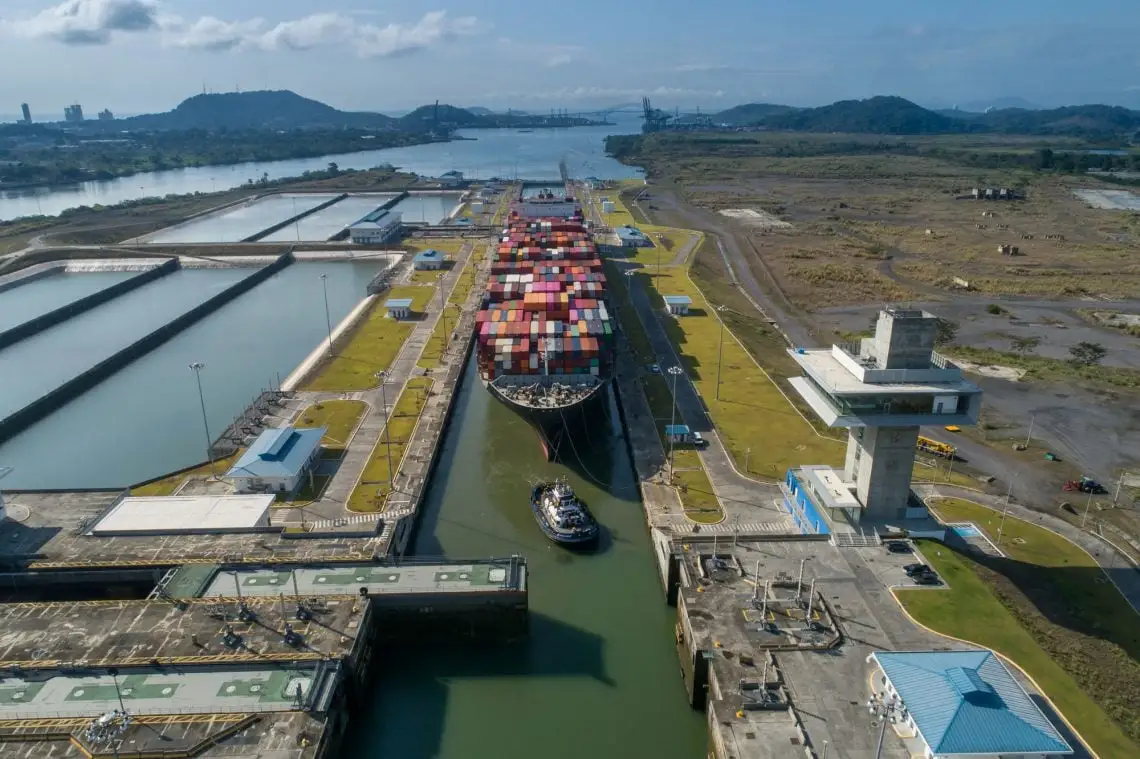
Canal Marks 112 Years With Higher Traffic
The Panama Canal, which opened on August 15, 1914, has marked 112 years of operations. According to the Panama Canal Authority, 10,623 deep-draft vessels transited the waterway between October 2025 and July 2026.
The canal recorded 10,010 transits during the corresponding ten months of fiscal year 2025. Traffic therefore increased by 613 vessels, or 6.12%.
The waterway currently connects 180 trade routes and approximately 1,920 ports in 170 countries. Its administration estimates that the canal handles around 3% of international maritime trade and cargo worth approximately $444 billion annually.
Neopanamax Vessels Account for Nearly 3,000 Transits
Of the vessels using the canal during the reporting period, 2,990 were Neopanamax ships operating through the expanded locks commissioned in 2016.
The remaining 7,633 transits involved Panamax vessels designed for the canal’s original lock system.
The increase indicates stronger demand following the water-related restrictions that previously constrained capacity. Rerouting caused by instability along other international maritime corridors is also generating additional traffic. K2Cargo.News previously reported that the Panama Canal is strengthening its role as an alternative route for global trade.
Corozal and Telfers Will Expand Container Capacity
Under its Vision 2025–2035 strategy, the authority plans to develop the canal beyond its traditional transit function and establish a broader international logistics, energy and services platform.
The programme includes two container transshipment terminals: Corozal on the Pacific side and Telfers on the Atlantic coast. Together, the facilities are expected to add between 5 million and 6 million TEU of annual transshipment capacity.
The Río Indio Lake project is intended to strengthen Panama’s long-term water security and provide additional resources for both the population and canal operations.
Energy Corridor Will Extend Approximately 76 km
Another strategic project is an energy corridor connecting the Atlantic and Pacific coasts. The plan includes an approximately 76-kilometre pipeline and terminals on both oceans.
According to the Panama Canal Authority’s project information, the infrastructure will transport propane, butane and ethane, with projected capacity of up to 2.5 million barrels per day.
The pipeline would allow energy products to move between the two oceans without passing through the locks or consuming additional freshwater for canal transits.
Neopanamax Draft Limits Will Change
Despite the traffic increase, the canal is again facing climate-related risks. The authority is monitoring the potential intensification of El Niño conditions and water levels in the Gatún and Alhajuela reservoirs.
From August 26, the maximum authorised draft for vessels using the Neopanamax locks is scheduled to be 48 feet, or 14.63 metres. From September 3, the limit is expected to be set at 47.5 feet, or 14.48 metres.
Water-saving measures have been applied since late 2025. During this year’s dry season, relatively favourable conditions allowed the authority to reinforce reserves in the canal’s two principal reservoirs.
Changes to the permitted draft may require some vessels to carry less cargo or redistribute containers. Water availability therefore remains one of the main factors affecting canal capacity, shipping schedules and transportation costs between the Atlantic and Pacific oceans.
Read also: The Panama Canal and Global Shipping Could Come Under Pressure Due to El Niño