

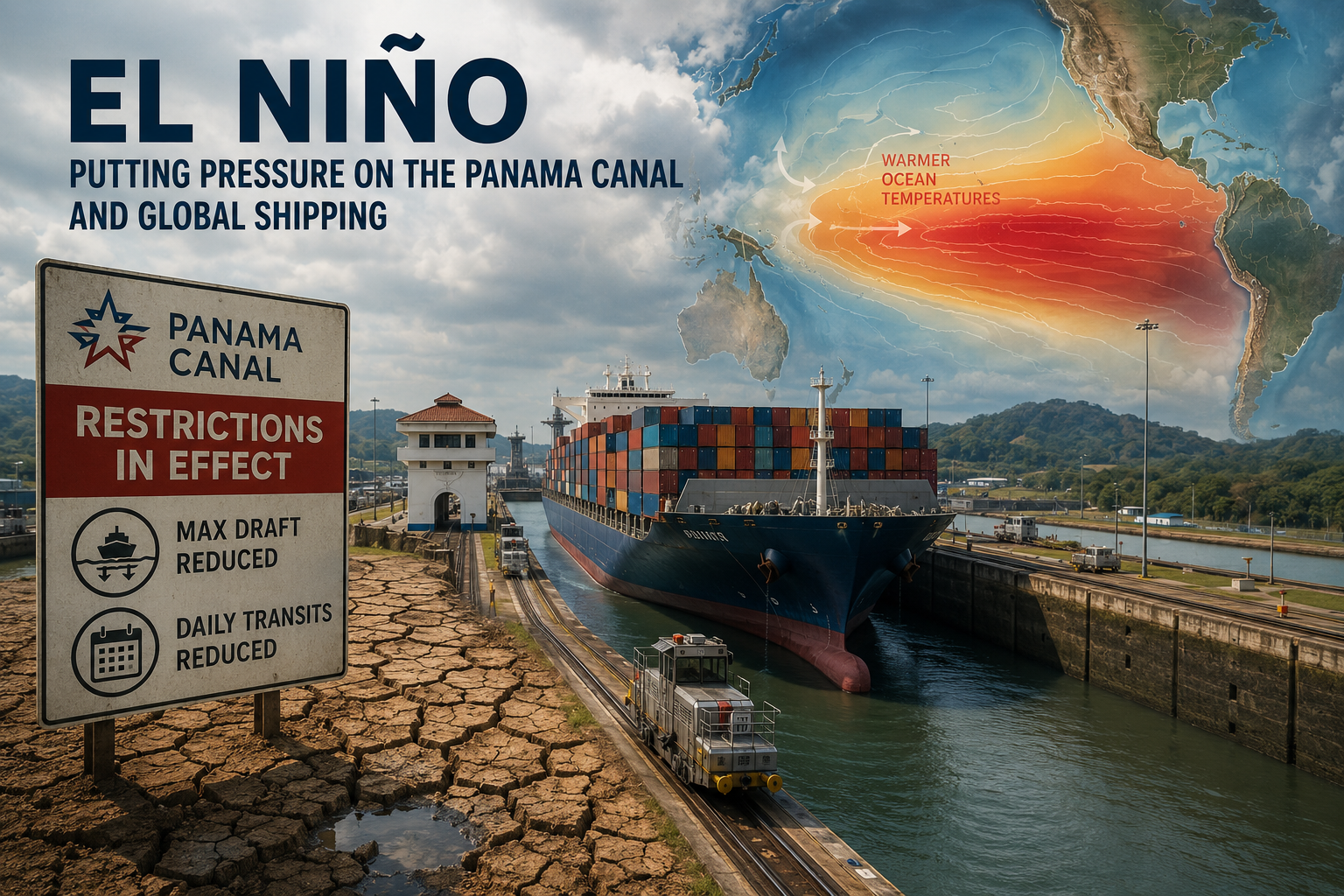
The U.S. National Oceanic and Atmospheric Administration has officially confirmed the development of the El Niño climate phenomenon in the tropical Pacific Ocean. According to experts’ forecasts, it may reach one of the highest levels of intensity ever recorded by the end of the year, creating serious risks for global logistics and maritime transportation as a whole.
According to estimates from the Climate Prediction Center, the probability of El Niño reaching high intensity between November and January stands at 88%, while the likelihood of a very strong event is estimated at 63%. In such a scenario, the current phenomenon could be comparable to the events of 1997–1998 and 2015–2016, which had a significant impact on global trade and the transportation industry.
One of the most vulnerable assets is the Panama Canal. During the previous El Niño event in 2023–2024, severe drought led to declining water levels, forcing the canal’s administration to restrict vessel draft and reduce the number of daily transits. As a result, many carriers faced a substantial increase in logistics costs.
The Panama Canal Authority is already taking preventive measures and closely monitoring weather conditions. Additional pressure on the canal comes from growing U.S. energy exports, including petroleum products, liquefied petroleum gas, and ethane.
Experts argue that the consequences of El Niño could extend far beyond Panama. Changes in precipitation patterns may affect the operation of other transport corridors, as well as agricultural production in several regions around the world. This could lead to shifts in trade flows and demand for maritime shipping services in the coming months.
Read also: New Al Dhaid Logistics Hub to Strengthen Trade Flows Across the Gulf Region