

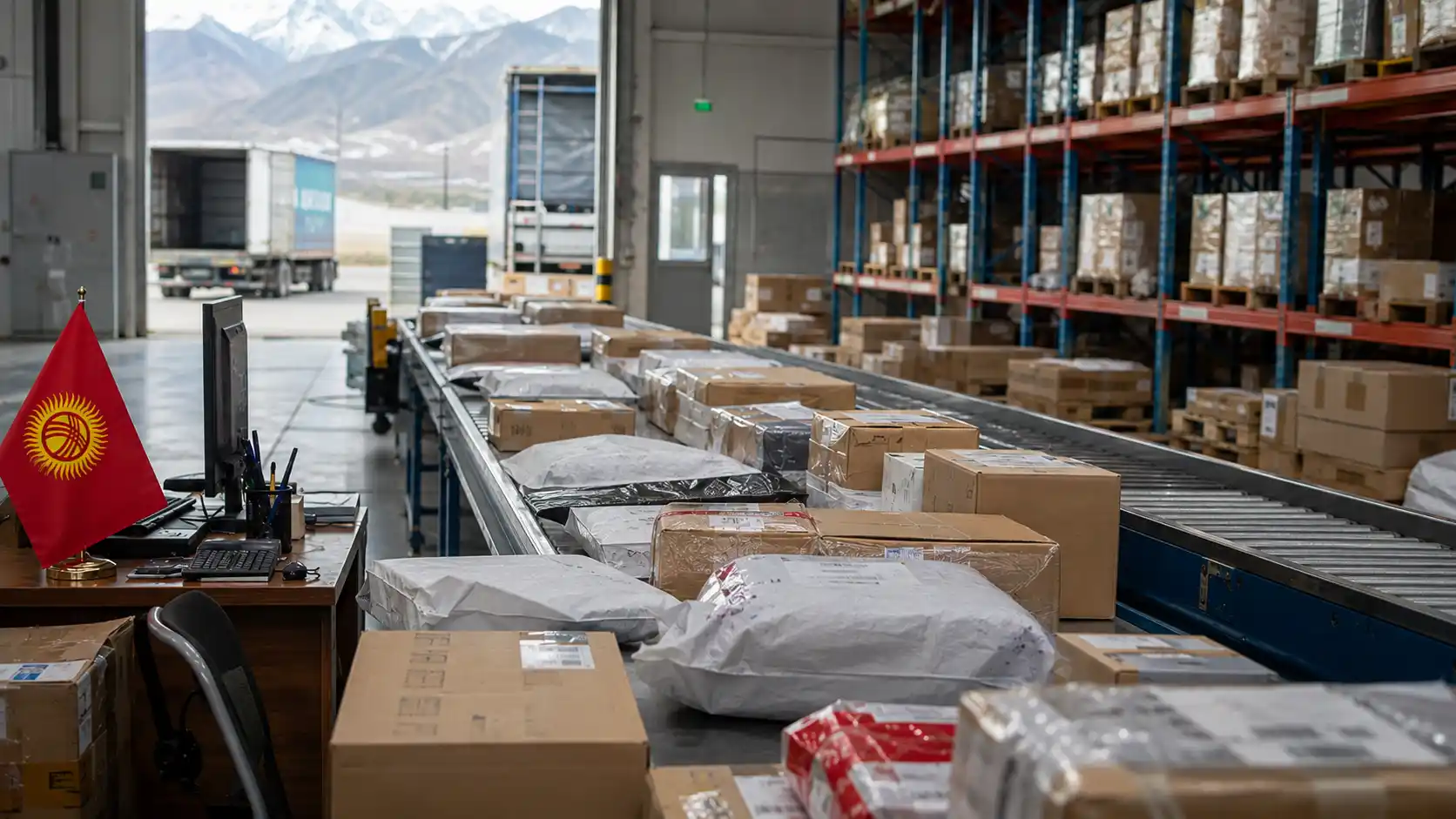
The regulatory framework for e-commerce operators and bonded warehouses has been prepared but cannot be fully applied until amendments to the EAEU Customs Code enter into force
No Warehouse Projects Have Been Approved
Reports that Kyrgyzstan will establish dedicated customs warehouses for online retailers remain preliminary. No specific construction projects, locations, investment amounts or launch dates have been approved.
Deputy Minister of Economy and Commerce Iskender Asylkulov said the creation of specialised warehouse infrastructure has not yet been formally considered.
“As of today, the construction of separate customs warehouses for e-commerce goods has not yet been considered,” Iskender Asylkulov said
Earlier announcements should therefore be understood as descriptions of what the future EAEU rules may permit rather than confirmation that warehouse construction has begun in Kyrgyzstan.
New EAEU Rules Are Not Yet Operational
The new model is based on a protocol amending the Treaty on the Customs Code of the Eurasian Economic Union. The document was signed on December 25, 2023.
According to the Eurasian Economic Commission, the protocol provides for:
- a separate customs category for cross-border e-commerce goods;
- the introduction of authorised e-commerce operators;
- a dedicated e-commerce customs declaration;
- the sale of goods to individuals from customs, or bonded, warehouses;
- specific procedures for calculating and paying customs duties.
Kyrgyzstan ratified the protocol in October 2024. However, the relevant EAEU procedures must be completed before the new regime can take effect across the Union.
In June 2026, the EEC further amended the rules for completing the new declaration. The Commission confirmed that the e-commerce declaration will only be used once the Customs Code amendments enter into force.
Kyrgyzstan Has Prepared National Legislation
Kyrgyzstan amended its national customs legislation in November 2025. Law No. 253 introduced provisions required for handling e-commerce goods, operators and specialised customs infrastructure.
The government adopted an additional implementing resolution in June 2026 to align secondary legislation with the amendments.
National preparations, however, do not automatically activate the new system. The relevant provisions cannot be fully applied until the EAEU protocol itself becomes effective.
A distinction must also be made between adopting a regulatory framework and developing physical facilities. Permission to use bonded warehouses does not require the government or private companies to begin construction immediately.
How Bonded E-Commerce Warehouses Could Operate
The protocol would allow foreign sellers and marketplaces to import goods into the EAEU in advance and store them under customs control.
Products could remain at a warehouse until purchased by an individual customer. After the sale, an e-commerce operator would arrange the declaration, payment of applicable duties and final delivery.
This model differs from direct cross-border shipping, under which each parcel is sent from another country directly to the buyer. Holding inventory locally could potentially:
- shorten delivery times;
- consolidate international shipments;
- simplify returns;
- improve the availability of popular products;
- standardise customs clearance.
Operators would still require authorisation, compliant information systems, financial guarantees and facilities meeting customs-control requirements.
Legal Permission Does Not Guarantee Construction
The amendments create a legal basis for the warehouse model, but they do not confirm that dedicated facilities will automatically appear in Kyrgyzstan as soon as the protocol enters into force.
Implementation will require commercially interested operators, investment, suitable land, warehouse equipment and integration with customs information systems.
Business decisions will also depend on construction costs, order volumes, customs-duty rates, operator requirements and the possibility of serving shipments to other EAEU countries.
At this stage, it is therefore more accurate to describe the initiative as a regulatory mechanism under preparation rather than an approved warehouse-construction programme.
E-Commerce Market Reached $525 Million
The Kyrgyz Cabinet estimates that the domestic e-commerce market reached $525 million in 2025. The figure increased by approximately 15%, or $68.5 million, from the previous year.
Market growth is creating demand for fulfilment centres, sorting infrastructure, courier services, pick-up points and digital customs solutions.
Bonded warehouses could become the next stage in this development by allowing marketplaces to hold popular products closer to customers and reduce reliance on the international shipment of every individual parcel.
Until the new rules officially take effect, however, companies should not treat the warehouse model as an operational customs regime. Launch dates, operator requirements and the parameters of any future facilities will require confirmation through separate decisions by national authorities and the EEC.
Read also: Türkiye Proposes Free Seller Data Transfers Between Marketplaces