

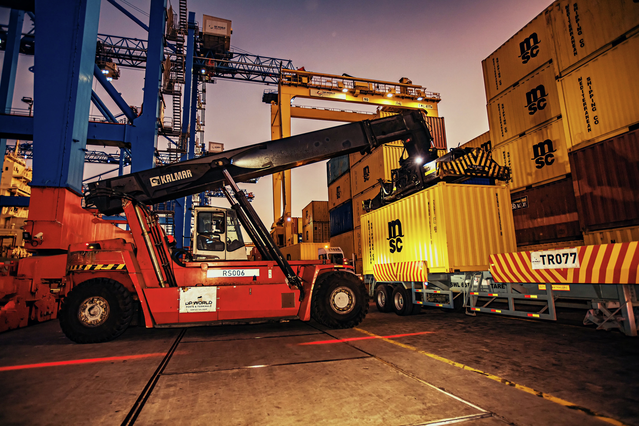
The redevelopment of seven cargo yards is expected to expand capacity at Tanzania’s main
maritime gateway and strengthen logistics links across East and Central Africa
Construction Is Already Underway
DP World has appointed EDECS Group to modernize seven operational yards at Terminal 1 of Tanzania’s Dar es Salaam Port. Construction work is already progressing at the site.
According to the official EDECS Group announcement, the project covers approximately 90,000 m². The contractor is responsible for designing and building dedicated cargo and material-handling yards together with supporting infrastructure.
Neither the contract value nor the expected completion date has been disclosed.
Seven Cargo Yards Will Be Redeveloped
The project includes new and upgraded gates, utilities and infrastructure required to support advanced digital yard-management systems.
The scope also covers:
- expanded cargo storage and handling facilities;
- a high-mast lighting system;
- digital infrastructure for managing terminal yards;
- a comprehensive port-wide fire-protection network;
- engineering solutions intended to improve operational safety and resilience.
The fire-protection and lighting systems will extend beyond the seven yards covered by the original contract. These improvements should support safer round-the-clock operations and provide better oversight of cargo movements within the port.
Terminal 1 Set a Record of 46,582 TEU
The redevelopment comes as cargo volumes continue to rise. Terminal 1 handled a record 46,582 TEU in July 2026, its highest-ever monthly container throughput.
The comparable transformation benchmark was 13,779 TEU in May 2024. The July 2026 result was therefore more than three times higher.
Dar es Salaam Port has surpassed 30 million tonnes in annual throughput and handles more than 90% of Tanzania’s international maritime trade.
DP World operates Terminal 1, which processes containers, general cargo and bulk commodities. Its official terminal information also lists shore handling, grain storage and bagging, stevedoring and export-hub services.
Dar es Salaam Serves Seven Landlocked Countries
The project’s significance extends beyond Tanzania. Dar es Salaam is a primary maritime gateway for seven landlocked economies across East and Central Africa.
Terminal performance directly affects the cost and speed of freight movements along regional transport corridors. Limited yard capacity and cargo-handling delays can lead to queues of trucks and railway wagons, longer container dwell times and higher costs for importers.
The new yards should help the terminal accommodate rising volumes, improve cargo allocation and reduce unnecessary internal movements. Digital management systems could also strengthen planning accuracy and operational visibility.
DP World Expands Its African Logistics Footprint
The Dar es Salaam project forms part of DP World’s broader expansion of port and inland logistics infrastructure across Africa. The company is increasingly linking marine terminals with road, rail and warehousing networks to provide integrated regional supply chains.
“The modernization of the DP World terminal remains central to improving trade connectivity and logistics efficiency across East and Central Africa,” Martin Jacob, CEO of DP World Dar es Salaam, said
The project’s wider impact will depend not only on terminal capacity but also on the performance of road and railway corridors, customs services and cargo evacuation systems.
If landside infrastructure develops alongside the port, Dar es Salaam could strengthen its position as one of Africa’s most important logistics hubs.
Read also: Casablanca Handles 17 Million Tonnes as Maersk Strengthens Tangier Link