

The partnership covers technology and port-management cooperation but does not yet include a new shipping service or guaranteed cargo volumes
Port Authorities Sign Cooperation Memorandum
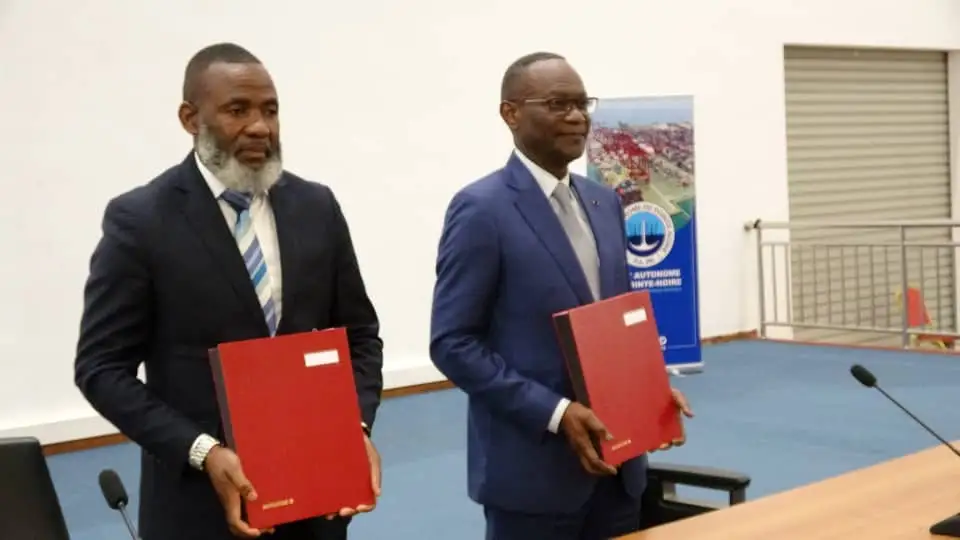
The Port Autonome de Pointe-Noire in the Republic of the Congo and the Namibian Ports Authority, Namport, have signed a memorandum of understanding establishing a long-term framework for cooperation.
The agreement was concluded in Pointe-Noire on August 21, 2026. According to Maritimafrica, the ceremony was attended by Congolese Foreign Minister Constant Mbounda and Namibia’s Minister of International Relations and Trade, Selma Ashipala-Musavyi.
The memorandum provides for exchanges of technical expertise, port-management practices and operational experience. The authorities also intend to explore joint initiatives aimed at improving the performance, attractiveness and competitiveness of their respective port platforms.
Two Gateways Serve Different African Markets
Pointe-Noire is the Republic of the Congo’s principal maritime gateway and an important port platform for Central Africa. In addition to domestic cargo, it has the potential to serve transit flows moving to and from landlocked markets in the region.
Walvis Bay performs a comparable role in Southern Africa. Road and rail corridors connect the Namibian port with Botswana, Zambia, the Democratic Republic of the Congo, South Africa and other markets in the Southern African Development Community.
The two facilities therefore serve complementary hinterlands. Their cooperation could support greater coordination of port procedures, cargo information and marketing of transport connections between Central and Southern Africa.
Walvis Bay Has Capacity for 750,000 TEU
According to official information published by Namport, Walvis Bay is Namibia’s largest commercial port. It receives approximately 899 vessels and handles about 8 million tonnes of cargo annually.
Its container-handling capacity stands at 750,000 TEU. The port has 13 commercial berths, while the container terminal opened in 2019 provides a 600-metre quay wall and a maximum water depth of 16 metres.
The Trans-Kalahari, Trans-Cunene and Walvis Bay–Ndola–Lubumbashi corridors connect the port with inland industrial, agricultural and mining regions. These links are central to Walvis Bay’s role as an alternative Atlantic gateway for Southern African cargo.
Cooperation Could Support AfCFTA Trade
The partnership is consistent with efforts to expand intra-African trade under the African Continental Free Trade Area. Efficient seaports alone cannot transform regional logistics without reliable road, rail and border connections to inland markets.
Potential areas of cooperation include digital documentation, terminal management, security, staff training and coordination with customs authorities. Joint promotion could also make the two ports more visible to shipping lines and logistics companies developing services between Central and Southern Africa.
For shippers, the longer-term benefit could be a wider choice of gateways and more resilient supply chains. However, this will require port improvements to be matched by investment in inland corridors and simplified cross-border procedures.
The Memorandum Does Not Yet Create a New Route
Neither port authority has announced an investment budget, implementation timetable or commitments from shipping companies. The agreement also does not establish a scheduled maritime service between Pointe-Noire and Walvis Bay.
The memorandum should therefore be viewed as an institutional foundation rather than an operational transport product. Its commercial impact will depend on the projects that follow, participation by carriers and freight forwarders, and the capacity of connecting road and rail networks.
If the commitments are translated into practical measures, Pointe-Noire and Walvis Bay could strengthen their roles as complementary Atlantic gateways and contribute to more diversified freight flows across the African continent.
Read also: South Africa Opens Its Rail Network to Private Operators