

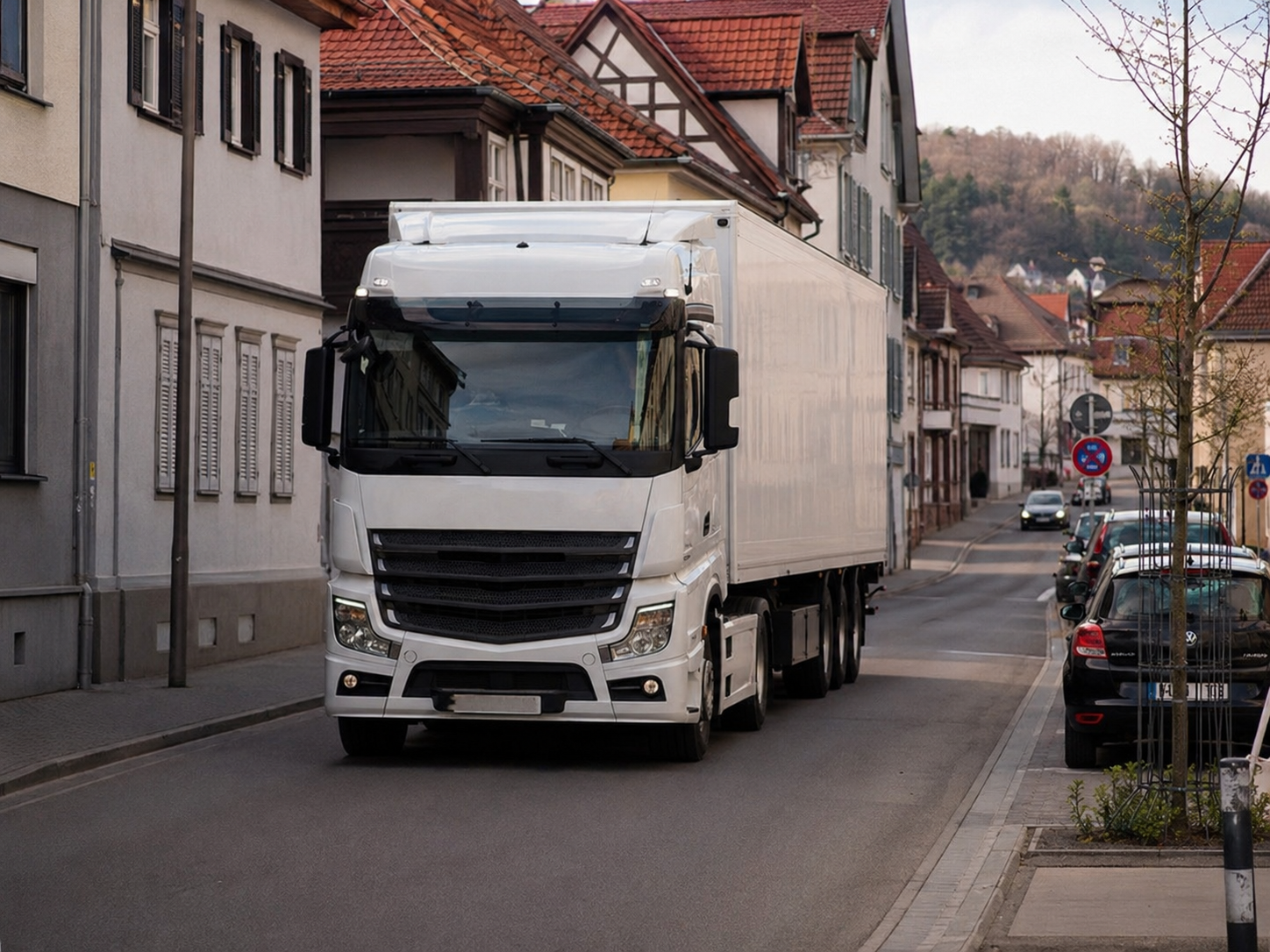
A dispute over truck noise in the German city of Hagen escalated into a police case after a local resident tried to stop a heavy vehicle on a public road. The incident happened on the morning of July 5 in the Altenhagen district and ended with a criminal complaint for dangerous interference with road traffic.
According to Hagen police, a witness called officers at around 08:40 after seeing a man shouting in Friedenstraße. When a patrol arrived, officers found two men, a truck, a chair and a waste bin on the road.
The truck driver told police that the 60-year-old resident first stepped onto the carriageway and gestured strongly, forcing the vehicle to stop. The man then placed a waste bin on the road to prevent the truck from continuing. When the driver tried to proceed, the resident threw a chair at the truck, causing damage.
During questioning, the man explained that the truck had disturbed his Sunday rest. After the driver left the scene, the resident calmed down and cooperated with officers. Police nevertheless issued an official warning and filed a report against him for dangerous interference with road traffic.
As K2Cargo News previously reported in Europe Introduces Summer Truck Driving Restrictions for 2026, truck movement in Europe is already shaped by weekend bans, local restrictions and public pressure. The Hagen incident shows how quickly tension around freight traffic can move from irritation to a safety risk.
Sunday Rest Meets Road Freight
The idea of Sunday rest is deeply rooted in Germany and many other European countries. Residents expect less noise, fewer commercial activities and calmer streets on Sundays. At the same time, logistics does not stop completely. Some truck movements remain necessary because of delivery schedules, exceptions, industrial operations or return trips.
This creates a conflict that is familiar to many cities. Residents want quieter neighborhoods, while freight operators need access to roads and customers. Usually, this tension is managed through traffic rules, delivery windows, noise standards and weekend driving restrictions.
But blocking a vehicle on a public road is not a legal solution. It creates a direct danger for the driver, pedestrians and other road users. A truck cannot always stop or maneuver quickly, and unexpected obstacles can lead to accidents.
The Hagen case is therefore not only a neighborhood dispute. It is a reminder that road safety must remain the priority, even when residents are frustrated by traffic noise.
Why the Police Treated It Seriously
Police classified the case as dangerous interference with road traffic.
This is a serious category because it concerns actions that can endanger vehicles or people on the road. Placing objects on the carriageway, forcing a vehicle to stop or throwing objects at a moving or operating truck can create unpredictable consequences.
Even if the resident’s motive was irritation rather than a plan to cause harm, the result could still have been dangerous. A waste bin in the road can force a driver into sudden braking. A chair thrown at a cab can distract or injure the driver. Damage to the vehicle can also create further operational and insurance issues.
For transport companies, such incidents are a reminder that drivers may face not only traffic and regulatory challenges, but also direct conflict with residents. Drivers should avoid confrontation, document incidents and call police when a road user or bystander creates a safety hazard.
A Broader Urban Logistics Problem
Urban freight is becoming more sensitive across Europe.
Cities need trucks for shops, construction sites, waste management, parcels, food supply and industrial deliveries. Yet the same vehicles generate noise, emissions and congestion. As residential areas become denser and delivery expectations rise, conflicts between logistics and local communities can become more frequent.
Germany already uses various tools to manage this balance: truck bans on certain roads, Sunday and holiday restrictions, environmental zones, time windows and route planning. But these rules cannot eliminate every conflict.
The real challenge is predictability. Residents need to know when and why heavy vehicles move through their streets. Carriers need clear rules and safe routes. Cities need enforcement that protects both quality of life and the functioning of supply chains.
What Carriers Can Learn
For carriers, the Hagen incident may seem unusual, but it contains a practical lesson.
Drivers should be trained to treat aggressive behavior from pedestrians or residents as a safety incident, not as a personal argument. If someone blocks a truck, places an object in the road or throws something at the vehicle, the correct response is to stop safely if possible, avoid escalation and call the police or dispatcher.
Companies should also communicate with customers about delivery timing in residential areas. Early-morning or weekend truck movements can trigger complaints, especially if they involve repeated routes, engine noise, reversing alarms or loading activities.
Not every complaint is justified, but every conflict can become costly if it turns into damage, delay or legal action.
Safety Must Come First
The Hagen case ended without reported injuries, but it could have been more serious.
A truck is a large vehicle with limited maneuverability, and unexpected obstacles on the road can create danger within seconds. Throwing objects at a cab is also a direct risk to the driver’s attention and safety.
Residents have the right to report noise, suspected violations or illegal truck movement. But they must use legal channels: police, municipal authorities, road regulators or complaint systems. Taking matters onto the road can turn a nuisance complaint into a criminal investigation.
For the logistics sector, the incident underlines a growing reality: freight transport operates in public space, and public acceptance matters. But public acceptance cannot be built through confrontation. It requires clear rules, safer routes, better communication and respect for both drivers and residents.
Read also: Europe Introduces Summer Truck Driving Restrictions for 2026