

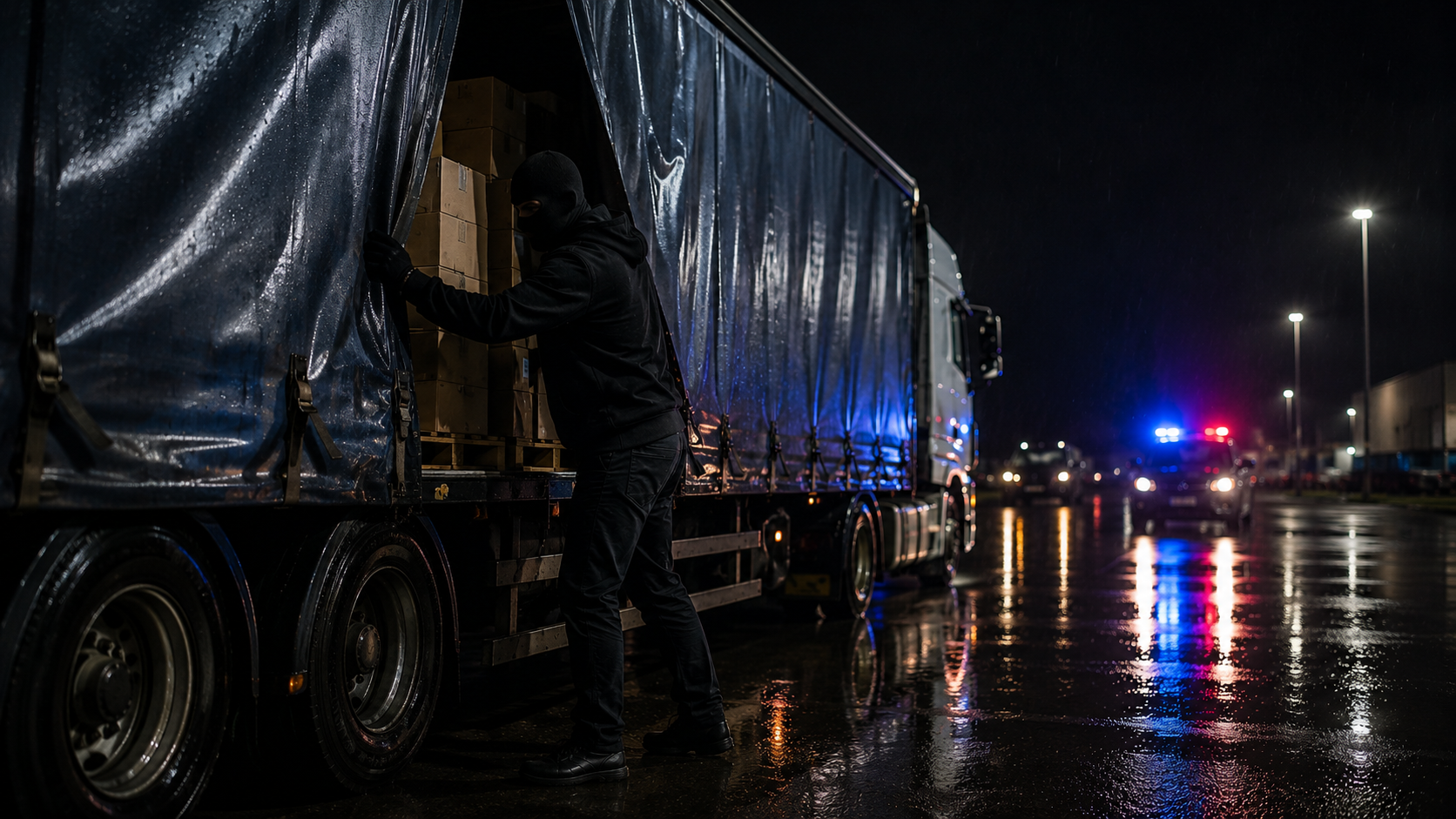
Cargo theft is no longer a problem limited to high-value electronics or luxury goods. In today’s European road freight market, almost any commercial cargo can become a target if criminals see an opportunity.
The most vulnerable moments remain mandatory driver stops at roadside parking areas, service stations and rest zones. Trucks carrying electronics, mobile phones, clothing, alcohol, tobacco products and diesel fuel are especially attractive to thieves, but the list is expanding. For organised groups, the cargo itself matters less than the ability to sell it quickly and avoid detection.
The problem is not only financial. Theft can disrupt delivery schedules, damage customer relationships, create insurance disputes and put drivers under serious pressure. In many cases, the driver is the first person left to deal with the consequences, even when the crime was planned by a professional group.
As K2Cargo News previously reported in Spain Dismantles Gang Robbing Moving Trucks, cargo crime in Europe is becoming more organised and more daring, with criminals targeting trucks both at rest and on the move.
Parking Areas Remain the Weak Point
For long-distance drivers, stopping is not optional.
European driving and rest-time rules require regular breaks, and drivers must find parking even when safe spaces are unavailable. This creates a structural vulnerability: criminals know where trucks are likely to stop and when drivers are likely to be sleeping.
Many thefts take place at poorly lit or unsecured parking areas. A truck may be parked legally, but still exposed. If there are no cameras, fences, access controls or patrols, thieves can inspect trailers, steal fuel or remove goods with limited risk.
The lack of secure truck parking remains one of the biggest security gaps in European logistics. Even experienced drivers cannot fully protect a load if they are forced to spend the night at an unguarded roadside area.
Curtain Slashing and Endoscopes
One of the most common methods remains “curtain slashing.”
Criminals make small cuts in the tarpaulin of a trailer and use endoscopes or similar devices to inspect the cargo inside. If the goods are valuable, they can return later to steal them. The method allows thieves to identify targets while keeping visible damage relatively limited.
This technique is efficient because it reduces guesswork. Instead of opening a trailer blindly, criminals can check whether the load is worth the risk. It also shows how professional cargo theft has become: tools, reconnaissance and timing are often used together.
For carriers, curtain slashing creates several problems at once. The cargo may be stolen, the trailer damaged, the delivery delayed and the insurance process complicated. Even when nothing is taken, the load may need to be checked, resealed or rejected by the receiver.
Fuel Theft Adds Another Cost
Diesel theft has also become a serious problem.
Fuel tanks can be drained during overnight stops, at construction sites or in remote parking areas. When fuel prices rise, the incentive for theft increases. For a carrier, the loss is not only the value of the diesel. A drained tank can delay the trip, require roadside assistance and disrupt the driver’s schedule.
Fuel theft is especially damaging for smaller operators. Large fleets may absorb losses through insurance and security systems, but small carriers often operate on thin margins. One theft can affect cash flow, route planning and customer commitments.
The problem is also difficult to investigate. Diesel can be stolen quickly, moved easily and sold through informal channels. Unless the theft is recorded or the perpetrators are caught near the scene, recovery is unlikely.
Distraction Fraud Targets Drivers
Not all thefts involve breaking into trailers.
Police also report fraud schemes based on distracting drivers. Criminals may pretend to have a vehicle breakdown, stage a minor accident or create another emergency situation to make the driver leave the cab.
While the driver is outside, another person can steal cash, documents, phones, bank cards or personal belongings. In some cases, criminals may also check whether the vehicle can be opened or whether the driver has left keys or cargo documents inside.
Drivers are advised to remain cautious, especially at night or in isolated areas. If a situation looks suspicious, the safest response is to stay in the cab, lock the doors and contact police or roadside assistance.
Phantom Carriers Create a Digital Risk
Another growing threat is fraud by so-called phantom carriers.
In these schemes, criminals use fake documents, stolen company identities or falsified transport credentials to obtain loads through digital freight exchanges. They appear to be legitimate carriers, accept an order, collect the cargo legally and then disappear with it.
This type of crime is particularly dangerous because it exploits the trust built into modern logistics platforms. The cargo is not stolen from a parking lot; it is handed over to criminals by mistake.
For freight forwarders and shippers, this means verification must become more rigorous. Company registration, insurance, contact data, bank details, vehicle numbers, driver identity and recent account changes all need to be checked carefully.
Digital speed is useful, but it also gives criminals opportunities. A fast booking process without strong verification can turn into a major loss.
What the Industry Wants
Transport associations and security specialists are calling for stronger protection on motorways and at parking areas.
The most common proposals include more secure truck parking, better lighting, additional CCTV, stronger police presence and improved information sharing between carriers, insurers and law enforcement. Technology can also help: telematics, trailer sensors, door alarms, fuel-level monitoring and GPS geofencing can alert operators before a theft is completed.
But technology alone is not enough. Carriers also need driver training, clear reporting procedures and stronger rules for choosing parking locations. Customers must also understand that secure transport costs money. If freight rates are pushed too low, security is often one of the first areas to suffer.
The fight against cargo theft therefore requires coordination. Drivers, carriers, freight exchanges, insurers, parking operators and police all play a role.
Security Becomes a Competitiveness Issue
Cargo crime is becoming part of the wider cost structure of European road freight.
A company that can protect loads reliably is more attractive to customers. A carrier with poor security procedures may face higher insurance costs, rejected claims and loss of trust. For high-value goods, security standards may increasingly decide who gets the contract.
The same applies to drivers. A safe parking plan, clear emergency procedures and support from dispatchers can reduce stress and improve working conditions. Security is not only about the cargo; it is also about protecting the person responsible for moving it.
The latest warnings from police and industry groups show that cargo and fuel theft are not disappearing. Criminals are adapting, and the freight sector must adapt faster.
For international road transport, the message is clear: a truck is most vulnerable when it stops. Until Europe has enough safe parking and stronger cargo security practices, theft will remain one of the sector’s most expensive and persistent risks.
Read also: Spain Dismantles Gang Robbing Moving Trucks