

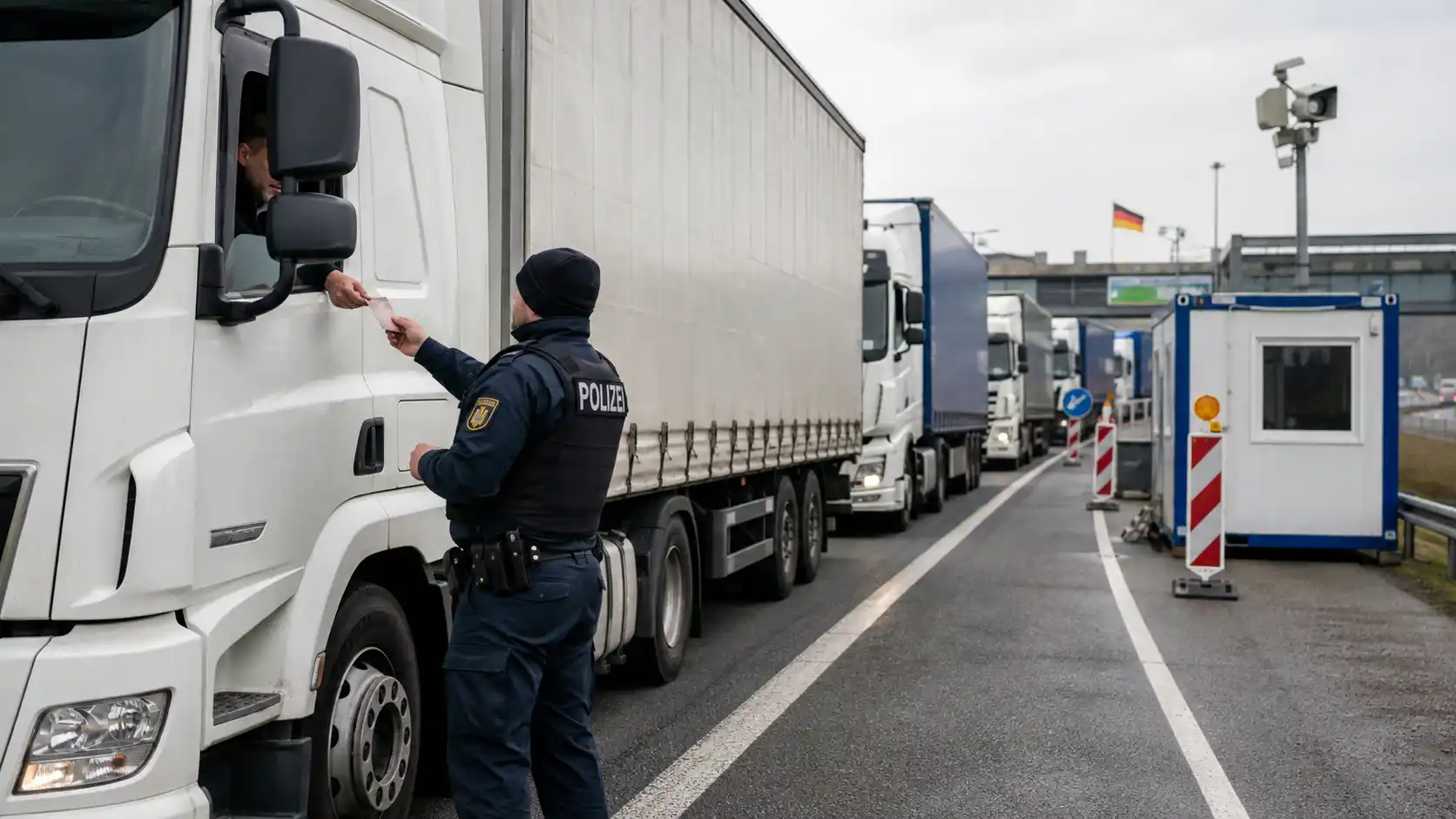
Controls Extended From September 16
Germany has notified the European Commission that temporary controls at all its land borders will be extended for another six months. According to the European Commission’s official register, the new period will run from September 16, 2026, through March 15, 2027.
Checks will remain in place at Germany’s borders with France, Luxembourg, Belgium, the Netherlands, Denmark, Austria, Switzerland, the Czech Republic and Poland. The extension will follow the current control period, which expires on September 15, 2026.
Germany Cites Migration and Security Risks
In its notification, Germany referred to continued serious threats to public security and order. The reasons include persistently high levels of irregular migration, migrant smuggling and pressure on the country’s asylum reception system.
Berlin also cited the impact of the global security situation on migration and domestic security. The notification specifically refers to Russia’s war against Ukraine and developments in the Middle East and Central Asia.
Federal Interior Minister Alexander Dobrindt had previously linked the planned extension to the large movement of migrants into the Spanish enclave of Ceuta.
The situation in Ceuta highlights the volatility surrounding irregular migration, Dobrindt said while confirming plans to continue the controls beyond September.
What the Extension Means for Freight Operators
The measure does not restore customs borders within the European Union or introduce new declarations for goods moving between EU countries. It primarily concerns checks on people and travel documents when crossing Germany’s internal Schengen borders.
Trucks may nevertheless be stopped by Germany’s Federal Police, potentially increasing crossing times and causing local congestion. The busiest freight corridors connecting Germany with Poland, the Czech Republic, Austria, the Netherlands, Belgium and France are likely to remain the most exposed to operational disruption.
Longer waiting times can affect delivery schedules, driver working hours and just-in-time supply chains. Carriers should therefore allow additional time when planning cross-border journeys and monitor traffic conditions before vehicles approach German border areas.
Internal Controls Remain a Temporary Measure
The Schengen Borders Code allows member states to temporarily reintroduce controls at internal borders when a serious threat to public policy or internal security is identified. The European Commission stresses that the mechanism must remain a last resort and comply with the principles of necessity and proportionality.
For foreseeable threats, controls may be introduced or renewed for periods of up to six months. The member state must notify the European Commission, the European Parliament, the Council and other Schengen countries.
Read also: European Commission Urges Nine Schengen Countries to End Border Controls
