

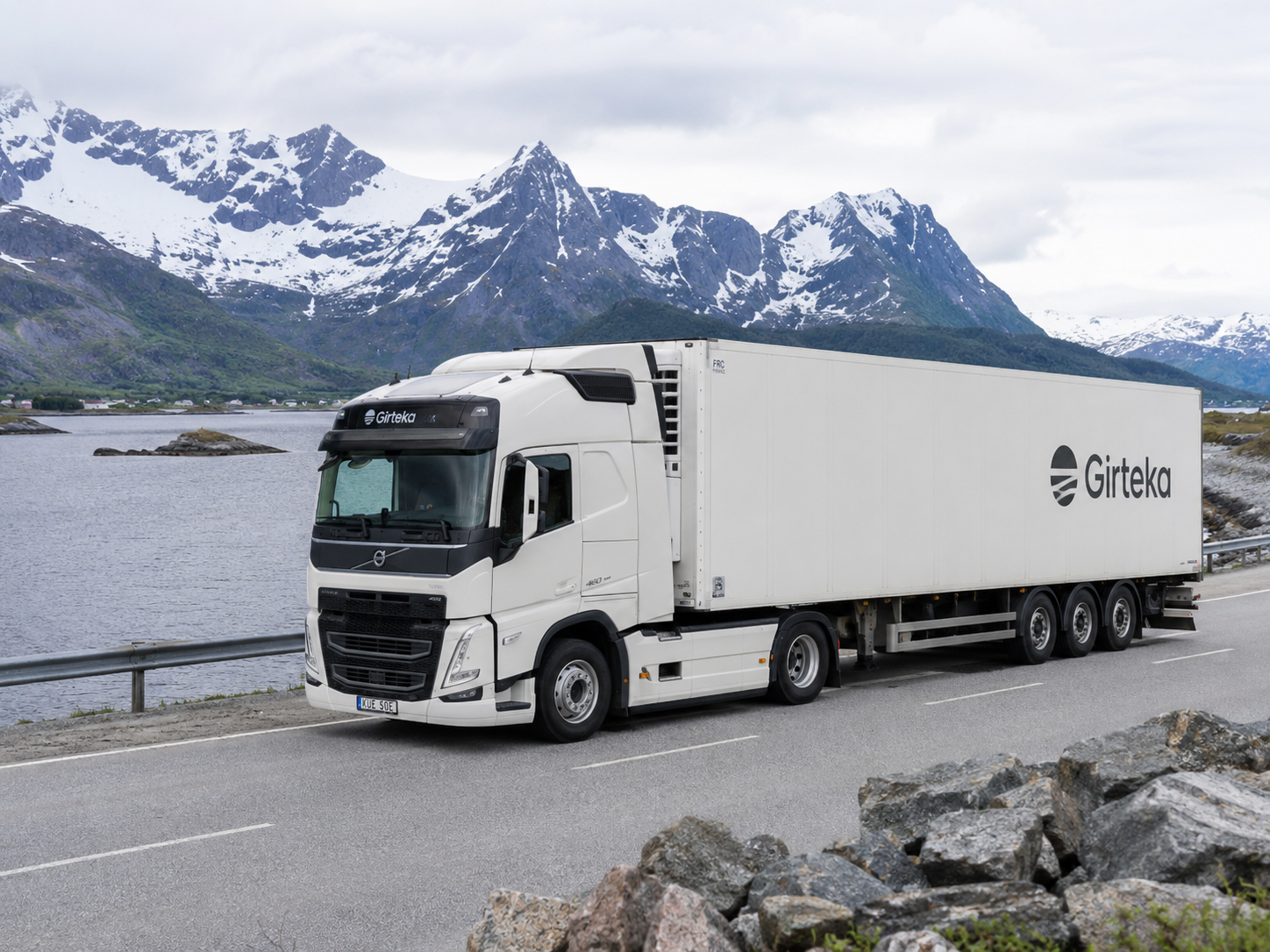
A transport company connected to one of Europe’s largest road freight groups has collapsed in Norway after a long-running tax dispute and unsuccessful restructuring process. TTN Trucking AS, part of the Thermo-Transit structure controlled by Lithuania’s Girteka Group, has been declared bankrupt amid tax claims of around 75.6 million Norwegian kroner, or approximately €6.7 million.
The total debt burden is reported to exceed 200 million kroner, or about €17.8 million. The case highlights how tax interpretation, regional contribution rules and rising operating pressure can quickly become existential risks for road transport companies, even when they operate inside large international logistics groups.
The region in question is Norway, specifically the Norwegian road freight and temperature-controlled transport market. TTN Trucking operated in a highly specialized segment: the movement of seafood and other perishable goods across the Nordic region, where reliability, timing and compliance are critical.
K2Cargo News previously reported that “Norway’s Tax Authority was seeking €4.2 million from Girteka” in a related social contribution dispute. The bankruptcy of TTN Trucking shows that the conflict has now moved from a tax disagreement into a broader corporate crisis.
TTN Trucking Was Part of a Sensitive Freight Segment
TTN Trucking AS was not a standard general cargo operator. The company was connected to Thermo-Transit, a business focused on seafood, fresh goods and temperature-controlled transport in Northern Europe.
This segment is operationally demanding. Seafood logistics requires strict temperature control, precise delivery windows and reliable coordination between producers, terminals, ferries, warehouses and final customers. Delays or disruptions can quickly lead to product losses, customer claims and damage to commercial relationships.
That makes the bankruptcy especially significant. Norway is one of Europe’s most important seafood export markets, and transport reliability is a key part of the country’s cold chain. Any disruption involving a carrier active in this sector attracts attention not only from creditors, but also from shippers and logistics partners.
At the same time, the bankruptcy does not appear to stop Thermo-Transit’s wider operations. According to available information, transport activity is continuing through the parent structure, while the collapse concerns TTN Trucking as a separate legal entity.
Tax Claims Centered on Employer Contributions
The dispute with Norwegian tax authorities centered on employer social security contributions for the period from 2018 to 2023.
The case is linked to the company’s registration in Alta, a region associated with preferential employer contribution rules. Norwegian authorities challenged the application of these benefits, arguing that the company’s actual business activity and management did not have sufficient connection to the area.
The company disputed the assessment and appealed the decision. Girteka and related entities have maintained that they complied with applicable rules and that the case concerns differing interpretations of contribution rates rather than intentional non-payment.
However, the scale of the tax demand created immediate financial pressure. The claim reportedly included back-calculated employer contributions as well as additional tax penalties. Combined with other liabilities, the company’s debt burden became too large to support continued operations.
This is a reminder that payroll-related tax rules can be just as important for transport companies as fuel prices, tolls or vehicle financing. In road freight, where margins are often narrow, a retroactive contribution dispute covering several years can create a financial shock that is difficult to absorb.
Restructuring Failed After Nine Months
TTN Trucking spent around nine months in a restructuring process.
The company attempted to reach an arrangement with creditors, including a proposal under which non-priority creditors would receive 60% coverage, while the remaining 40% of claims would be written off.
The plan failed. Creditors, with the Norwegian Tax Administration among the largest, voted against the restructuring proposal. Once the rescue plan was rejected, bankruptcy became unavoidable.
The restructuring process also involved significant downsizing. The workforce was reduced by more than half, from over 100 employees to 44. This shows that the company had already been trying to reduce costs and adapt before the final bankruptcy decision.
For the wider industry, the case demonstrates how difficult it can be to rescue a transport company when tax claims become dominant in the creditor structure. Unlike commercial creditors, tax authorities may have less flexibility when accepting write-offs or long-term compromise arrangements.
Bankruptcy Reflects Broader Pressure on Road Transport
Although the tax dispute was the immediate trigger, TTN Trucking’s bankruptcy also reflects broader pressure in the road transport sector.
European carriers are facing higher operating costs, intense price competition, driver shortages, stricter compliance requirements and growing scrutiny of cross-border business models. Temperature-controlled transport adds further complexity because vehicles, equipment, maintenance and energy consumption are more expensive than in standard freight.
This pressure is visible across Europe. K2Cargo News recently reported in “New Report Reveals Widespread Problems in Europe’s International Road Transport Sector” that international road freight is increasingly affected by subcontracting complexity, compliance challenges and pressure on operating margins.
The TTN Trucking case fits into this environment. Even large transport groups are not immune when local tax rules, corporate structures and operating costs collide.
What This Means for Girteka and Thermo-Transit
For Girteka Group, the bankruptcy creates reputational and operational questions, but it does not necessarily threaten the wider group.
Girteka remains one of Europe’s largest road transport operators, with thousands of trucks and trailers operating across international markets. The collapse of one Norwegian subsidiary is significant, but it is not the same as a crisis of the entire group.
For Thermo-Transit, the key issue is continuity. If customers continue to receive transport services through the parent structure, the commercial damage may be limited. However, the bankruptcy still raises questions about how transport groups manage local subsidiaries, tax risk and regional operating models.
Large logistics groups often operate through multiple entities in different countries. This structure can improve operational flexibility, but it also increases the importance of local compliance. A dispute in one jurisdiction can quickly affect the financial stability of a subsidiary.
Compliance Risk Is Becoming a Strategic Issue
The bankruptcy of TTN Trucking shows that compliance is no longer a purely administrative function in logistics.
Tax contribution rules, employment structures, regional incentives and corporate registration choices can directly affect the survival of a transport business. This is especially true in countries with differentiated contribution rates or special tax zones.
For fleet operators, the lesson is clear: cost optimization must be supported by strong legal and operational substance. If a company uses regional tax benefits, it must be able to demonstrate that the actual activity, management and operational presence match the conditions required by law.
Otherwise, savings achieved over several years can turn into retroactive liabilities, penalties and restructuring pressure.
What This Means for the Logistics Market
For the Nordic logistics market, the bankruptcy of TTN Trucking is a warning sign.
Temperature-controlled transport remains essential for seafood, food retail and other perishable supply chains. But the sector is expensive to operate and vulnerable to disruption. Companies working in this field must manage not only vehicles and routes, but also tax exposure, labor compliance and financial resilience.
For customers, the case may increase attention to carrier stability. Shippers may ask more questions about the financial health of logistics partners, especially in specialized segments where replacing capacity quickly can be difficult.
For transport companies, the bankruptcy underlines the importance of conservative risk management. Competitive pricing is not enough if the legal and tax structure behind the operation is fragile.
TTN Trucking’s collapse began with a dispute over employer contributions, but its consequences go further. It shows how local regulatory decisions can affect international logistics groups and how narrow the margin for error has become in European road transport.
Read also: Norway’s Tax Authority Seeks €4.2 Million from Girteka