

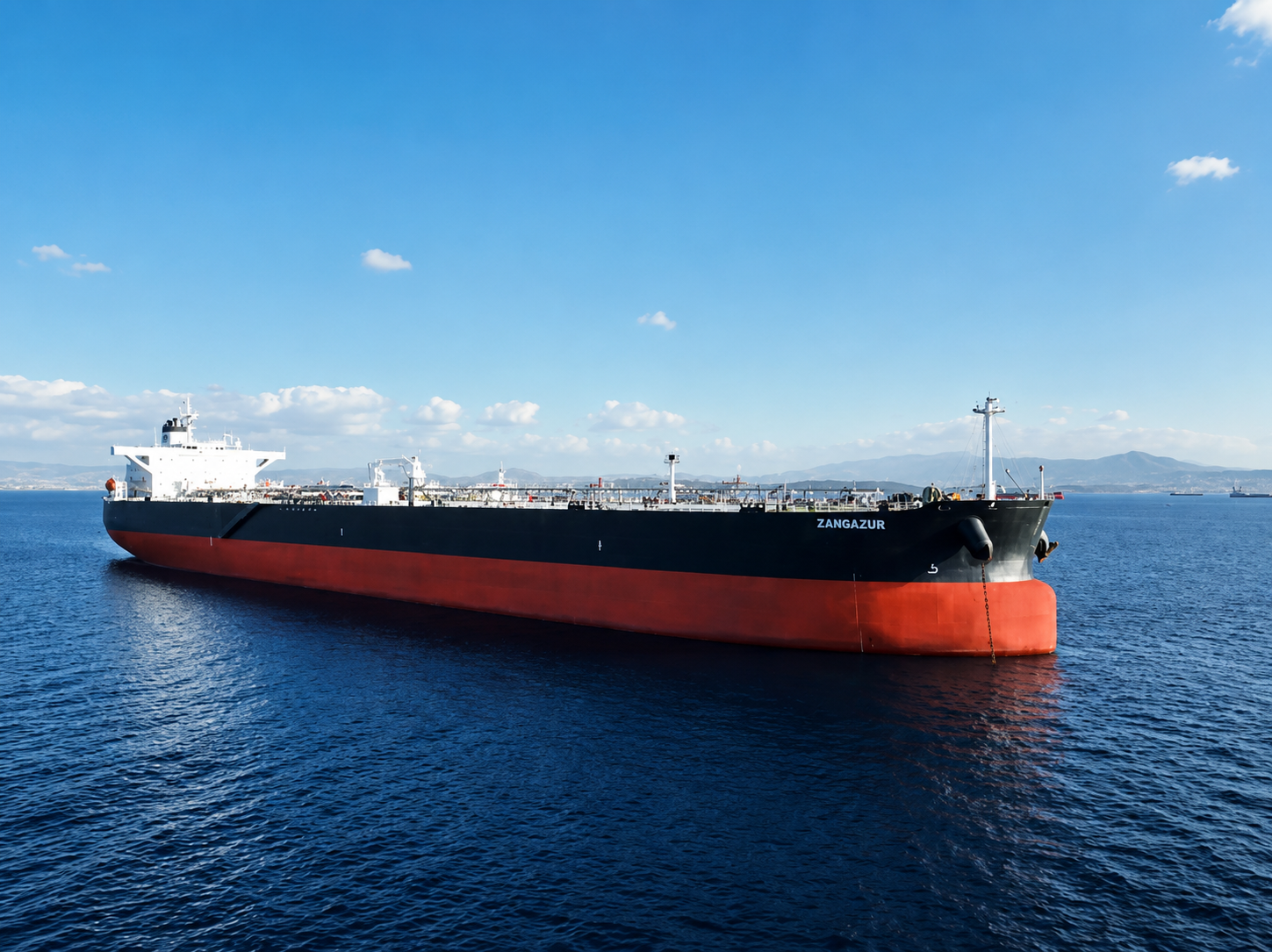
The United Kingdom has removed the Azerbaijani oil tanker Zangezur from its sanctions list, fully lifting restrictions that had applied to the vessel under the UK Russia sanctions regime. The decision was made on July 7, 2026, and confirmed through official sanctions updates and statements cited by Azerbaijan Caspian Shipping Company.
Zangezur is an Aframax-class tanker owned by a joint venture between Azerbaijan Caspian Shipping Company, part of the AZCON holding structure, and SOCAR. The vessel had been placed under restrictions in the context of Western measures targeting Russia-linked oil transport and the so-called shadow fleet.
For Azerbaijan’s maritime sector, the UK decision is significant. Sanctions on ships can create serious operational consequences: restrictions on port access, insurance, financing, technical services, chartering and commercial due diligence. Even when a vessel is not physically detained, its presence on a sanctions list can sharply limit its ability to operate in international oil transport.
The delisting also follows a similar development in the European Union. In April 2026, the EU removed five Azerbaijani-linked vessels from its sanctions list: Zagatala, owned by ASCO, and Shusha, Karabakh, Khankendi and Zangezur, owned by the ASCO-SOCAR joint venture.
As K2Cargo News previously reported in Azerbaijan–NATO Trade Exceeds $2 Billion as Economic Ties Strengthen, Azerbaijan is strengthening its role in regional trade and transport networks. The removal of sanctions from Zangezur reduces uncertainty around one of the country’s maritime assets and may support confidence in Azerbaijani shipping operations.
What the UK Decision Means
The UK decision means that sanctions imposed under the Russia regime no longer apply to Zangezur.
In practical terms, this removes the vessel from the UK sanctions framework and reduces legal and commercial obstacles for companies that may deal with it. Shipowners, charterers, insurers, ports, banks and service providers usually check sanctions lists before entering into any transaction involving a vessel. A delisting can therefore reopen access to services that were previously restricted or considered too risky.
However, the removal does not automatically eliminate all commercial scrutiny. Maritime companies still conduct compliance checks, especially for tankers operating in sensitive oil trades. But the formal UK restriction has been lifted, which is the key legal change.
For ASCO and SOCAR, the decision is also reputational. It supports Azerbaijan’s argument that the vessel’s inclusion in sanctions lists was contested and that diplomatic and legal engagement could produce results.
Why Tanker Sanctions Matter
Vessel sanctions have become one of the main tools used by Western countries to target Russia’s oil revenues.
After the full-scale invasion of Ukraine, the UK, EU, US and other partners expanded restrictions on shipping, insurance and financing linked to Russian oil. A major focus has been the “shadow fleet” — tankers accused of helping Russia move oil while avoiding price caps, embargoes or transparency requirements.
When a ship is listed, the consequences can be severe. It may lose access to major ports, international insurance, classification and technical services. Banks may refuse payments, charterers may avoid contracts, and flag or registry issues can emerge.
This is why delisting matters. It signals that the sanctioning authority has reviewed the case and removed the vessel from the list. For a tanker owner, that can restore part of the commercial space needed for normal operations.
EU Delisting Came First
The UK move did not happen in isolation.
In April 2026, the Council of the European Union removed sanctions from five Azerbaijani tankers. According to ASCO’s statement cited by Interfax-Ukraine, the decision covered Zagatala, Shusha, Karabakh, Khankendi and Zangezur.
ASCO said at the time that the positive result followed coordinated diplomatic and legal efforts by Azerbaijani state institutions, ASCO and SOCAR. The company also stated that the vessels had been under long-term lease to third parties and that their operation complied with international regulations, including sanctions rules.
The UK decision now extends that positive trend for Zangezur specifically. It shows that Azerbaijan continued to pursue the case not only in Brussels, but also in London.
Why This Is Important for Azerbaijan
Azerbaijan’s maritime industry is strategically important for the country’s energy and transport policy.
ASCO operates in the Caspian and beyond, while SOCAR is a central player in Azerbaijan’s oil and gas sector. Their tanker operations are linked to the movement of energy cargoes, regional trade and the country’s ambition to remain a reliable logistics and energy partner.
Any sanctions issue involving Azerbaijani vessels can therefore affect more than one ship. It can influence financing, partner confidence and the broader perception of Azerbaijan’s shipping sector.
The removal of Zangezur from the UK list helps reduce those risks. It does not change the fact that global tanker markets remain heavily regulated and politically sensitive, but it removes one important legal barrier for the vessel.
A Compliance Lesson for Shipping
The Zangezur case also shows how complex maritime sanctions have become.
Modern tanker operations involve owners, managers, charterers, cargo interests, insurers, flag states, classification societies, banks and port authorities. A vessel can be affected not only by its owner, but also by who charters it, what cargo it carries, where it loads, where it discharges and which services support the voyage.
This makes compliance a central part of tanker operations. Shipping companies need documentation, transparent contracts, clear cargo records and rapid legal response if a vessel is listed or questioned.
For Azerbaijan, the delisting is a positive result. For the broader market, it is a reminder that sanctions decisions can be contested, reviewed and reversed — but only through structured legal and diplomatic work.
What Comes Next
The removal of Zangezur from the UK sanctions list may allow the vessel to return to a more normal commercial position, but the tanker market will remain cautious.
Charterers and insurers will still review the ship’s trading history, ownership structure and compliance documentation. Banks and service providers will also continue to apply internal risk policies. In sensitive oil markets, formal delisting is necessary, but reputation and documentation still matter.
For ASCO, SOCAR and Azerbaijan’s maritime sector, the main task will be to convert the legal decision into restored commercial trust. If counterparties accept the vessel as compliant, the impact of the delisting will be stronger.
The decision is also politically important. It shows that Azerbaijan was able to achieve a result through coordinated state, legal and corporate action. In a sanctions environment where shipping is under increasing scrutiny, that is a meaningful signal.
For the region, the case confirms that maritime logistics and geopolitics are now closely connected. Tankers are no longer just transport assets; they are part of the global system of energy security, sanctions enforcement and trade compliance.
Read also: Azerbaijan–NATO Trade Exceeds $2 Billion as Economic Ties Strengthen