

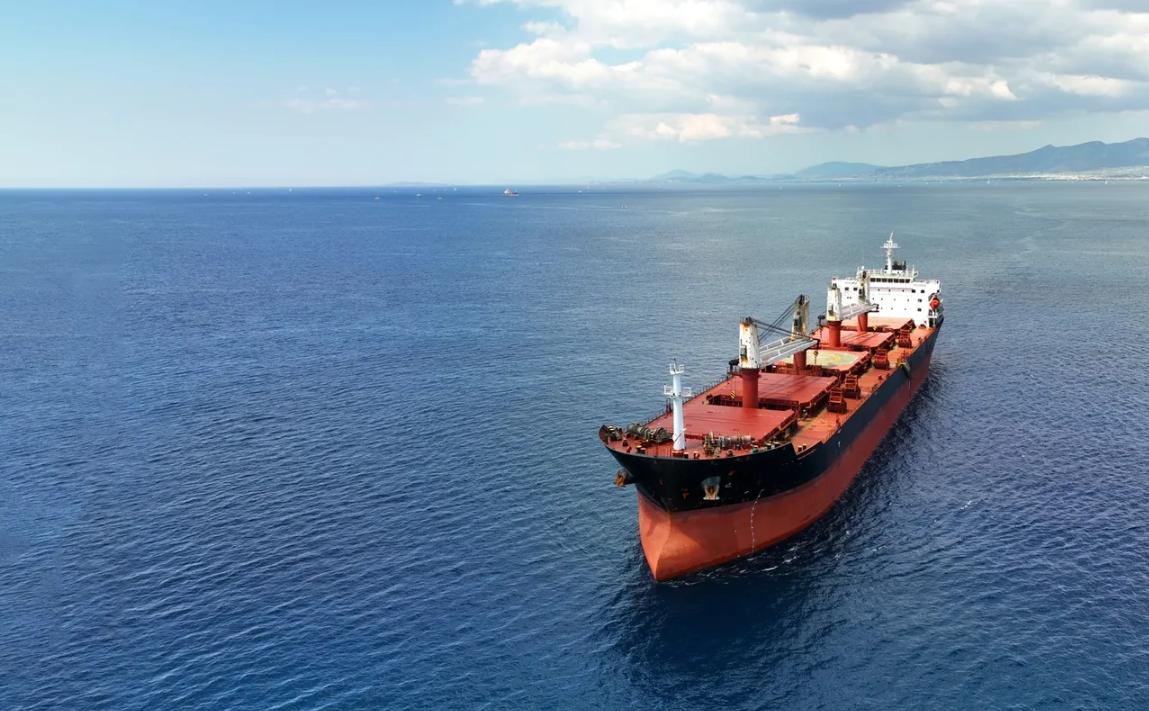
Cargo liquefaction remains the leading cause of fatal accidents on bulk carriers, according to the latest Bulk Carrier Casualty Report 2026 prepared by INTERCARGO, the International Association of Dry Cargo Shipowners.
The report covers the ten-year period from 2016 to 2025 and analyzes total losses of bulk carriers of more than 10,000 dwt. Over that period, 17 vessels were lost, representing 1.63 million dwt in total. These incidents resulted in the deaths of 71 seafarers.
At the same time, the report shows a long-term improvement in bulk carrier safety. The rolling ten-year average of annual ship losses has continued to fall, while the global bulk carrier fleet has expanded sharply. The number of bulk carriers grew from around 10,400 vessels in 2013 to 13,669 by December 2025.
This creates a mixed picture for the dry bulk sector. Traditional vessel losses are declining, but the most dangerous causes remain severe. Liquefaction is the clearest example: it was responsible for only two ship losses in the 2016–2025 statistical period, but those incidents caused 37 deaths — 52.1% of all lives lost in the report.
As K2Cargo News recently reported in Cargo Ship Attacked in Red Sea off Yemen, maritime safety risks are no longer limited to technical or operational failures. Security threats, cargo risks and regional instability are now shaping the operating environment for merchant shipping at the same time.
What Is Cargo Liquefaction?
Cargo liquefaction occurs when a dry bulk cargo with excessive moisture loses strength during a voyage and begins to behave like a liquid.
This can happen with cargoes such as nickel ore, iron ore fines, bauxite and other Group A cargoes under the International Maritime Solid Bulk Cargoes Code. If moisture content is too high, vibration and ship motion can cause the cargo to shift suddenly inside the hold.
For a bulk carrier, the result can be catastrophic. A shifting mass of liquefied cargo can create a severe list, reduce stability and cause the vessel to capsize in a short period of time. In many cases, crew members have little time to react.
This is why liquefaction is so dangerous. It may not produce many incidents compared with groundings or collisions, but when it happens, the consequences are often fatal.
Why Liquefaction Still Kills
INTERCARGO’s figures show the scale of the risk.
Between 2016 and 2025, cargo liquefaction caused 37 deaths, more than half of all fatalities in total bulk carrier losses. Flooding caused another 34 deaths, or 47.9% of the total. Groundings were the most frequent cause of vessel losses, with seven ships lost, but they did not account for deaths in this ten-year sample.
This means the sector faces two different safety challenges. Groundings remain the leading cause of ships being lost, but liquefaction remains the leading cause of people dying.
The pattern is also concentrated by vessel size. Bulk carriers in the 50,000–59,999 dwt range accounted for four of the 17 total losses, but they were linked to 37 deaths, or 52.1% of all lives lost. This reflects the particular risk associated with cargoes such as nickel ore on certain trade routes.
2025 Shows Fewer Fatalities, but Risks Persist
The report lists two total losses in 2025 within the main statistical category, and both involved no loss of life.
The first was An Yang 2, a 56,705 dwt bulk carrier built in 2010, which ran aground off the southwest coast of Sakhalin Island in stormy conditions on February 8, 2025. The grounding damaged multiple ballast tanks.
The second was Glengyle, a 37,679 dwt vessel built in 2015, which partially sank on the Long Tau River near Ho Chi Minh City, Vietnam, after a collision with a container ship on April 25, 2025. The collision caused hull damage, flooding and a fuel oil spill.
These cases show that vessel losses can still occur even without fatalities. They also support INTERCARGO’s broader conclusion: safety performance is improving, but operational risks remain significant.
However, the 2025 safety picture is more complex because INTERCARGO excludes conflict-related attacks from the main casualty statistics. In the Red Sea and Gulf of Aden, two additional bulk carrier losses in 2025 were linked to attacks.
Magic Seas was sunk in the Red Sea in July 2025 after an attack involving unmanned surface vessels, skiffs and weapons. Eternity C was also sunk in July 2025 after attacks that killed four crew members and injured others. These cases are recorded separately because they were caused by acts of conflict rather than traditional maritime casualties.
2026 Brought Another Liquefaction Warning
Although the main report covers 2016–2025, INTERCARGO also points to a major 2026 incident that reinforced the danger of liquefaction.
At the beginning of 2026, the bulk carrier Devon Bay was lost while carrying nickel ore. INTERCARGO’s extended liquefaction list records the 2026 Philippines nickel ore casualty with six lives lost.
The case is important because it shows that the problem did not end with the statistical period of the report. Nickel ore remains one of the most sensitive cargoes in dry bulk shipping, especially when moisture testing, sampling and cargo declarations are not managed rigorously.
For shipowners and charterers, the Devon Bay incident is a reminder that compliance cannot be treated as a paperwork exercise. Cargo condition at loading can determine whether a vessel completes its voyage safely.
Why the IMSBC Code Matters
The International Maritime Solid Bulk Cargoes Code was created to improve the safe carriage of dry bulk cargoes.
For cargoes that may liquefy, the code requires proper testing, documentation and limits on moisture content before loading. The key concept is the transportable moisture limit. Cargo should not be loaded if its moisture content exceeds the safe limit.
But INTERCARGO argues that rules alone are not enough. The report stresses the need for stronger enforcement by flag and port States, targeted inspections of high-risk cargoes and mandatory training for both ship and shore personnel involved in cargo handling.
This is a crucial point. Liquefaction often begins before the ship leaves port. If sampling is inaccurate, if cargo is exposed to heavy rain, if declarations are unreliable or if pressure is placed on crews to load questionable cargo, the risk is already on board.
Investigation Delays Remain a Problem
The report also highlights a transparency issue.
By the beginning of February 2026, investigation reports for 12 of the 17 bulk carrier losses in the 2016–2025 analysis had been made available on the IMO GISIS database. That equals 70.6% of cases.
The average time from incident to publication was 23.6 months. The fastest report appeared after nine months, while the slowest took 44 months.
For safety management, this matters. The industry can only learn from accidents if investigation findings are published and shared quickly enough. Long delays reduce the value of lessons learned, especially when similar cargoes and routes remain active.
Safety Is Improving, but the Risk Has Changed
INTERCARGO’s report contains both good and bad news.
The good news is that bulk carrier losses are declining, even as the fleet grows. Safety improvements are linked to better ship design, crew training, operational experience, technology and regulatory compliance.
The bad news is that fatal risks remain concentrated and severe. Cargo liquefaction, flooding and conflict-related threats can still produce sudden, high-impact incidents.
For dry bulk operators, the lesson is clear. Safety cannot focus only on navigation or machinery. It must include cargo science, port procedures, shipper responsibility, crew authority, weather exposure and geopolitical risk.
The goal is not only fewer ships lost. It is zero loss of seafarers’ lives. The latest INTERCARGO report shows that the industry is moving in the right direction — but liquefaction remains the risk that can turn one cargo decision into a fatal disaster.
Read also: Cargo Ship Attacked in Red Sea off Yemen