

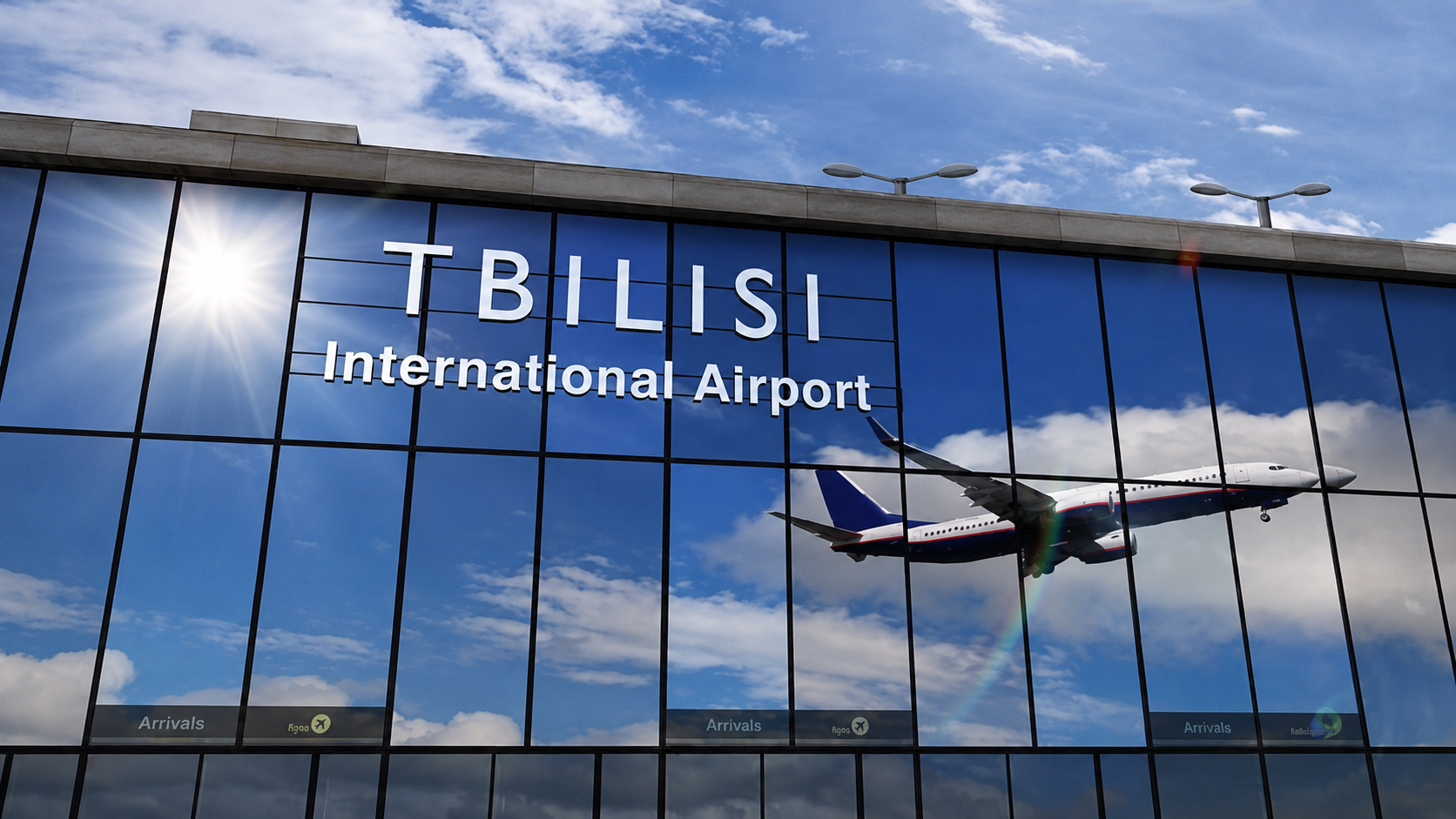
Georgia has started a major expansion project at Tbilisi International Airport, with TAV Georgia investing $150 million in new terminal and airfield infrastructure. The project is expected to increase the airport’s annual capacity from 5 million to 10 million passengers.
The expansion will be implemented from 2026 to 2028 and is described by the Georgian government as one of the largest aviation infrastructure investments in the country. TAV Georgia, a subsidiary of TAV Airports and part of Groupe ADP, operates both Tbilisi and Batumi international airports.
The need for expansion has become urgent because passenger traffic has grown quickly in recent years. In 2025, Tbilisi International Airport handled more than 5.4 million passengers, nearly reaching its current design capacity.
As K2Cargo News previously reported in Georgia Expands Poti Port to Strengthen the Middle Corridor, Georgia is investing in transport infrastructure to strengthen its position between Europe, the Black Sea, the Caucasus and Central Asia. The airport expansion fits into the same broader logistics strategy.
What the Project Includes
The project covers both passenger and airfield infrastructure.
The passenger terminal will be expanded and existing passenger areas will be reconstructed. The airport will add new commercial spaces, restaurants and business lounges, with a focus on promoting Georgian cuisine and local products.
Operational infrastructure will also grow. The number of passenger boarding bridges will double to 10. Seven remote aircraft stands will be added, along with nine check-in counters, two baggage carousels and a passport-control area expanded to 24 points.
Additional parking spaces will also be built near the terminal. For passengers, the goal is to reduce congestion, improve processing speed and raise service quality to international standards.
Why Capacity Is Becoming Critical
The airport’s current capacity has already become a constraint.
In 2025, passenger traffic exceeded 5.4 million, while the airport’s current annual capacity is around 5 million passengers. This means the airport is already operating close to or above its planned limit during peak periods.
Without expansion, further growth could lead to longer queues, operational pressure, reduced comfort and fewer opportunities for airlines to add new routes.
Doubling capacity to 10 million passengers gives the airport more room to support tourism, business travel and transit flows. It also helps Georgia compete for new airlines and routes in a region where air connectivity is increasingly important.
Airlines and Route Development
The agreement also includes marketing support for airlines.
This part of the project is important because infrastructure alone does not guarantee traffic growth. Airports need airlines, routes and passenger demand. Marketing support can help attract new carriers, stimulate route launches and improve Georgia’s international air connectivity.
For Tbilisi, new routes are not only a tourism issue. They also support business links, cargo connections, diaspora travel and regional mobility. Better air access can make Georgia more attractive for investors, conference organisers and international companies.
The expansion of the airport therefore works together with route-development programmes. New gates, stands and passenger facilities create capacity; airline support helps fill it.
Economic Impact for Georgia
The Georgian government expects the project to have a strong financial effect.
As part of the agreement, the Georgian Airports Association has already received a one-time advance payment of $25 million. After the project is completed, annual revenue from Tbilisi International Airport is expected to increase roughly threefold compared with the current level.
The broader effect may be even larger. Airports generate activity beyond passenger fees. They support hotels, taxis, logistics, retail, catering, ground handling, tourism services and regional business travel.
For Georgia, which is positioning itself as a tourism and transit destination, airport capacity becomes part of national competitiveness. A larger and more efficient airport can support both incoming tourism and the country’s role as a regional connector.
TAV Georgia’s Long-Term Role
TAV Georgia has operated in the country since 2005.
Over more than two decades, the company has managed Tbilisi and Batumi international airports and invested about $250 million in infrastructure projects in Georgia. It is also one of the major employers in the country’s aviation sector.
The new $150 million investment strengthens TAV’s role in Georgian aviation at a time when passenger traffic is rising and the country is trying to expand international links.
For the government, the project offers a faster way to modernise existing airport capacity while longer-term aviation plans continue to develop.
A Strategic Step for Connectivity
The expansion of Tbilisi International Airport is not only about passenger comfort.
It is also about Georgia’s place on the regional transport map. The country sits between major markets and transport corridors, and its ability to handle more passengers, more airlines and more connections supports tourism, trade and investment.
The project should give Tbilisi Airport a stronger platform for growth through 2028 and beyond. But success will depend on execution: construction timing, operational continuity during works, airline demand and the ability to maintain service quality as traffic rises.
If completed as planned, the expansion will double the airport’s capacity and strengthen Georgia’s main aviation gateway at a critical moment for regional mobility.
Read also: Georgia Expands Poti Port to Strengthen the Middle Corridor