

For decades, the world’s largest logistics companies have relied on people to make thousands of operational decisions every hour. Who should unload trailers? Who should replenish inventory? Which employee should move to another production zone?
Now, one of the world’s biggest employers is quietly changing that equation.
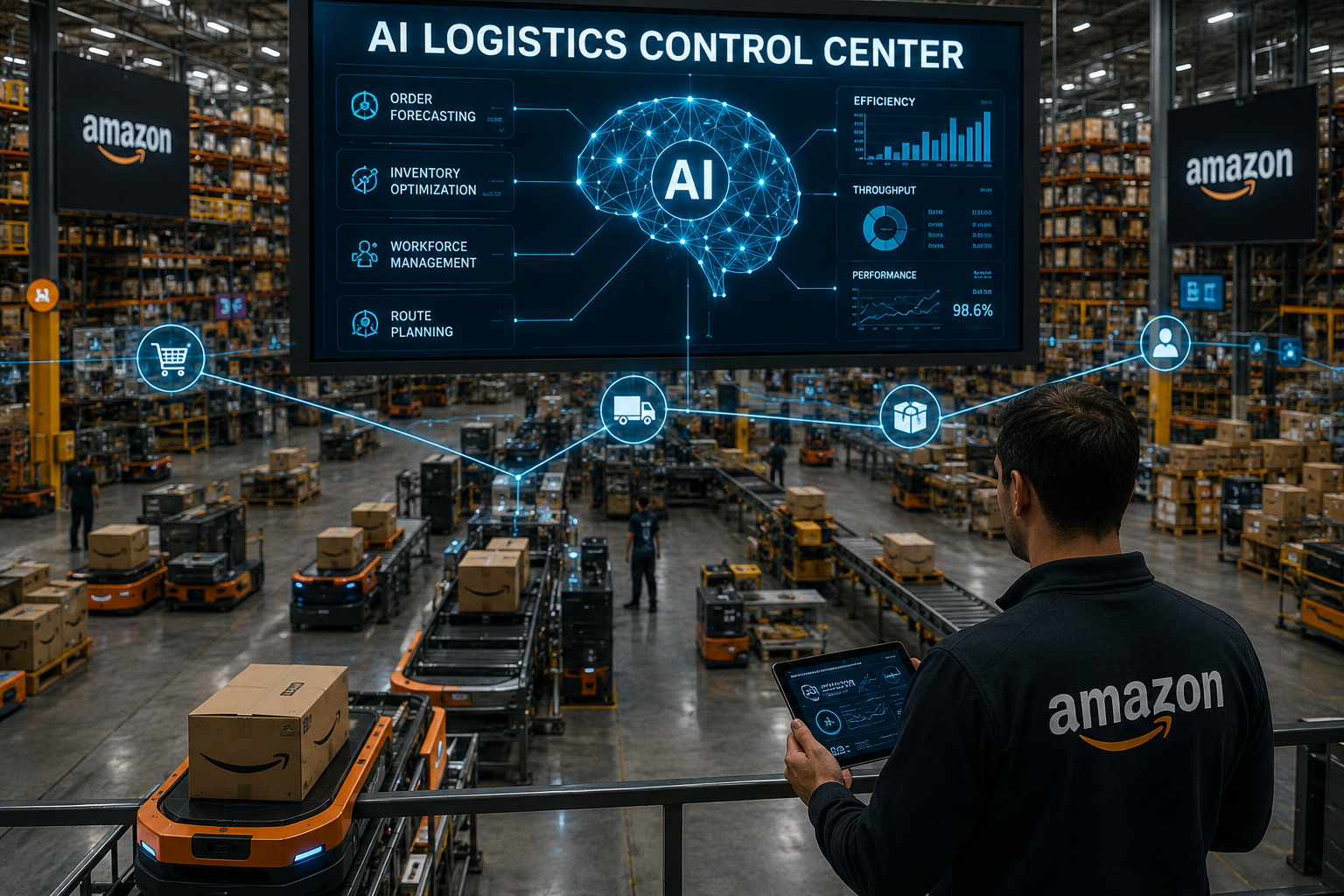
Amazon has begun testing an artificial intelligence system capable of making workforce allocation decisions inside its fulfillment centers with minimal human involvement. While the technology is still being expanded gradually, its implications reach far beyond one company’s warehouses.
This is not simply another software upgrade.
It is another step toward a future where artificial intelligence becomes an operational manager rather than just an analytical assistant.
According to reports from inside the company, some warehouse managers have expressed concerns that the AI system occasionally ignores real-world conditions on the warehouse floor. Employees familiar with daily operations say the algorithm sometimes redistributes workers in ways that appear efficient on paper but create bottlenecks or reduce productivity in practice.
The criticism highlights one of the biggest challenges facing industrial AI: algorithms can optimize data, but they do not always understand context.
Yet Amazon appears committed to the long-term strategy.
The company continues investing billions of dollars in robotics, automation, predictive analytics, and AI-driven logistics, viewing autonomous decision-making as the next stage in warehouse evolution. Every improvement in labor allocation has the potential to reduce fulfillment times, increase throughput, and lower operating costs across a global network that processes millions of orders every day.
The consequences extend well beyond Amazon.
If AI successfully proves it can coordinate large warehouse workforces more efficiently than human supervisors, the technology is likely to spread rapidly throughout the logistics industry. Distribution centers, manufacturing facilities, ports, and transportation hubs could increasingly rely on algorithms to make operational decisions once reserved for experienced managers.
This transformation also raises difficult questions
- How much authority should algorithms have over workers?
- Who is responsible when an automated decision reduces safety or productivity?
- Can artificial intelligence truly understand the unpredictable realities of a busy warehouse floor?
For logistics professionals, this story is not just about Amazon.
It is about the future of industrial management itself.
The world’s largest supply chains are entering an era where artificial intelligence is no longer merely helping humans make decisions—it is beginning to make those decisions on its own.
Whether this shift ultimately delivers greater efficiency or exposes the limits of automation may become one of the defining business stories of the next decade.