

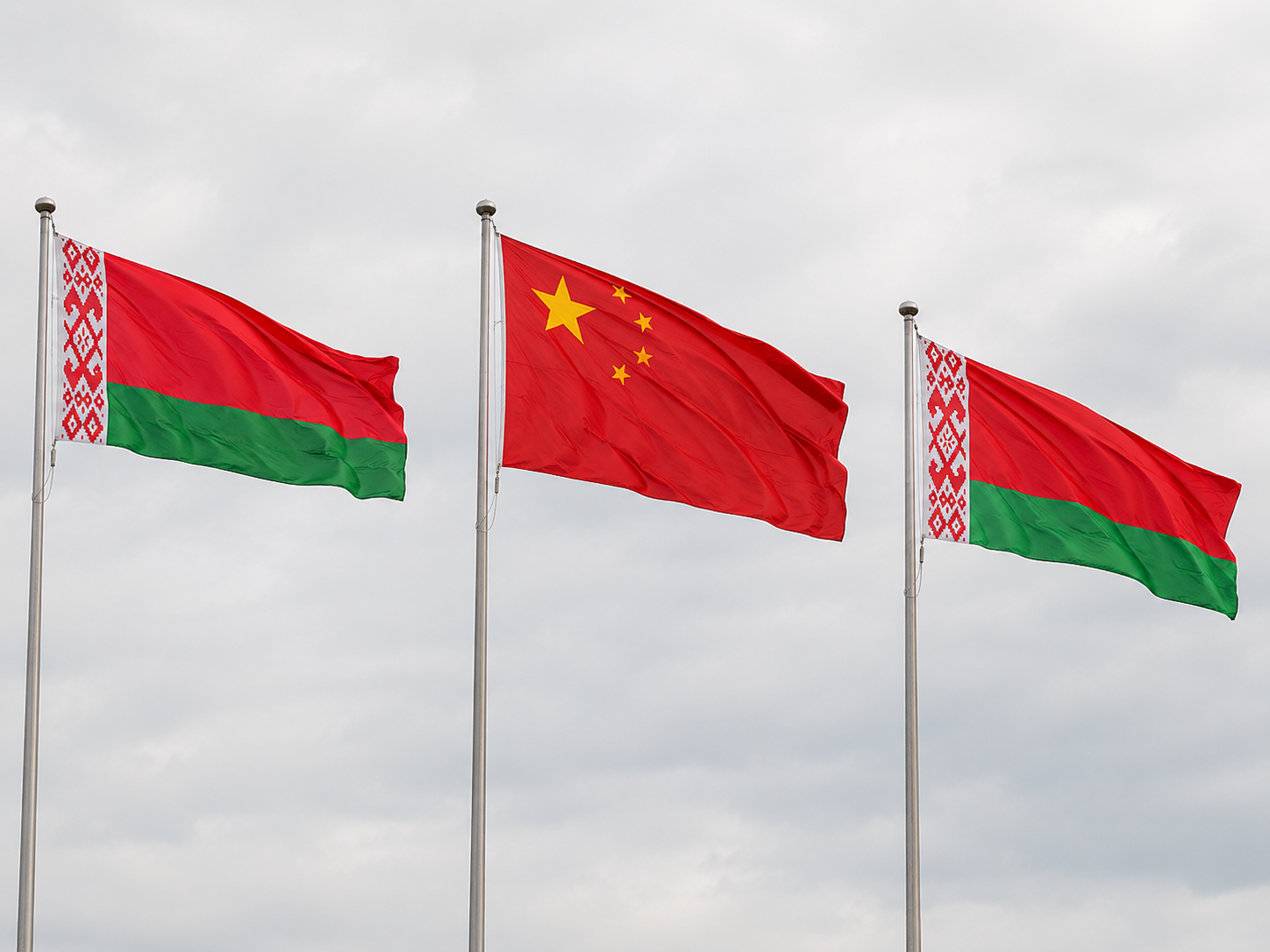
Belarus and China are deepening economic cooperation through a new regional format. During the first Belarus-China Forum of Regions, held in Lanzhou, the capital of China’s Gansu Province, the two sides signed investment agreements worth almost $1 billion.
The preliminary results were announced by Belarusian First Deputy Prime Minister Nikolai Snopkov, who said the agreements reflect the strategic shift outlined by Minsk: moving from a “center-to-center” model of cooperation to a “region-to-region” approach.
According to Snopkov, practical economic work is carried out not only at the level of governments, but primarily in regions, industrial parks, enterprises, logistics hubs and local administrations. This is why Belarus and China are now trying to bring cooperation closer to specific projects, cities and provinces.
For the logistics and investment market, the forum is important because it shows how Belarus wants to strengthen its role as a production and distribution platform between China, the Eurasian Economic Union and wider regional markets.
As K2Cargo News previously reported in “Why Kazakhstan and Georgia Are Becoming Key Hubs of Eurasia’s New Logistics Network”, the development of Eurasian transport and industrial routes increasingly depends on regional infrastructure, not only on national-level agreements. Belarus is now trying to apply a similar logic in its cooperation with China.
The Forum Took Place in Lanzhou
The region where the forum was held is Gansu Province in northwestern China. Its capital, Lanzhou, has long been positioned by Beijing as an important inland logistics and industrial center connected to Belt and Road transport routes.
This location is symbolic. Belarus is also promoting itself as an inland logistics and production hub, located between China, Russia, the Eurasian Economic Union and the European direction.
The forum was designed to connect Belarusian regions directly with Chinese provinces. Instead of limiting cooperation to ministries and central agencies, the two sides want regional governments and businesses to develop trade, investment and industrial projects more actively.
This is a practical step. Regional cooperation can often move faster than national-level frameworks because it deals with concrete land plots, factories, warehouses, road access, local workforce, tax conditions and available infrastructure.
For companies, this approach may be more useful than general political declarations. Investors need to know where a project will be located, which regional authority will support it, how logistics will work and what local incentives will be available.
Why the $1 Billion Figure Matters
The reported value of almost $1 billion in investment agreements is significant for Belarus.
For Minsk, Chinese investment is not only a source of capital. It is also a tool for industrial modernization, diversification of partnerships and deeper integration into Eurasian production and logistics networks.
The amount also shows that the forum was not only symbolic. Belarusian officials wanted to demonstrate that the regional format can produce measurable business results.
However, the real impact will depend on implementation. Signed agreements are only the first stage. Their importance will be measured by how many projects actually move to construction, production, export activity and long-term employment.
This is especially important because Belarus wants to move beyond simple trade. The current strategy focuses on industrial cooperation, technology transfer, production chains, logistics infrastructure and joint projects in sectors where Chinese companies can bring capital and equipment, while Belarus offers location, workforce and access to regional markets.
Cooperation Is Moving Into Industrial Chains
Belarus-China cooperation today is no longer limited to trade in goods.
The two countries have built a broad institutional base for industrial cooperation. A comprehensive strategy for joint industrial development was signed in 2023, and 2026–2027 have been declared the Years of Industrial Cooperation between Belarus and China.
Belarusian officials say the next stage should focus on moving from individual investment projects to shared industrial chains. Priority areas include microelectronics, instrument engineering, machine tools, unmanned systems, new materials, medicine and tourism infrastructure.
This is important for logistics because industrial cooperation creates cargo flows. New factories require imported equipment, components, raw materials and export channels. Industrial parks need warehouses, customs services, road and rail connections, and reliable access to suppliers.
If Belarus succeeds in attracting more Chinese industrial projects, the country could increase demand for logistics services, warehouse infrastructure and multimodal transport solutions.
Great Stone Remains the Flagship Project
The China-Belarus Industrial Park Great Stone remains the flagship project of bilateral economic cooperation.
Located near Minsk, Great Stone is presented as a special economic and industrial platform for Chinese and international companies seeking access to the Eurasian market. Belarus promotes the park as offering favorable business conditions, logistics access and a special legal regime.
For Chinese companies, the attraction is clear. Belarus is a member of the Eurasian Economic Union, which means production located in the country can potentially serve a market that includes Russia, Kazakhstan, Armenia and Kyrgyzstan.
This makes Great Stone more than a local industrial park. It is part of a wider strategy to turn Belarus into a manufacturing and logistics base for Eurasian markets.
At the same time, the success of such projects depends on more than tax incentives. Companies need predictable regulation, transport access, skilled labor, customs efficiency and stable demand from end markets.
Trade Is Growing, but the Relationship Is Asymmetric
Belarus and China describe their relationship as an all-weather and all-round strategic partnership. In recent years, China has become one of Belarus’s most important non-CIS partners, and bilateral trade has grown significantly compared with the early years of diplomatic relations.
At the same time, the structure of trade remains uneven. Belarus exports mainly fertilizers, agricultural products, food and wood-related goods, while China supplies vehicles, machinery, electronics and industrial equipment.
This asymmetry explains why Belarus is trying to shift the relationship toward investment and industrial production. Selling raw materials or agricultural goods is not enough to build a balanced long-term partnership. Minsk wants Chinese companies to produce more inside Belarus, create jobs, transfer technology and use the country as a regional platform.
The Forum of Regions fits this logic. Regional authorities can promote specific industrial sites, agricultural processing projects, logistics zones and local investment opportunities directly to Chinese partners.
Logistics Is Central to the New Model
The logistics dimension of Belarus-China cooperation is especially important.
Belarus lies on the land corridor between China and the western part of Eurasia. Even though the geopolitical environment has changed significantly in recent years, the country continues to position itself as a gateway to the Eurasian Economic Union and a possible base for freight, production and redistribution.
For Chinese companies, logistics matters for two reasons.
First, production in Belarus may provide access to nearby markets. Second, Belarus can serve as a consolidation and distribution point for goods moving across Eurasian land routes.
This makes transport infrastructure, customs procedures, warehouse capacity and regional road links essential. Investment agreements signed at the regional level will only produce long-term results if they are supported by efficient logistics.
A factory without reliable transport connections is not competitive. A logistics hub without cargo flows is not sustainable. This is why industrial cooperation and transport cooperation must develop together.
What This Means for Belarus and China
For Belarus, the forum is an opportunity to attract investment, strengthen regional economies and reduce dependence on a narrow set of traditional partners.
For China, Belarus offers a politically friendly partner, an industrial base near the Eurasian market and a platform for Belt and Road-related cooperation. The country’s location and membership in the Eurasian Economic Union remain central to its appeal.
The forum also shows that China is increasingly working not only through central governments, but also through provinces, regions and industrial clusters. This model allows Chinese companies to build more targeted economic links abroad.
However, the success of the agreements will depend on execution. The key questions are whether projects will receive financing, whether regional authorities can support them effectively, and whether companies can create commercially viable production and logistics chains.
Regional Cooperation Becomes Practical Policy
The main message of the forum is that Belarus-China cooperation is becoming more regional and more practical.
Instead of relying only on large political statements, the two sides are trying to build cooperation through contracts, industrial zones, local governments and business projects. This may help turn strategic partnership into concrete economic activity.
For the logistics sector, the most important point is that regional investment and industrial cooperation generate demand for transport, warehousing, customs and distribution services. If the signed agreements are implemented, they could create new cargo flows between Belarus, China and the wider Eurasian market.
The forum therefore matters not only as a diplomatic event, but also as a signal to investors and logistics companies. Belarus wants to position itself as a regional platform for Chinese capital, industrial production and Eurasian supply chains.
The next stage will show whether the $1 billion in agreements becomes a real driver of infrastructure, trade and logistics development — or remains mostly a political milestone. For now, the forum confirms that Belarus-China cooperation is entering a more regional, industrial and supply-chain-focused phase.
Read also: Why Kazakhstan and Georgia Are Becoming Key Hubs of Eurasia’s New Logistics Network
