

The largest infrastructure projects are rarely built exactly as they are first envisioned. The greater the investment, the more important it becomes to manage risk, protect public resources, and adapt strategy without losing sight of the ultimate objective.
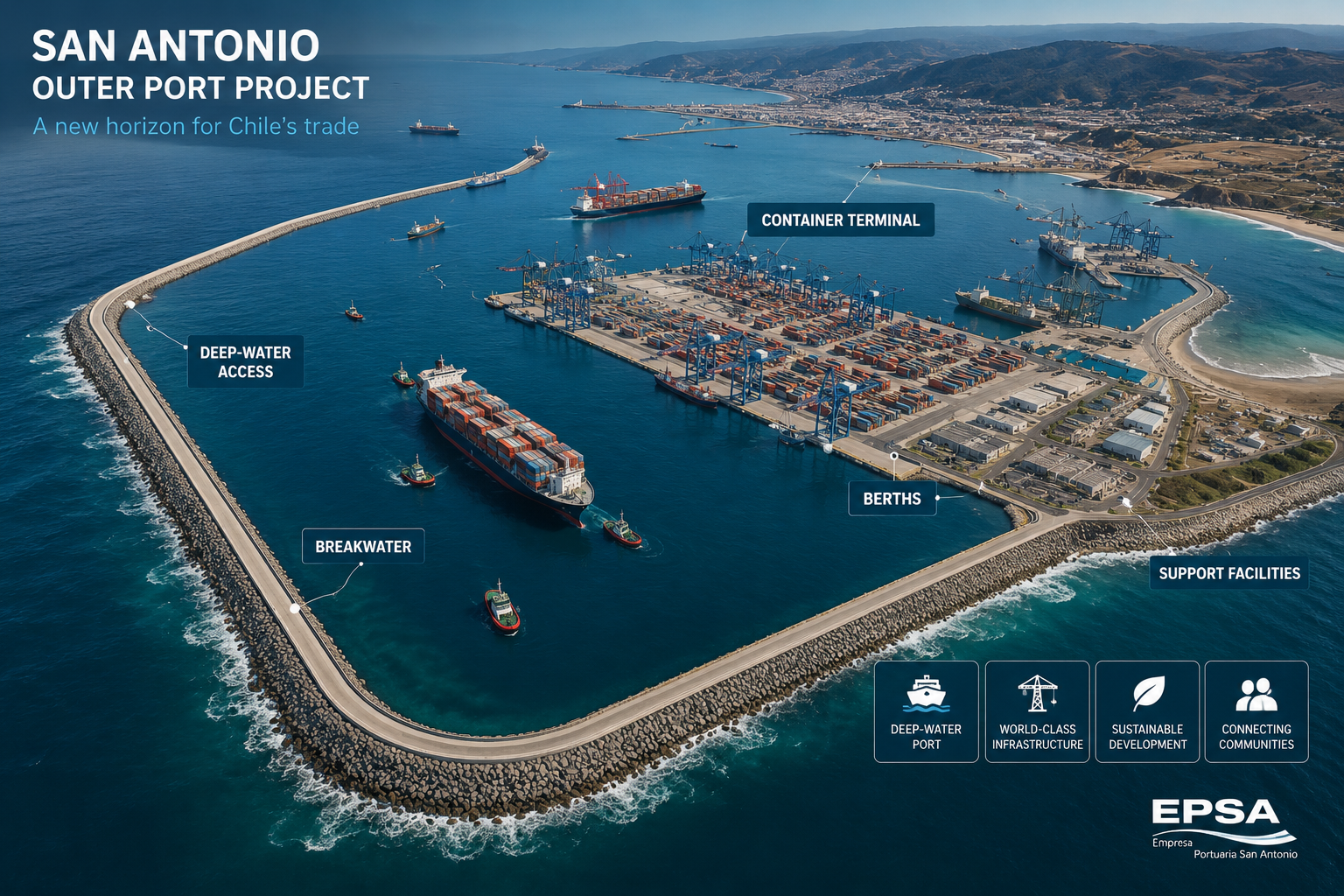
That is precisely the approach now being taken by Empresa Portuaria San Antonio (EPSA), the state-owned company responsible for developing Chile’s ambitious San Antonio Outer Port project.
Rather than proceeding with a single comprehensive construction tender, EPSA has decided to divide the procurement process into two independent contracts.
The first tender will cover the preparatory works required before large-scale construction begins.
The second will focus exclusively on building the breakwater—one of the most critical engineering components of the future deep-water port.
At first glance, the decision may appear to be a routine administrative adjustment.
In reality, it represents a strategic effort to maintain tighter control over one of Chile’s most significant infrastructure investments long before the first major construction equipment arrives on site.
Reducing Risk Before Construction Accelerates
According to EPSA, separating the contracts will improve project planning, strengthen risk management at every stage of construction, safeguard public investment, and create greater opportunities for Chilean contractors to participate in the project.
For developments of this scale, that distinction matters.
When a single contractor is responsible for every major phase of construction, one delay or technical issue can disrupt the entire schedule.
Dividing the project into separate construction packages creates greater operational flexibility. Individual phases can move forward independently, allowing problems to be addressed without bringing the entire development to a halt.
The Overall Vision Remains Unchanged
Despite the revised contracting strategy, EPSA emphasized that the long-term development plan for the Outer Port remains fully intact.
The adjustment affects only the procurement structure—not the project’s timeline or strategic objectives.
At the same time, work continues on environmental permits, regulatory approvals, land acquisition, and technical refinements needed before full-scale construction begins.
EPSA also confirmed that it will continue working closely with the San Antonio community through urban development initiatives, environmental commitments, and programs designed to integrate the future port with surrounding neighborhoods.
Modern Ports Require More Than Engineering
The project highlights how major port developments have evolved beyond simply constructing docks, terminals, and breakwaters.
Today, the success of large infrastructure investments depends equally on engineering excellence, financial discipline, environmental stewardship, and maintaining public trust throughout the construction process.
Balancing those priorities has become just as important as pouring concrete or expanding cargo capacity.
A Long-Term Investment in Chile’s Trade Future
In its official statement, EPSA reaffirmed that the San Antonio Outer Port remains one of Chile’s most important long-term infrastructure initiatives and will continue moving forward through the phased implementation strategy already established.
Sometimes the most significant news in infrastructure is not the groundbreaking ceremony or the ribbon-cutting.
Sometimes it is the decision to change the path forward—making a project more resilient today so it has a greater chance of succeeding tomorrow.