

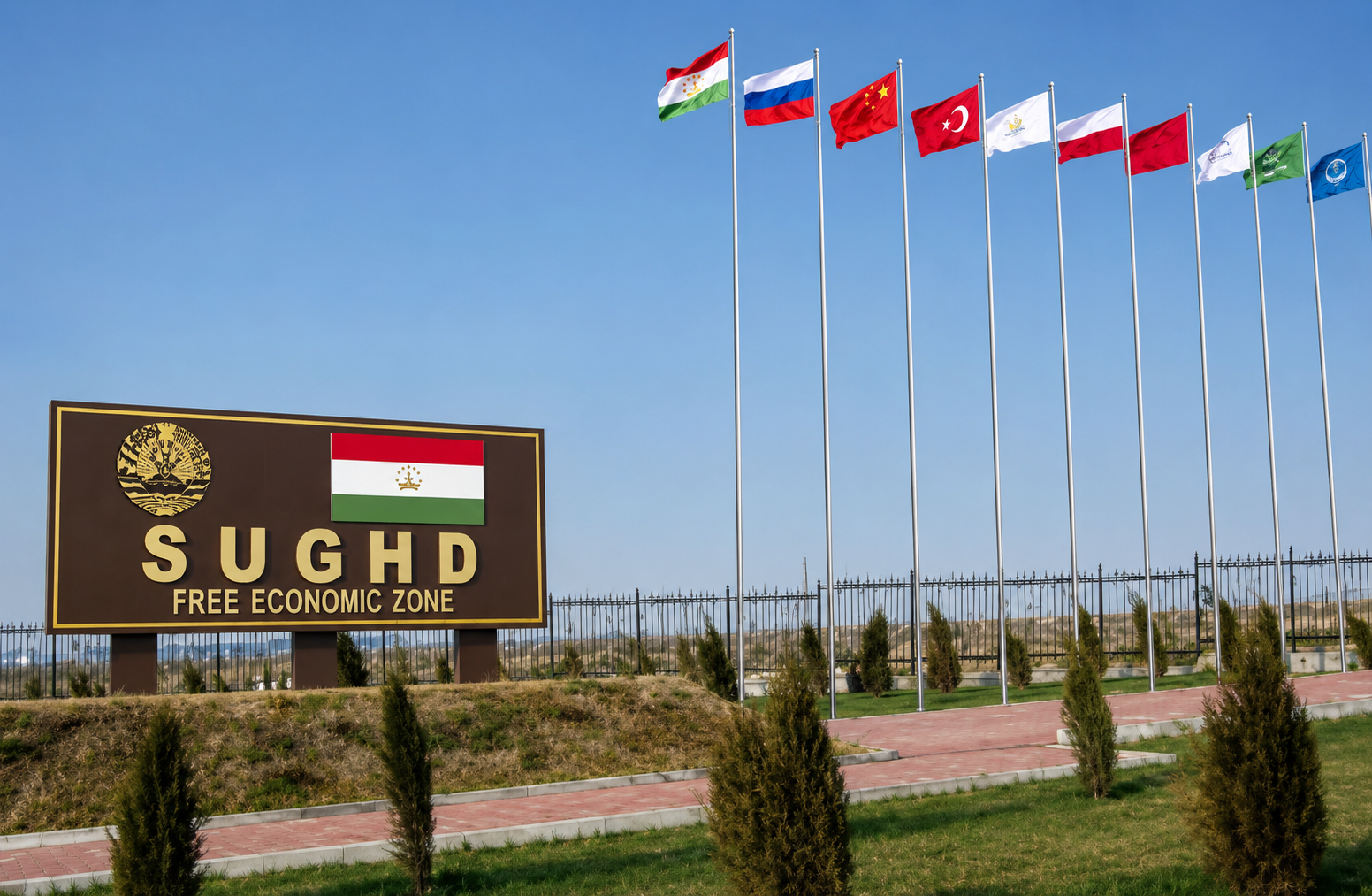
FEZ Products Exempted From Import Duty
Tajikistan has expanded customs privileges for companies operating in its free economic zones. According to the country’s Ministry of Economic Development and Trade, the changes also apply to goods manufactured inside FEZs and subsequently supplied to other parts of Tajikistan.
Import customs duty on these products has been fully abolished. However, goods transferred from a free economic zone to the rest of Tajikistan’s customs territory must still undergo customs clearance.
VAT is regulated separately under the country’s tax legislation. The new measure therefore specifically removes the import customs duty and does not automatically eliminate all payments associated with domestic deliveries from FEZs.
Preferential customs treatment also applies to technologies, equipment, machinery and raw materials imported into free economic zones for use by resident enterprises.
FEZ Enterprises Produced Goods Worth 358.9 Million Somoni
According to the Agency on Statistics under the President of the Republic of Tajikistan, enterprises in the country’s free economic zones produced goods worth approximately 358.9 million somoni in January–June 2026.
The Sughd FEZ remained the largest production center. Its output reached 290.1 million somoni during the six-month period, accounting for around 81% of total FEZ production nationwide.
Twenty-two industrial enterprises were operating in Sughd, while their combined production increased by 15.4% compared with the same period a year earlier.
Dangara Produced 64.1 Million Somoni of Goods
The Dangara FEZ recorded the second-largest production volume, with ten industrial enterprises generating output worth 64.1 million somoni.
Production in the Panj FEZ reached around 4.4 million somoni. Only one of its six registered industrial enterprises was operating during the reporting period.
The Kulob FEZ produced goods worth 273,200 somoni, while output in Ishkoshim totaled 8,700 somoni.
The figures show that industrial activity in Tajikistan’s free economic zones remains heavily concentrated in the two largest sites, Sughd and Dangara.
Investments Reached Around 134 Million Somoni
Around 134 million somoni of investment was attracted to Tajikistan’s free economic zones during the first six months of 2026.
Dangara received the largest amount at approximately 60 million somoni, followed by Sughd with around 42 million somoni and Panj with about 27 million somoni.
Ishkoshim attracted roughly 3.5 million somoni, while approximately 1.1 million somoni was invested in Kulob.
The number of registered FEZ participants is also increasing. Seven new entities were registered in Dangara during the reporting period, four in Sughd, three in Panj and one each in Ishkoshim and Kulob.
New Benefits Reduce the Customs Burden
Abolishing import duty on goods manufactured in free economic zones and supplied to Tajikistan’s domestic market reduces the tariff burden associated with these deliveries.
For manufacturers, the measure creates more favorable conditions for serving the domestic market as well as producing goods for export. Preferential treatment for imported equipment, technologies and raw materials can also reduce initial costs for investors launching new industrial projects.
The effectiveness of the measures will ultimately depend on growth in the number of active enterprises, additional investment and the ability of Tajikistan’s FEZs to expand production beyond their largest existing sites.
Read also: Tajikistan Strengthens Its Role as a Central Asian Logistics Hub
