

Washington Expands Its Minerals Diplomacy
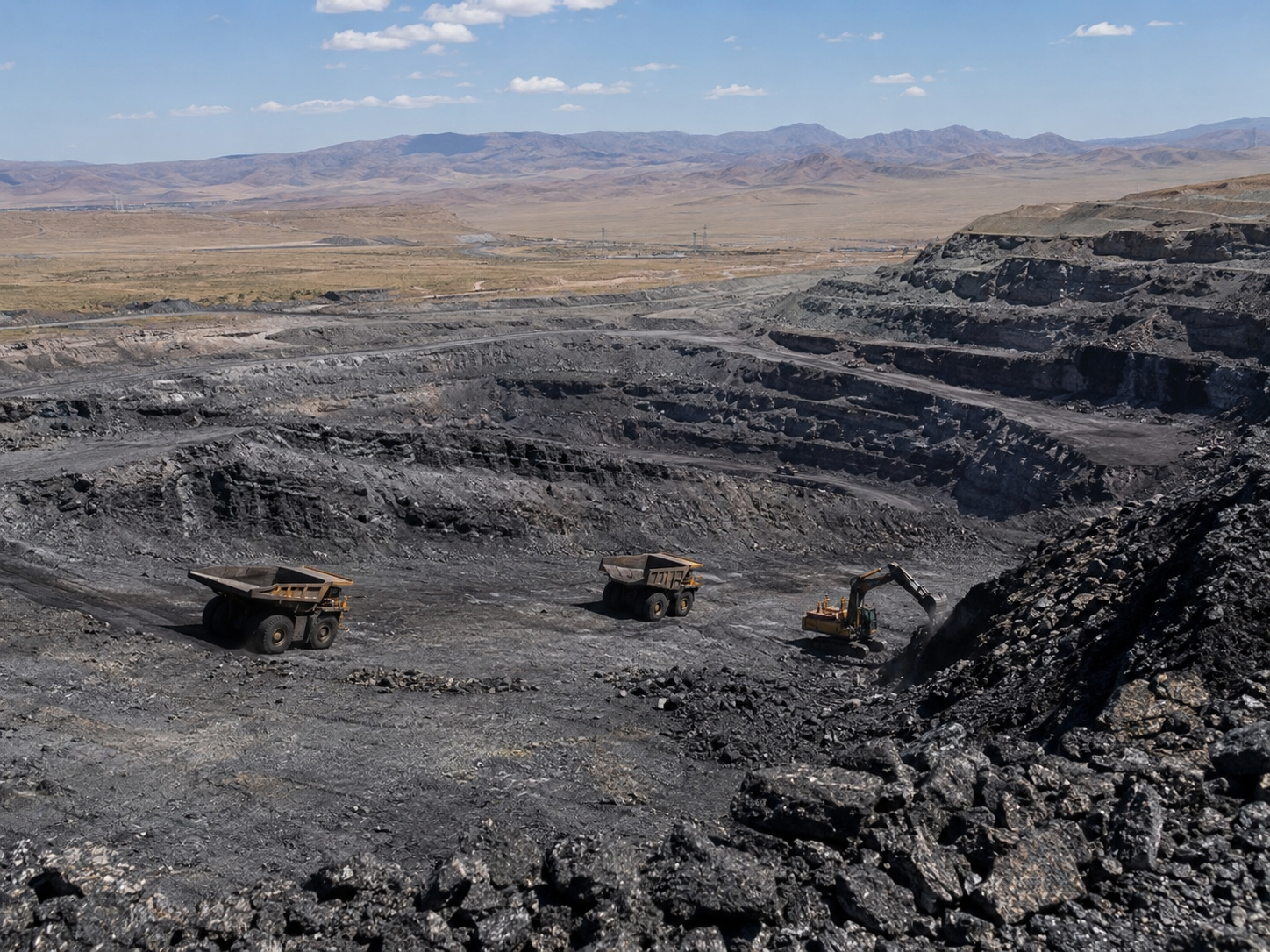
Central Asia is becoming an important arena in the international competition for raw materials used in semiconductors, batteries, energy infrastructure, artificial intelligence, and defense manufacturing.
On June 10, 2026, Astana hosted a C5+1 Critical Minerals Dialogue involving representatives of the United States, Kazakhstan, Kyrgyzstan, Tajikistan, Turkmenistan, and Uzbekistan. According to Kazakhstan’s Ministry of Foreign Affairs, the meeting preceded the 16th Astana Mining & Metallurgy Congress, held on June 11–12.
U.S. Special Envoy for South and Central Asian Affairs Sergio Gor said economic security depends on the ability to diversify access to critical minerals. He also highlighted Central Asia’s importance to global trade, connectivity, and resilient supply chains.
U.S. Secretary of State Marco Rubio previously announced his intention to visit all five Central Asian countries in 2026 and hold a C5+1 meeting in the region.
Central Asia Holds Strategic Mineral Resources
According to research by the Norwegian Institute of International Affairs, Central Asia holds approximately 38.6% of global manganese ore reserves and 30.07% of chromium reserves. The region also possesses substantial deposits of copper, zinc, titanium, tungsten, lithium, and other high-demand materials.
The frequently cited 40% figure for uranium should be applied to production rather than reserves. According to the World Nuclear Association, Kazakhstan supplied 39% of the world’s mined uranium in 2024, making it the largest global producer. The country holds approximately 14% of global uranium resources.
Kazakhstan leads the region’s mineral sector. Its Ministry of Industry and Construction reports more than 9,500 mineral deposits, including over 100 containing rare and rare-earth metals.
U.S.-Backed Investment Reaches $1.1 Billion
An estimate published by The National Interest places the United States’ share of Central Asian mineral exports at approximately 2.1%. This is an analytical estimate rather than official consolidated regional trade data.
The largest U.S.-linked project to date is an agreement signed on November 6, 2025, between Kazakhstan’s national mining company Tau-Ken Samruk and Cove Capital. The companies plan to jointly develop the North Katpar and Verkhne Kairakty tungsten deposits in the Karaganda Region with investment of approximately $1.1 billion.
The project includes mining and the construction of processing facilities producing higher-value tungsten products. The two deposits have JORC-certified tungsten reserves estimated at 410,000 tonnes.
Jackson–Vanik Remains a Trade Barrier
Further expansion of U.S. investment is complicated by the Jackson–Vanik Amendment. It does not prohibit trade, but it prevents Kazakhstan, Uzbekistan, Tajikistan, and Turkmenistan from receiving permanent normal trade relations with the United States. Kyrgyzstan previously obtained that status and is the only exception among the five Central Asian states.
The need to renew trade treatment creates additional uncertainty for mining projects that may operate over several decades. U.S. lawmakers have discussed removing the restrictions, but a final decision has not yet been adopted.
China Retains a Logistics Advantage
China remains Central Asia’s largest external economic partner and one of the principal buyers of its mineral commodities. The National Interest estimates that China may receive around half of the region’s mineral exports, although the result depends on the commodities and calculation method included.
Researchers at the Norwegian Institute of International Affairs have noted that Chinese companies hold a majority of critical-material mining licenses in Kyrgyzstan and Tajikistan. China is also one of the main destinations for Kazakhstan’s mining-sector exports.
Geographical proximity allows raw materials to move directly into China’s western provinces through established road and rail connections. U.S. companies must rely on more complex multimodal supply chains across the Caspian Sea, the South Caucasus, Türkiye, or alternative routes through the Middle East and Europe.
Competition will therefore depend on more than investment volumes. Processing capacity, financing guarantees, trade conditions, and reliable transport corridors will be decisive. U.S. companies are unlikely to match China’s regional presence in the short term, but new projects could gradually diversify Central Asia’s export markets.
Read also: Expert Opinion: Why Kazakhstan and Georgia Are Becoming Key Hubs of Eurasia’s New Logistics Network