

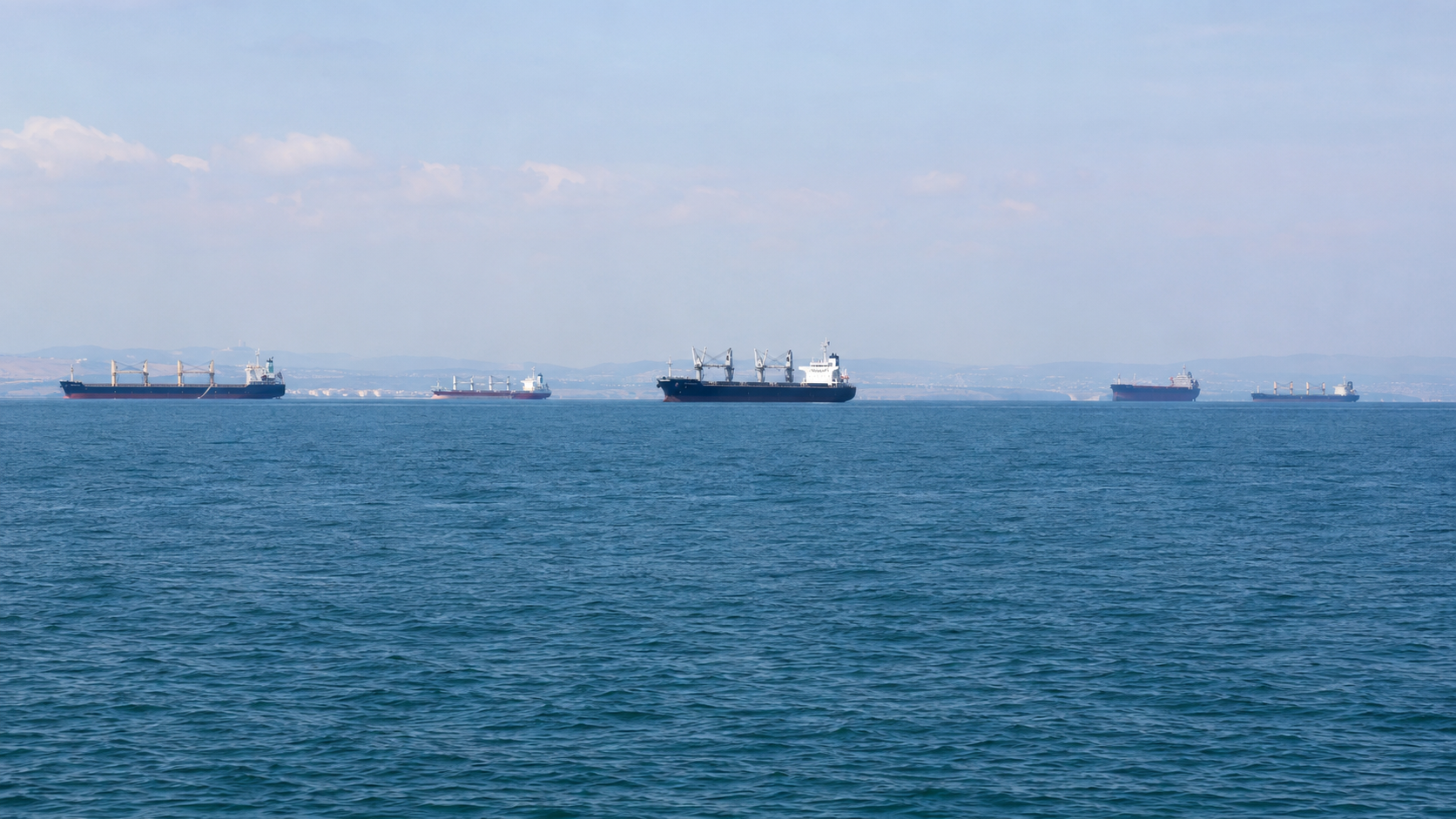
The Black Sea Has Become a Two-Way Front
Black Sea logistics, connecting Ukraine and Russia with global markets through the Bosphorus, faced a sharp deterioration in security during the summer of 2026. Russia intensified its attacks on Ukrainian ports and merchant vessels, while Ukraine expanded strikes against Russian port, military and energy infrastructure.
The escalation affects two strategic commodity flows. The region handles a significant share of Russian and Ukrainian grain exports, while terminals near Novorossiysk process large volumes of Russian and Kazakh oil.
Ports are not necessarily closed by government order after every attack. However, shipowners, container lines, terminal operators and insurers may suspend calls when they consider the risks to vessels, crews and cargo unacceptable.
Novorossiysk Is No Longer a Safe Rear Base
During the night of August 12, Ukraine carried out a combined missile and drone attack on Novorossiysk. President Volodymyr Zelenskyy said air-defence positions, piers and port infrastructure had been struck.
Russia had previously relocated much of its Black Sea Fleet to Novorossiysk following Ukrainian attacks on naval vessels stationed in occupied Crimea. The latest raid demonstrated that Russian military and port infrastructure on the eastern Black Sea coast is also within Ukraine’s reach.
Reuters reported that two major grain terminals temporarily suspended operations after the attack, while Chicago wheat futures rose by approximately 3%. Russian authorities also reported deaths, injuries and damage to civilian property. The two sides have provided conflicting assessments of the damage to warships and other targets, leaving some claims independently unverified.
Russian Strikes Have Hit 57 Ships Since June 20
Odesa regional prosecutors said Russian drones and missiles had struck 57 vessels since June 20, according to The Wall Street Journal. Most of the ships were sailing under foreign flags, and at least 21 people were killed.
Kpler’s MarineTraffic service reported that Russian missiles damaged two international merchant ships during one recent week. One of the vessels was carrying wheat.
Russia’s Defence Ministry claimed that the ships were transporting weapons. However, no publicly available independent evidence has established the cargo carried by every affected vessel. Such statements should therefore be distinguished from information confirmed by operators, port authorities and vessel-tracking services.
Ukraine Claims Strikes on 218 Russian-Linked Vessels
Ukraine’s Unmanned Systems Forces said they had struck 218 vessels associated with Russian maritime logistics and the so-called shadow fleet since July 6. Commander Robert Brovdi said 134 targets were in the Sea of Azov and another 84 were in the Black Sea.
These figures remain a Ukrainian military claim. The Kyiv Independent said it could not independently verify the full list. The term “struck” also does not mean that every vessel was destroyed or permanently removed from service, as the extent of damage may vary considerably.
Ukraine says the campaign is intended to disrupt Russian military supplies, oil exports and logistics serving occupied Crimea. Nevertheless, attacks in areas of dense commercial traffic increase the possibility of collateral damage to vessels that are not Russian-owned.
Kazakh Oil Exports Have Also Been Affected
Incidents near the Caspian Pipeline Consortium terminal have created particular concern. The CPC system primarily transports Kazakh crude, with flows equivalent to approximately 2% of global oil supply.
US energy companies are major shareholders. Chevron owns 15% of the consortium, while an ExxonMobil subsidiary holds 7.5%.
Attacks and temporary restrictions reduced CPC oil loadings by more than 20% in July, equivalent to approximately 400,000 barrels per day, Reuters reported. The disruption affected not only Russia but also Kazakhstan, which relies on the Black Sea route for most of its oil exports.
Concerned about energy-market stability, the US administration urged Kyiv to limit strikes on non-Russian vessels and infrastructure carrying Kazakh crude.
Maersk Redirected Cargo to Romania
The growing security risk has already changed the operations of international carriers. Maersk temporarily suspended its container service through Chornomorsk Fishing Port and redirected import cargo to Constanța in Romania, according to the company’s official advisory.
This did not represent an administrative closure of the entire deep-water Port of Chornomorsk. The suspension applied to a specific terminal and Maersk service.
Agricultural exporter Kernel also stopped its own operations in Chornomorsk after infrastructure was damaged. These decisions are reducing Ukraine’s available export capacity ahead of September, when agricultural shipments normally approach their seasonal peak.
Alternative Routes Cannot Replace Deep-Water Ports
If Black Sea shipping declines further, Ukraine can redirect grain through Danube ports and across rail and road crossings with Moldova, Romania, Poland, Slovakia and Hungary.
These routes have less capacity and are more expensive than deep-sea shipping. Low water levels on the Danube are placing additional limits on vessel loads. Overland delivery may add approximately $50–70 to the logistics cost of each tonne of grain.
Radio Free Europe/Radio Liberty reported that Ukrainian grain exports fell by 76% year over year during the first weeks of August. Even under favourable conditions, river ports can handle only part of the volume normally processed by the deep-water terminals around Odesa.
Food Markets Are Pricing in More Risk
Chicago wheat futures moved above $7 per bushel in July for the first time since late 2023. Prices were supported by both Black Sea attacks and hot weather in major grain-producing regions. Futures later retreated, indicating that an immediate global shortage had not yet emerged, although the market remains highly sensitive to port disruptions.
Further attacks could increase war-risk insurance premiums, reduce the number of shipowners willing to enter the region and push freight costs higher. For grain-importing countries in Africa, Asia and the Middle East, this could translate into higher food prices even without a complete halt to exports.
Ukraine has reportedly proposed a mutual suspension of attacks on civilian vessels through a third party. Russia said it had not received a formal proposal and rejected what it called partial measures. A rapid de-escalation therefore remains uncertain.
Read also: New Ship Strike Reported off Odesa
