

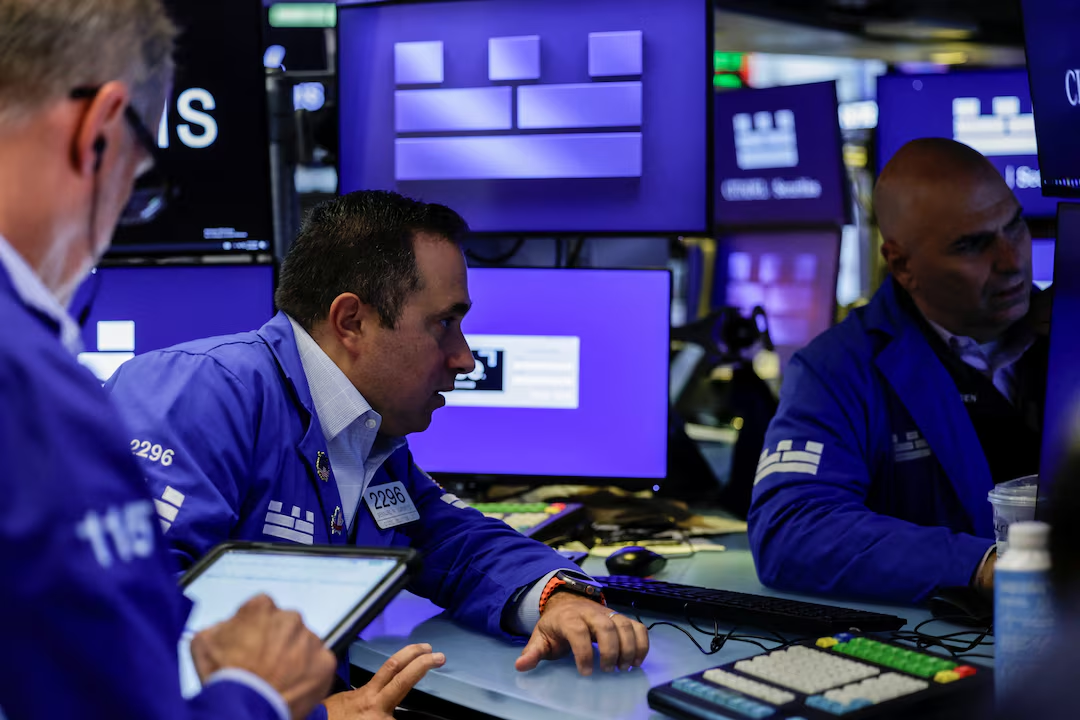
Index Futures Remained Close to Flat
Futures on the main U.S. stock indexes stabilized on August 19 following a sharp technology-sector selloff during the previous session. Investors assessed inflation risks, the Federal Reserve’s monetary policy outlook and geopolitical tensions in the Middle East, Reuters reported.
At 06:09 a.m. ET, Dow Jones E-minis were up 11 points, or 0.02%. S&P 500 futures declined by three points, or 0.04%, while Nasdaq 100 futures lost 66.25 points, or 0.22%.
The muted trading followed heavy losses among technology and semiconductor companies. The Philadelphia Semiconductor Index fell nearly 5% in the previous session, while Nvidia and other major technology stocks came under significant pressure.
Most large technology stocks showed limited changes in premarket trading on August 19. Marvell and Intel shares were each down by more than 1%.
Hormuz Uncertainty Supported Oil Prices
The Strait of Hormuz remained one of the market’s main geopolitical risks. The White House said that no negotiations with Iran were taking place and maintained that the strait was open. Tehran offered a conflicting assessment and said commercial navigation remained restricted.
Brent crude futures rose 1.1% amid the uncertainty, reaching their highest level in three weeks. Oil markets continued to price in the possibility of further disruption to energy exports from the Persian Gulf.
For transport and logistics companies, higher oil prices increase the risk of more expensive diesel, aviation fuel and marine bunker costs. Prolonged regional instability could also keep war-risk insurance premiums and freight rates elevated on Middle Eastern routes.
Bond Yields Pressured Technology Stocks
Global government bond yields had reached multi-year highs as rising public debt and geopolitical uncertainty unsettled fixed-income markets. The yield on the 30-year U.S. Treasury remained close to 5.28%, near its highest level since 2007.
The benchmark 10-year yield retreated from its highest point since January 2025. However, long-term borrowing costs remained high enough to weigh on growth stocks and capital-intensive technology projects.
“A more hawkish internal debate could keep the expected policy path elevated,” said Florian Ielpo of Lombard Odier Investment Managers.
Higher bond yields also matter to the logistics industry because they increase the cost of financing vessels, aircraft, commercial vehicles, warehouses and port infrastructure.
Markets Awaited Fed Minutes and Retail Earnings
Investors were waiting for the minutes of the Federal Reserve’s July meeting. According to LSEG data, traders were pricing in at least one 25-basis-point rate increase by the end of 2026. The probability of a September increase had declined significantly following softer inflation data.
Corporate results from Target, TJX Companies and Walmart were also in focus. Earnings from major retailers were expected to provide additional evidence of how interest rates, import costs and inflation were affecting consumer demand.
Among individual stocks, Estée Lauder gained 6.8% in premarket trading after the cosmetics company issued an annual profit forecast above Wall Street expectations.
Read also: Analytical Report: The Blockade of the Strait of Hormuz During the U.S.-Israeli War Against Iran