

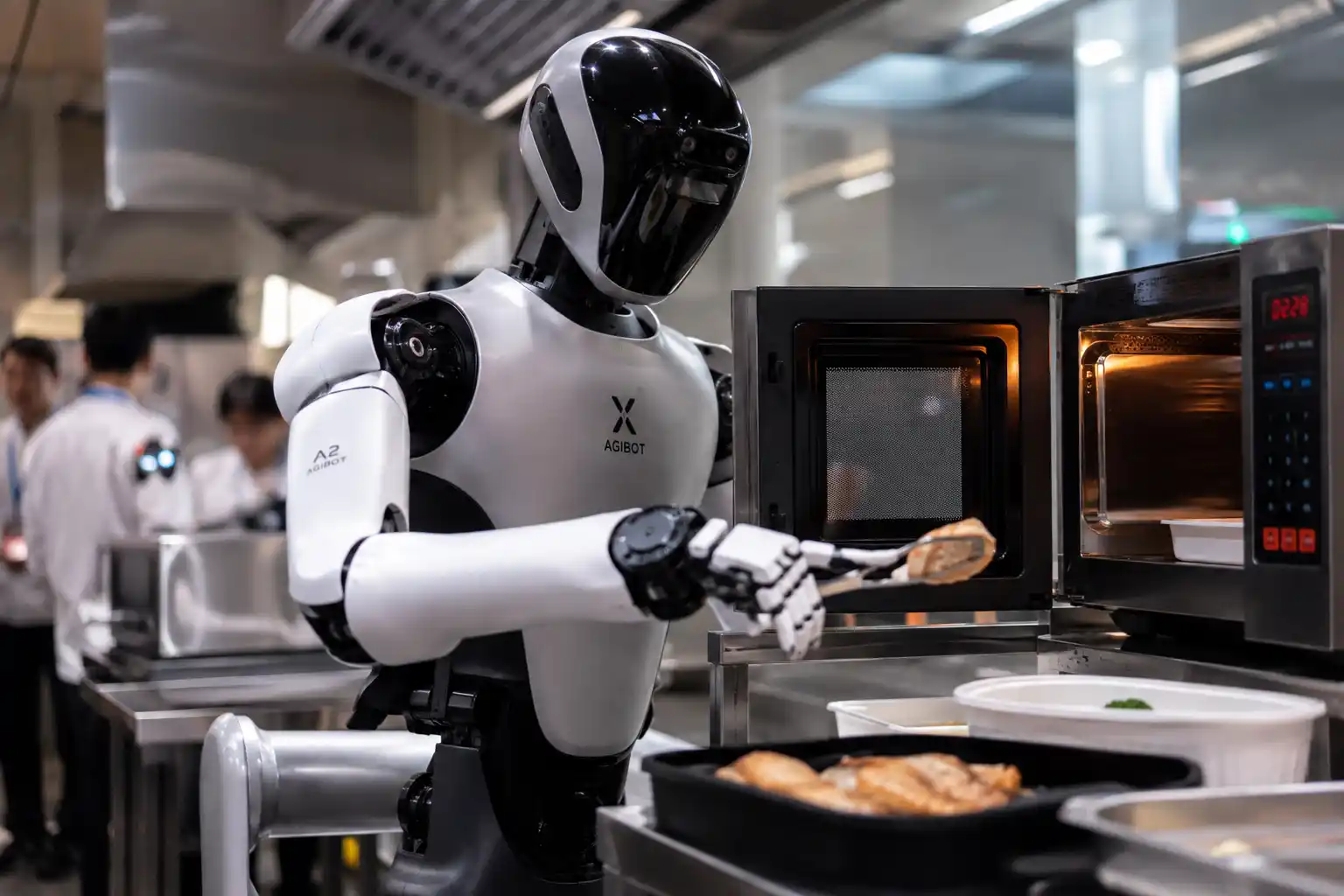
In China, robots are no longer being judged solely on speed and agility. They are now expected to make beds, work in kitchens, assemble tools and perform tasks designed to mirror real working environments
Over the past few years, China has made such rapid progress in robotics that humanoid machines have become one of the most visible symbols of the country’s technology industry. Now Beijing is putting them to a different kind of test — not in polished demonstrations, but in situations where a machine must do more than move impressively. It must actually get the job done.
The second World Humanoid Robot Games in Beijing have brought together 666 teams and more than 2,000 robots from 16 countries and regions. The program has also expanded significantly. Among 51 disciplines are challenges designed to replicate ordinary working environments — from factories, hotels and restaurants to homes and logistics centers.
The robots are being asked to perform tasks that may seem simple at first: carry luggage, make beds, restock hotel rooms, assemble tools and even operate a microwave. Yet these routine actions are proving to be a serious test of a machine’s ability to navigate changing environments.
In the restaurant competition, for example, a robot must pick up a snack with tongs, place it in a microwave and set the correct cooking time. An error of more than one minute results in a penalty. Spilling a drink also costs points.
This is where the industry’s biggest shift becomes visible: from demonstrating what robots can do to proving that they can be commercially useful. Chinese organizers see the games as a testing ground for technologies that could eventually move into real workplaces.
But humanoid robots are still far from being truly versatile. Their biggest weakness is adapting to unexpected situations and changes in their surroundings. A machine may perform almost flawlessly in a controlled environment, yet an unfamiliar object or a new setting can significantly reduce its performance.
As the Chinese news agency Xinhua reports, the games in Beijing are therefore about more than winning medals. They are becoming a kind of job interview — a test of whether China’s robots can eventually leave the laboratory and begin working alongside people, taking on some of the repetitive and physically demanding tasks that make up everyday work.
Read also: China strengthens its gas fleet with 99,000-cubic-meter carrier
