

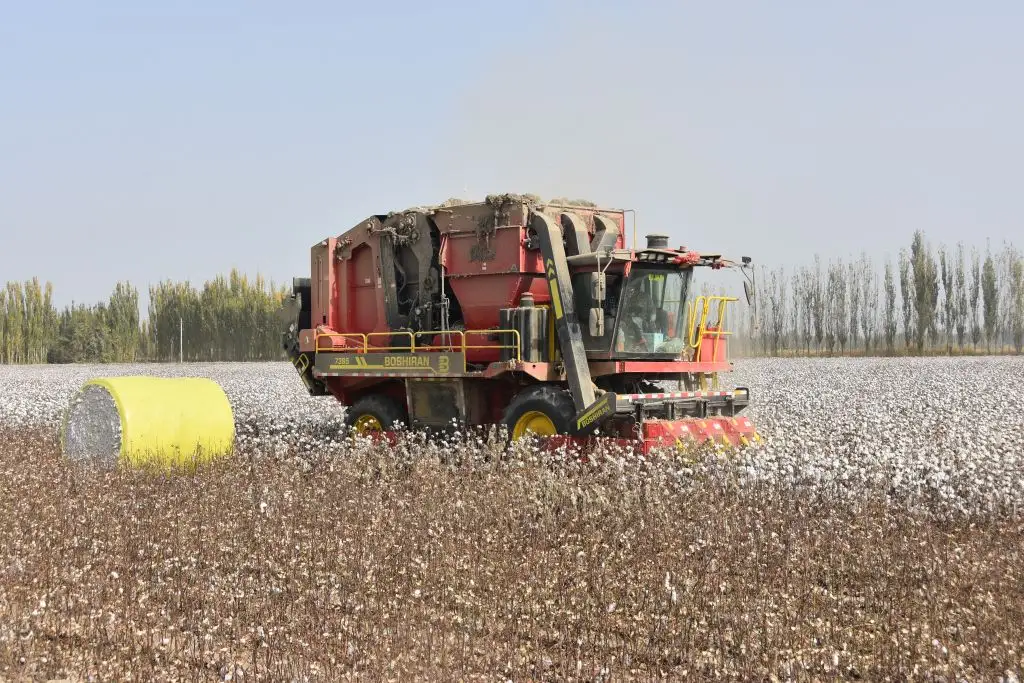
Chinese technologies for growing and processing cotton are expanding across Central Asian markets. Demonstration fields are already operating in Uzbekistan, where Chinese cotton varieties, precision irrigation and modern planting methods are being used
According to Xinhua, a demonstration cotton field covering about 66.7 hectares is operating near Tashkent. Chinese researchers have been involved in the project at every stage, from selecting cotton varieties to developing cultivation and field-management techniques.
The site uses methods widely adopted in Xinjiang, including drip irrigation under plastic film, higher-density planting and mechanized harvesting.
“Given the current growth and field management, the field is well on track to exceed the target of 550 kilograms of seed cotton per mu this year,” Song said.
Interest in Chinese expertise is partly driven by the similarities between the natural conditions of Xinjiang and those of Central Asian countries. In 2025, Xinjiang produced 6.17 million tonnes of cotton, accounting for 92.8 percent of China’s total output, while the mechanization rate across the sector exceeded 97 percent.
Demand for Chinese agricultural products is also growing. Cotton seed exports from Xinjiang to Central Asia increased from 800 tonnes in the 2024–2025 sales season to 1,500 tonnes in the following season. Chinese companies are also supplying cotton-picking machinery to the region.
Since 2023, China has cooperated with agricultural research institutions in all five Central Asian countries on cotton breeding, improving yields and developing water-saving irrigation technologies.
As a result, Chinese expertise is gradually expanding across the regional market in several areas — from seeds and cultivation technologies to agricultural machinery.
Read also: Japan seeks to reclaim LNG carrier market as shipbuilding revival takes shape