

Two large Maersk containerships transited the Suez Canal together, although a full return of the Gemini East–West network has not been scheduled
Two Ships Joined the Northbound Convoy
Maersk is gradually returning container services to the Red Sea and Suez Canal route. On August 22, 2026, Mathilde Maersk and Bangkok Maersk transited the waterway in the same northbound convoy, representing a combined nominal capacity of 36,276 TEU.
Mathilde Maersk led the Maersk vessels through the canal. Built in 2015, the ship belongs to the final series of Triple E-class containerships. It has a deadweight of 214,121 tonnes and a nominal capacity of 19,076 TEU. The vessel was sailing to Colombo before continuing toward the Far East.
Bangkok Maersk followed on a voyage from Italy to Singapore. Contrary to the original report, it was built in 2025 rather than 2015. The vessel has a deadweight of 181,648 tonnes and a dual-fuel engine capable of operating on methanol.
According to the Suez Canal Authority’s official announcement, Bangkok Maersk is 350 metres long, 56 metres wide and has a capacity of 17,200 TEU. Some vessel databases list the class’s design capacity as 17,480 TEU, but the canal authority used the lower figure.
Bangkok Maersk Completed Its First Suez Transit
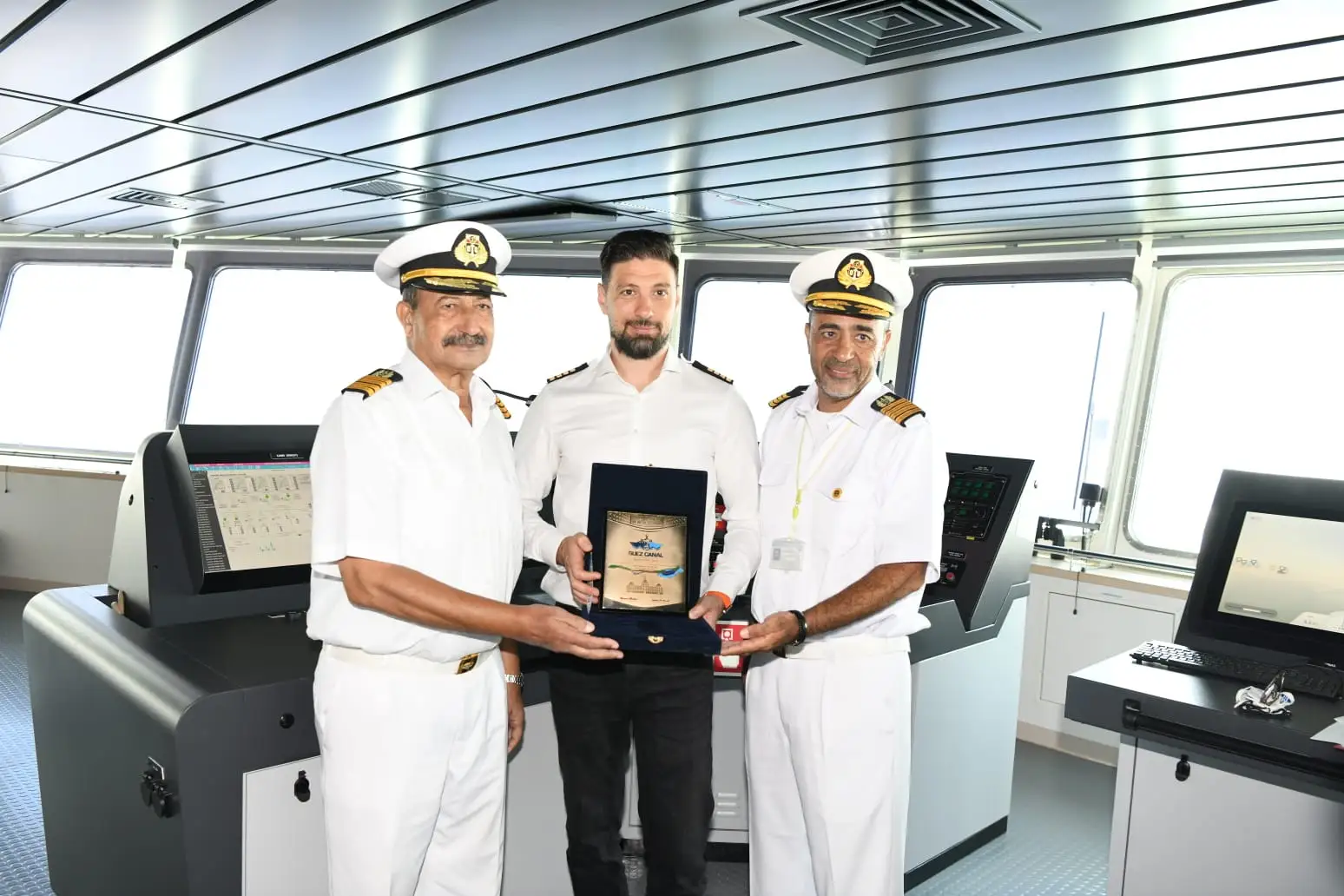
The passage marked Bangkok Maersk’s first transit of the Suez Canal. Under the canal authority’s protocol, senior pilots Hesham Helmy and Galal Shabaka boarded the vessel, welcomed the crew and presented a commemorative gift to its master.
Bangkok Maersk operates on the AE7 service, directly connecting major Asian ports with Northern Europe and the Mediterranean.
Vessel master Pata Radu highlighted the operational benefits of returning to the traditional route.
“Choosing the Suez Canal over navigating around Africa saves approximately 14 days,” Radu said
The shorter route reduces fuel consumption, fleet requirements and container turnaround times. It can also provide cargo owners with faster delivery between Asia and Europe.
A total of 57 vessels transited the canal on August 22, representing combined net tonnage of 2.8 million tonnes.
Gemini Is Restoring Selected Services
Maersk’s return is being implemented gradually. In February, the carrier and Hapag-Lloyd routed the ME11 service through the Red Sea under the Gemini Cooperation network.
In July, the partners moved the AE15 service back to the Suez route. The service connects Asia, the Mediterranean and Europe, with Majestic Maersk operating the first revised sailing.
On August 10, the companies announced that the AE19 service would also switch to the trans-Suez corridor. The route connects Asia, Saudi Arabia, the Mediterranean and Europe.
Maersk has nevertheless stated that it is not currently considering a wider return of the entire East–West network through the Red Sea. No timetable has been established, meaning forecasts of a complete return by the end of 2026 remain unconfirmed.
Crew, vessel and cargo safety will determine any further expansion. Maersk retains contingency plans allowing individual sailings or entire services to return to the Cape of Good Hope route if security deteriorates.
MSC Confirms a Partial Return
Reports of unannounced MSC transits circulated before the carrier issued an official update. On August 24, MSC confirmed the partial restoration of Suez Canal transits.
The initial changes cover selected eastbound and westbound sailings on the Jade, Albatros, Himalaya and Tiger services. The published schedule names MSC Michel Cappellini, MSC Josefina, MSC Beryl, MSC Anna and MSC Tina.
MSC said the transition would be implemented service by service. Contingency arrangements remain available if regional conditions change.
CMA CGM Records Strong Growth
CMA CGM is also increasing its use of the Suez Canal. According to official canal statistics, 199 CMA CGM vessels with combined net tonnage of 25.2 million tonnes transited the waterway from the beginning of 2026 through August 18.
During the whole of 2025, 212 CMA CGM vessels used the canal, representing net tonnage of 18.8 million tonnes. The number of 2026 transits is therefore already approaching the previous full-year total, while tonnage is approximately 34% higher.
Return Could Reshape Container Capacity
More Suez transits will shorten voyage times and gradually release vessels that carriers previously required to maintain schedules around the Cape of Good Hope.
This could improve container circulation, increase schedule reliability and reduce some operating expenses. Faster fleet availability may also expand effective capacity between Asia and Europe and place downward pressure on freight rates.
The outcome still depends on maritime security. Maersk, MSC and other carriers are restoring selected services while retaining the ability to return to the longer route around Africa if regional risks increase.
