

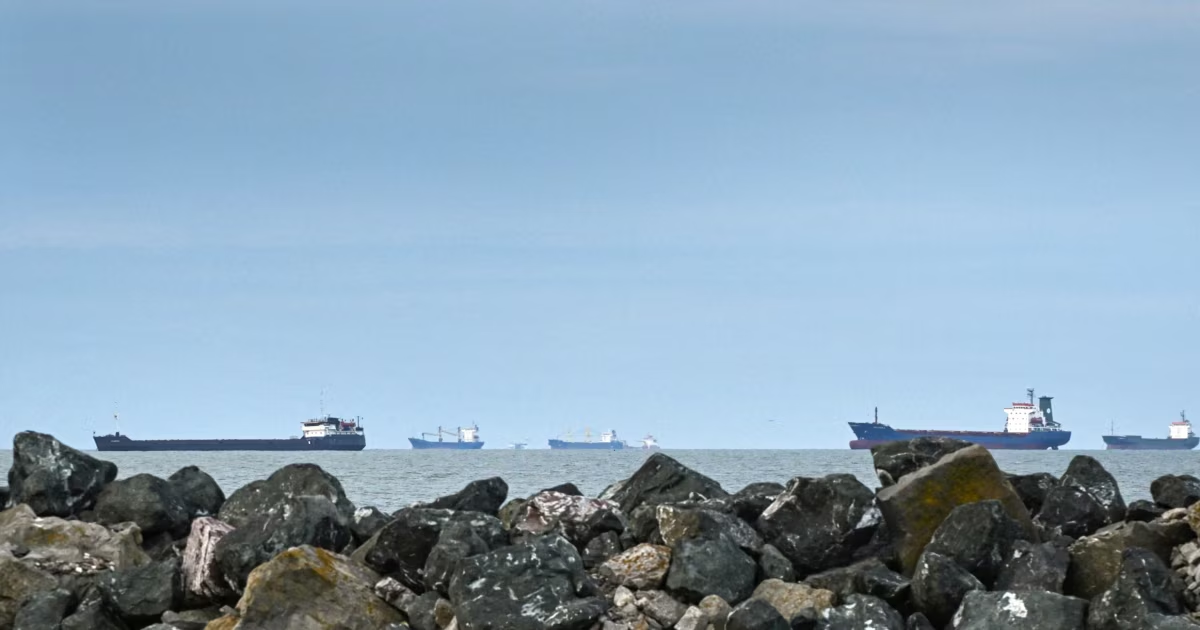
Grain diverted from the Greater Odesa ports to the Danube has overwhelmed the alternative route, where waiting costs can reach $8,000 per vessel per day
Up to 70 vessels have accumulated at the Sulina roadstead while waiting for access to Ukraine’s Danube ports. Most are heading to load grain diverted to the river following intensified Russian attacks on Ukraine’s Black Sea ports.
Reuters reported, citing agricultural consultancy ASAP Agri, that more than 50 vessels were waiting to pass through the canal on August 25, while five to seven ships per day were moving towards Ukrainian Danube ports.
Katerina Kononenko, Operations Manager at Avalon shipping, estimated the actual capacity for vessels bound specifically for Ukraine at only two or three ships per day. By August 26, the queue had grown to approximately 70 vessels.
At this ratio between the number of waiting ships and daily capacity, clearing the congestion could take considerable time even without further disruptions. Poor weather may also close the canal for approximately two days, adding another interruption.
The Sulina Canal is located in Romania and provides one of the principal deep-water links between the Black Sea and the Danube Delta. Ships use it to reach Ukrainian river ports, including Izmail and Reni.
Market participants identify a shortage of pilots as one of the main causes of the delays. Pilots are required to guide vessels safely through the restricted waterway.
Grain cargoes are also competing for access with higher-priority shipments, particularly fuel. This reduces the number of bulk carriers that can pass towards Ukrainian terminals each day.
Air-raid alerts create additional stoppages. Port operations are suspended during alerts, disrupting scheduled vessel handling and subsequent canal transits.
Bad weather can stop navigation completely. Even a relatively short closure causes the queue to grow rapidly because additional vessels continue arriving at the Sulina roadstead.
Before the latest escalation, Ukrainian seaports handled approximately 90% of the country’s grain exports. The deep-water terminals of Greater Odesa can accommodate much larger ships and process considerably more cargo than the Danube ports.
Following intensified Russian attacks on Black Sea port infrastructure and merchant vessels, some shipowners reduced calls at Odesa, Chornomorsk and Pivdennyi. Exporters responded by redirecting more cargo to the Danube.
The river route cannot fully replace the deep-water ports. It has less capacity and depends on canal availability, pilot numbers, river levels, weather conditions and access to suitable vessels.
During the earlier restriction of Black Sea shipping in 2022 and 2023, Ukrainian grain-export capacity through the Danube peaked at 2.5 million tonnes per month. Current volumes remain well below that level, although shippers are again increasing their use of the route.
Claims that Ukrainian ports have “ground to a halt” describe a sharp reduction in capacity, but not a complete suspension of every operation.
At a press conference following the Coalition of the Willing meeting on August 24, President Volodymyr Zelenskyy said Russia was attempting to impose a total blockade of Ukrainian ports but had not yet achieved that objective.
According to Zelenskyy, approximately three or four ships continue to enter and leave the Greater Odesa ports each day. He did not say that the ports had no problems. On the contrary, he acknowledged the attempted blockade and the need to restore secure operation of the maritime corridor.
His statement does not contradict the report about the Sulina Canal because the two figures refer to different routes:
- Zelenskyy described the limited traffic still moving through the deep-water ports of Greater Odesa;
- the Sulina figures concern ships using the Danube route to reach Ukrainian river ports.
Both indicators point to a major loss of export capacity. Greater Odesa continues to receive some vessels, but traffic remains far below previous levels. The Danube route is operational but congested and cannot quickly absorb all diverted cargo.
Each additional day of delay may cost a shipowner as much as $8,000. The actual expense depends on vessel type, charter terms, fuel costs, crew expenses and any demurrage charges.
Waiting increases the transport cost of every tonne of grain. Depending on the contract, these expenses may be divided among the shipowner, trader, exporter and final buyer.
Expected congestion is also reflected in future freight rates. If carriers anticipate long queues, military risk or repeated canal closures, they may price those risks into the voyage before accepting the cargo.
War-risk insurance premiums add another layer of expense. Some owners may decide not to send ships into Ukrainian waters at all, further reducing the available tonnage.
Ukraine exported 539,000 tonnes of grain between August 1 and August 21, 2026, compared with 1.73 million tonnes during the same period a year earlier.
Current shipments therefore amount to only about one-third of the previous year’s level. The decline reflects port attacks, fewer vessel calls and the limited capacity of alternative logistics routes.
State railway operator Ukrzaliznytsia said grain transport towards the Danube ports in August was 11 times higher than in July. This demonstrates how quickly cargo is being redirected, but it also adds pressure to port rail stations, storage facilities and terminals.
Ukraine’s Ministry of Economy, Environment and Agriculture previously lowered its grain-export forecast for the 2026/27 marketing year from 43 million tonnes to 38–40 million tonnes. The maximum reduction is approximately 12%.
Prolonged restrictions could create a storage-capacity shortfall of around 11 million tonnes. Ukraine has previously estimated potential agricultural losses from the port disruption at as much as $3 billion.
Ukraine remains one of the world’s largest suppliers of wheat and corn. Disruption to its exports is particularly important for importing countries in Africa, Asia and the Middle East.
The Sulina congestion does not by itself mean an immediate global grain shortage. It does, however, slow deliveries, increase freight expenses and create additional uncertainty for buyers.
If restrictions persist during the main export period for the new harvest, more grain will remain inside Ukraine for longer than planned. This will increase pressure on silos and may force producers to accept lower domestic prices while importers face higher logistics costs.
Markets will remain sensitive to further port strikes, vessel damage, deteriorating weather and any change in the availability of the Sulina Canal.
Zelenskyy said several countries would work on restoring secure shipping. The options include a negotiating mechanism and stronger air defence for the maritime grain corridor.
Ukraine has also proposed through an intermediary that attacks on civilian vessels and targets in the Black Sea should be mutually suspended. No confirmed agreement on such a moratorium has been reached.
In the short term, the situation will depend on weather, pilot availability and the duration of air-raid alerts. Accelerating rail deliveries to the Danube may bring more grain to the ports, but without greater canal capacity it could also extend the vessel queue.
The Danube therefore remains an essential fallback route but cannot fully replace the deep-water terminals of Greater Odesa. Stabilizing Ukrainian grain exports will require both a safer Black Sea corridor and fewer constraints on the river route.
Read also: 57 Ships Hit Since June 20 as Attacks Reshape Black Sea Logistics
